The Solo Exhibition
by afatpurplefig
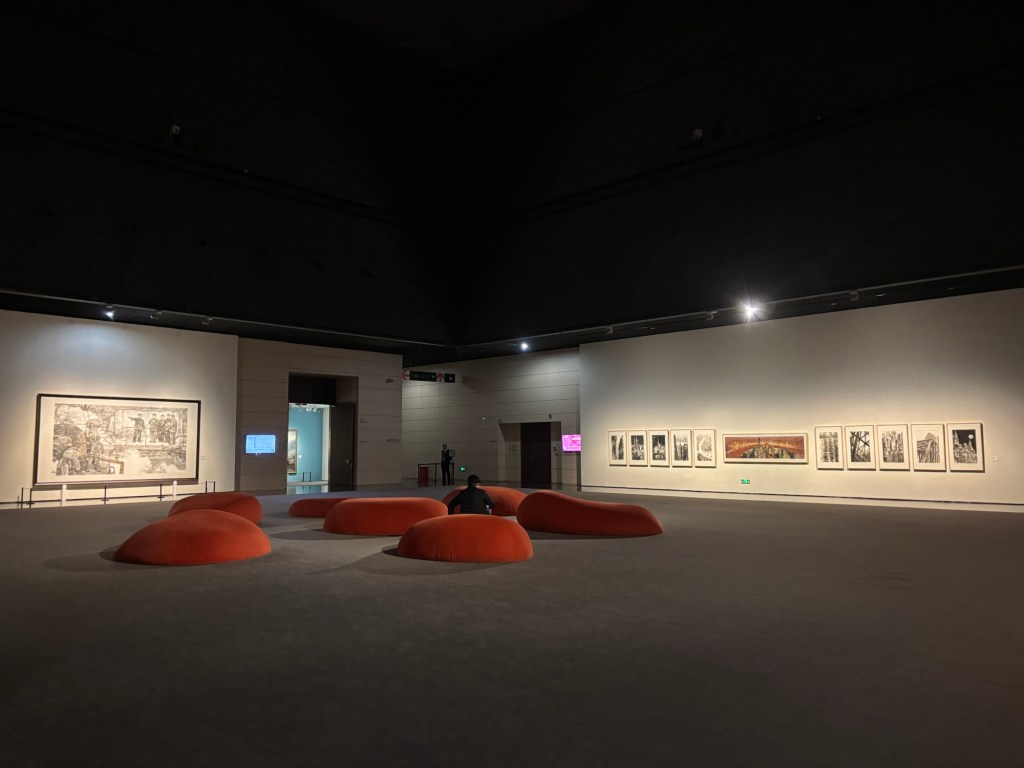
TR isn’t feeling well, so I head out alone and make a beeline for the station. The plan? China Art Museum and the Fosun building, to see its changing facade. I’m hoping to squeeze in the Opera House and the People’s Square too, but I will start here and see how I go.
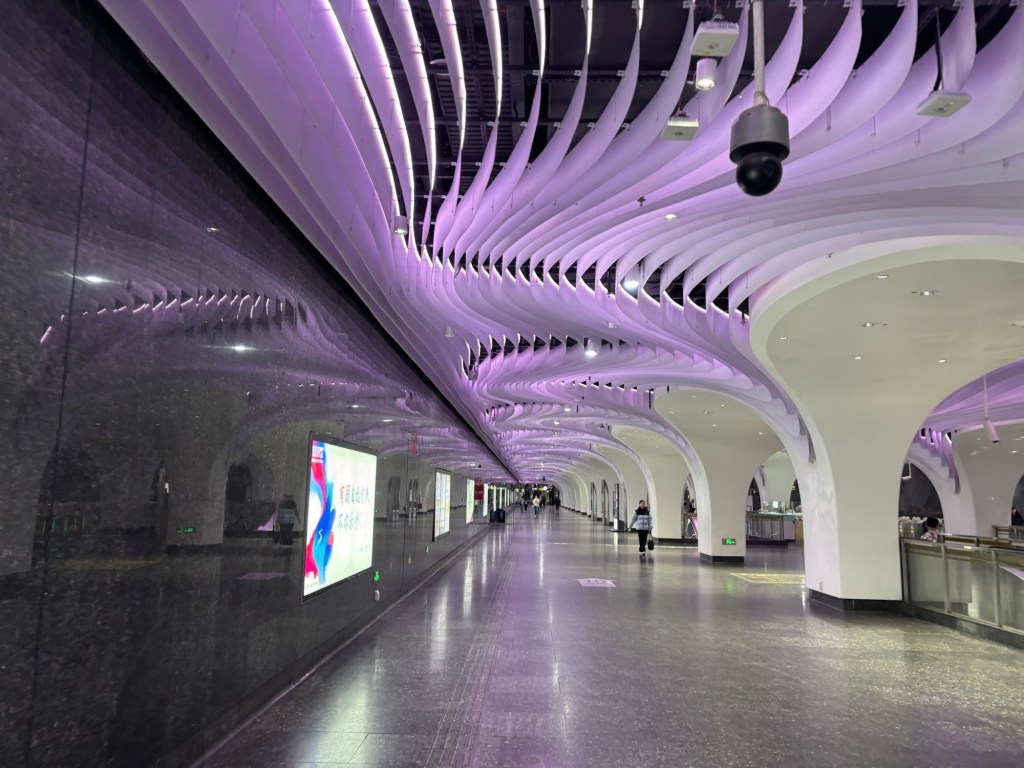
Yuyuan Gardens station has a swirling, colour-changing ceiling. This time, I pay attention to the process, instead of traipsing behind Joe. In fact, it’s all pretty self-explanatory. The trains on either side of the platform go in opposing directions, and each stop shows the lines you can change to. China Art Museum is on Line 8, so I look for the stop with the ‘8’ square above it, and it’s off to Laoximen (老西门) I go.
Have I mentioned how much I love the subway?
A day alone means a day with JJ Lin crooning in my AirPods, which makes me happy. And, given I’ve mastered the subway, I’m walking with a real spring in my step when I try to enter the exit gate for the China Art Museum. A security guard shouts at me and ushers me out.
(Stay humble. This is the Chinese way.)
Once inside, I buy a coffee and sit for a minute, to get my bearings. The space is cavernous, and has the echoing, soothing gallery-calm I love so.
I fancy I will be here a while.
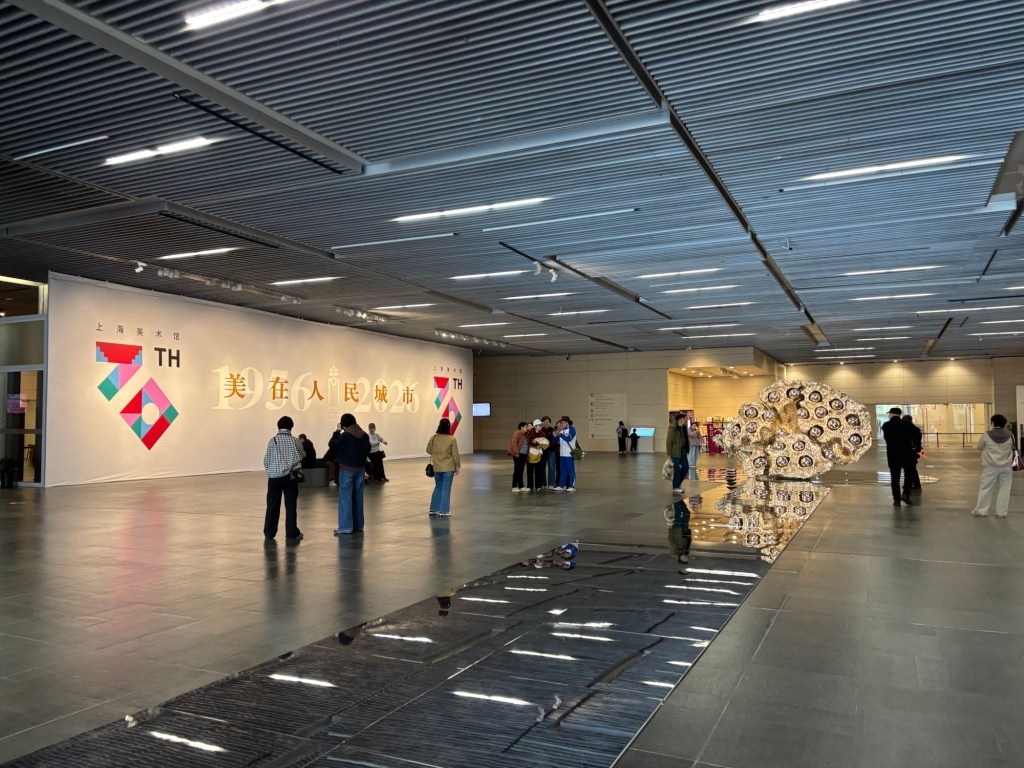
I especially love faces in photos, so head first to ‘Together in This Land: The 56 Ethnic Groups of China,’ a photography exhibition by Chen Haiwen (陈海汶).
Haiwen travelled thousands of kilometres across China in his quest to capture the lives and traditions of China’s ethnic groups. The photos are magnificent. He sought to capture what he called a ‘ritual sense of family’.
I am reminded of the family Christmas photos we took every year, between gift-giving and lunch. Every combination you can possibly make with a four-person family and the dual options of sitting and standing. I am as grateful for the photos now as I hated posing for them then.
Photos sure can grow on you.
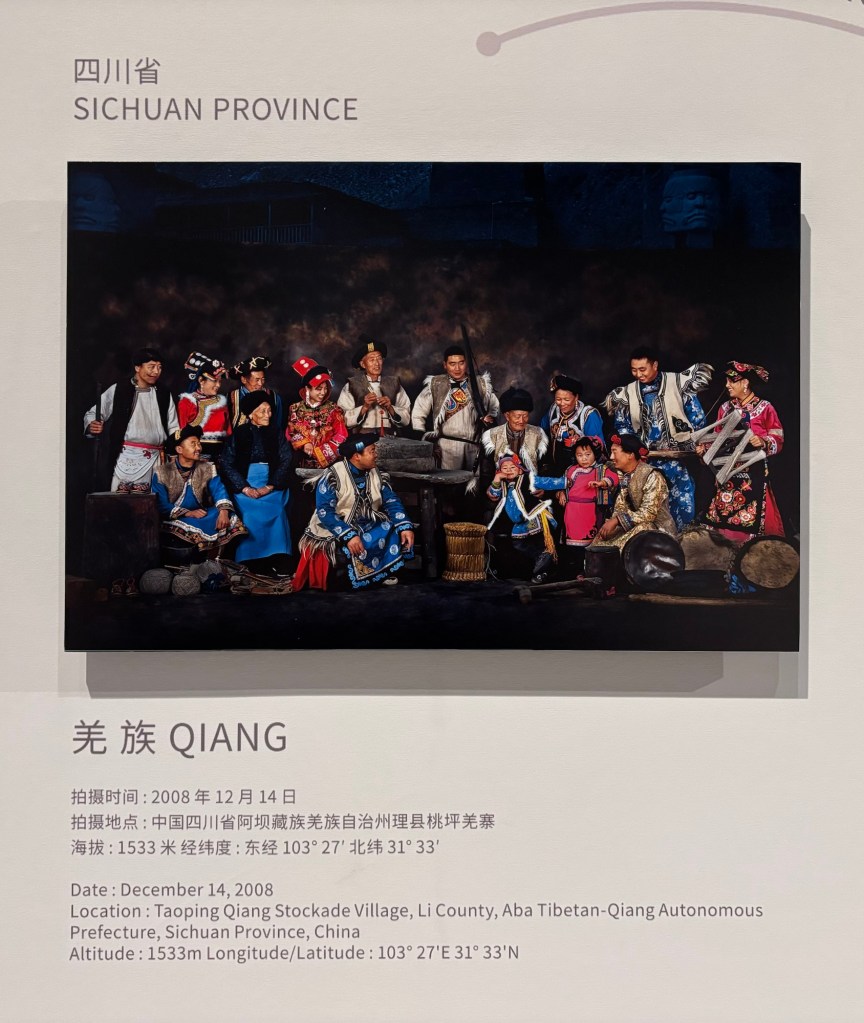
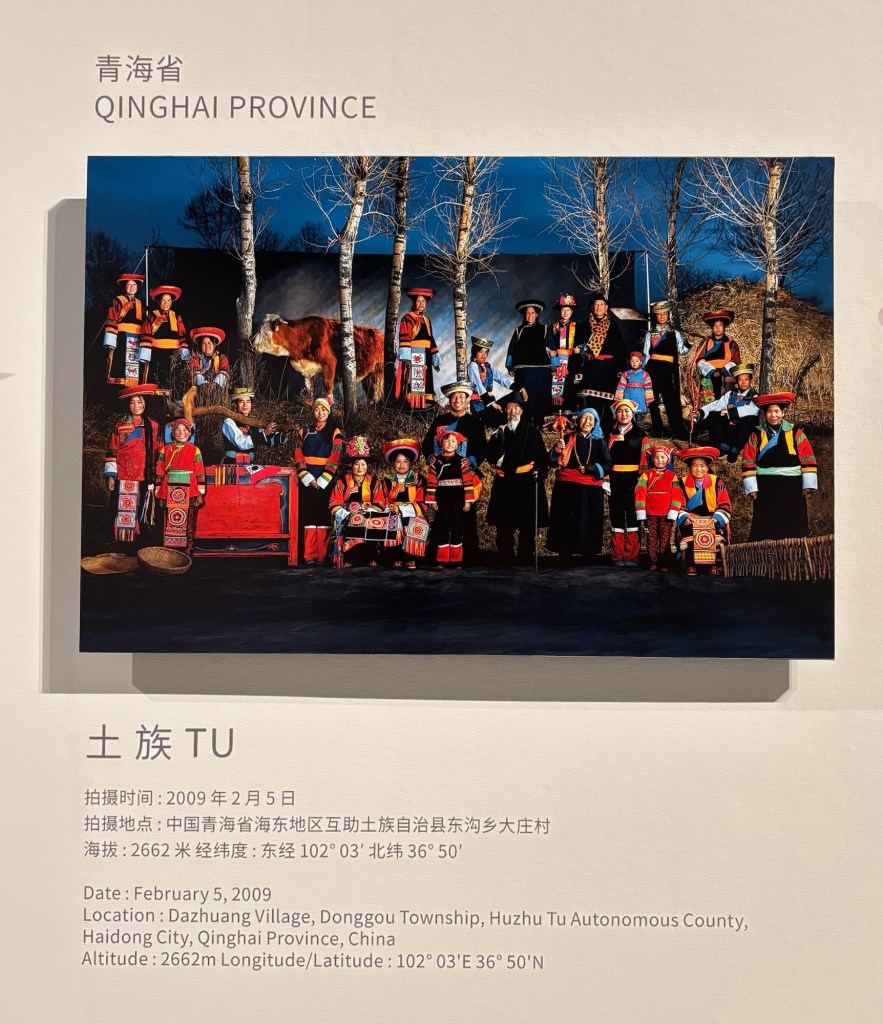
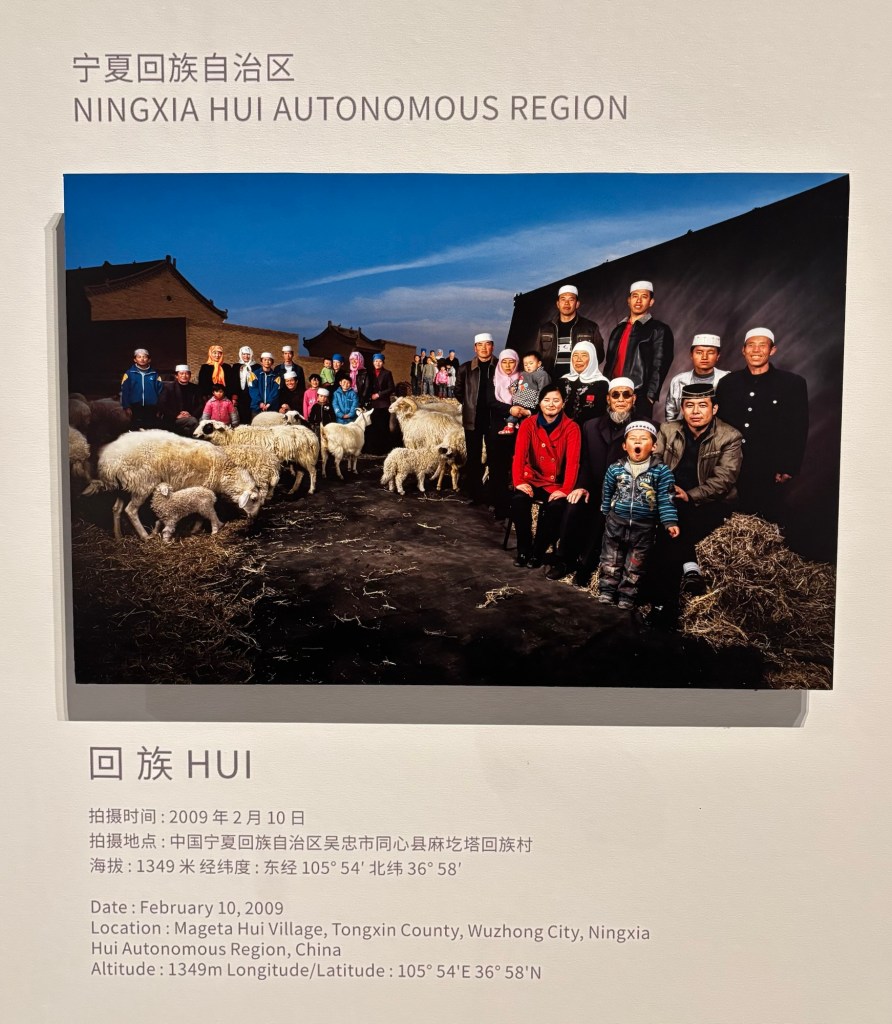
The short films are beautifully done, combining camera shutter sounds and staccato stills with behind-the-scenes footage of Haiwen photographing his subjects. I watch them all. Their trust in him underpins the entire project.
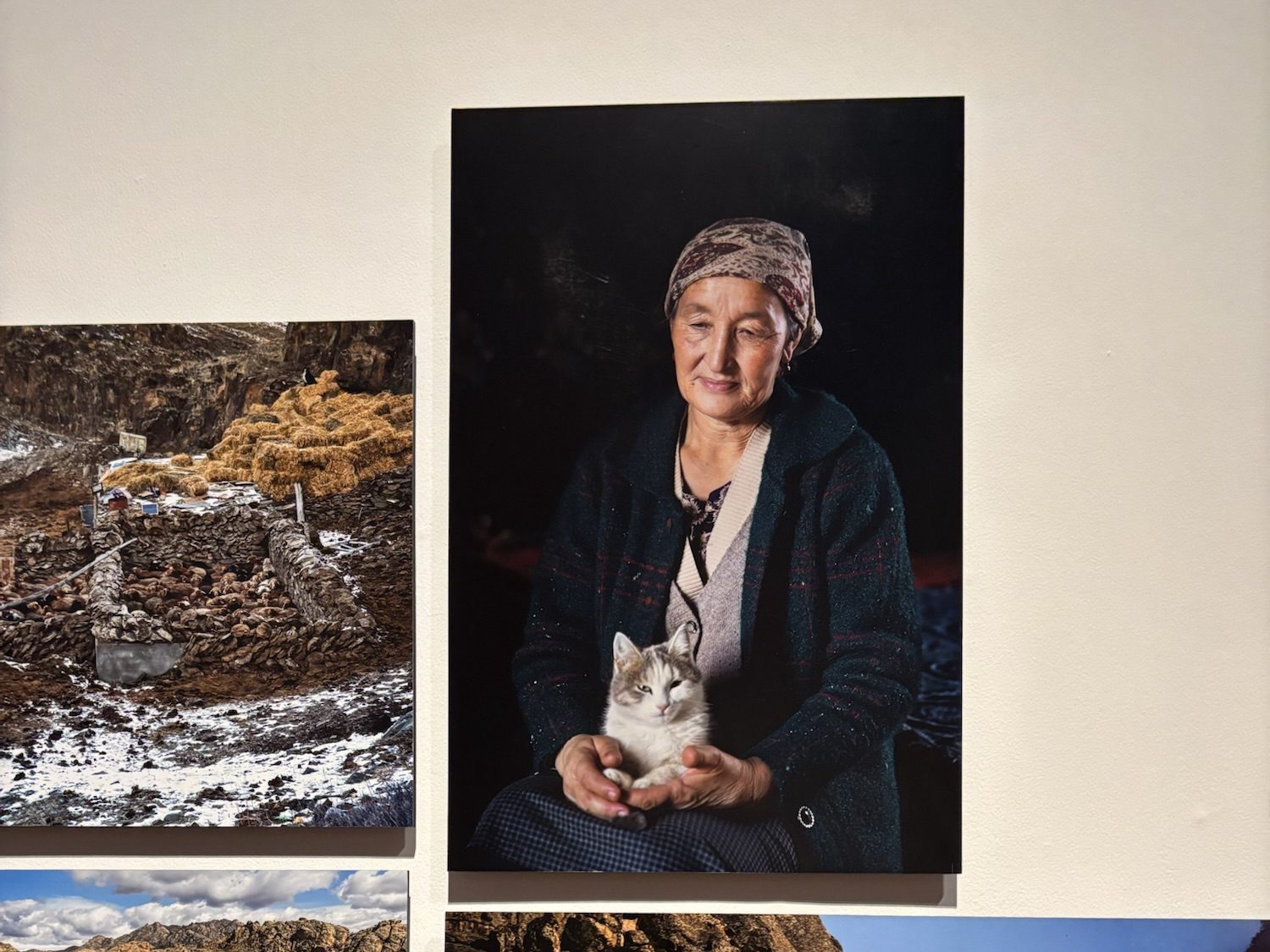
This woman below lives in rocky, mountainous country. She stays behind for months at a time while her husband takes their 20 cows and 400 sheep, livestock passed down through generations, away to graze.
‘You absolute plonker,’ I think to myself. ‘Your life is outrageously easy. Get on with it.’
Sheesh.
I translate the lift stops and head to the 12th floor for ‘Shanghai Through Artistic Eyes.’ It’s an eclectic collection of artworks depicting Shanghai in a range of forms.
I am standing beside an artwork when a Chinese gentleman says something to me. I reply:
‘Wǒ shì Àodàlìyà rén. Wǒ shuō Yīngyǔ. Wǒ bú shuō Zhōngwén.’
He smiles and immediately hits me with a barrage of Mandarin. It is wonderful.
Later, I realise I have left out the ‘huì’. It matters not, in this otherwise stellar moment.
I continue on.
I’m beginning to recognise the things I’m drawn to. Expressions (what is it about the way they’re looking at me? attitude? pride? disdain?), unusual techniques, and…um…cats.
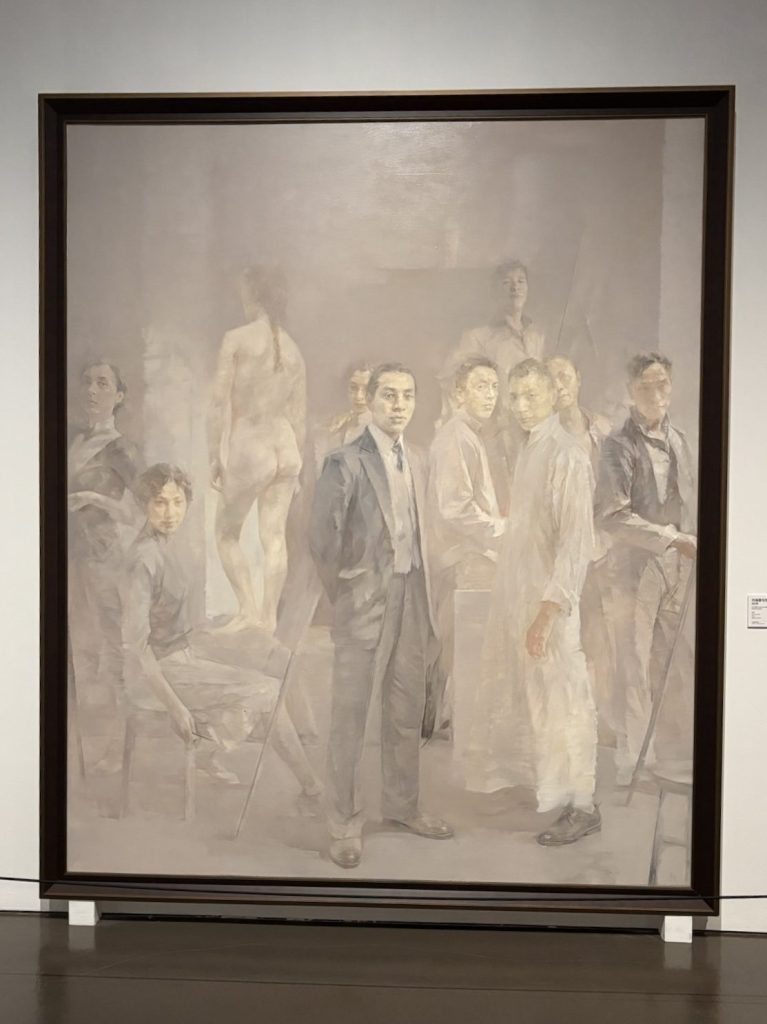
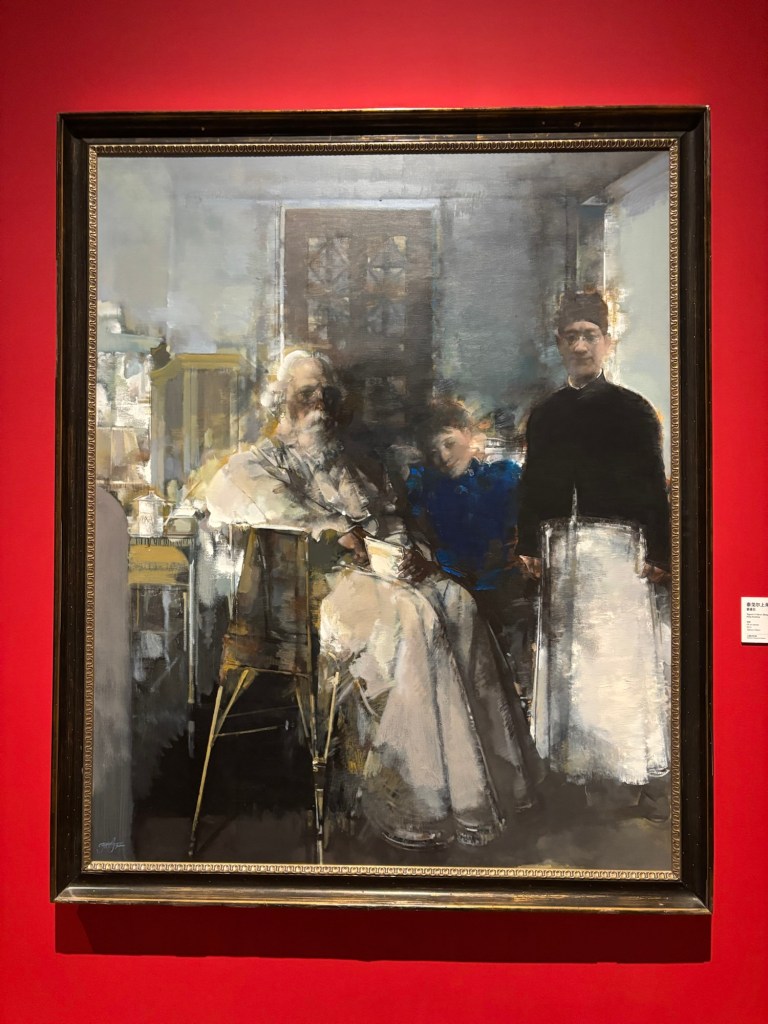
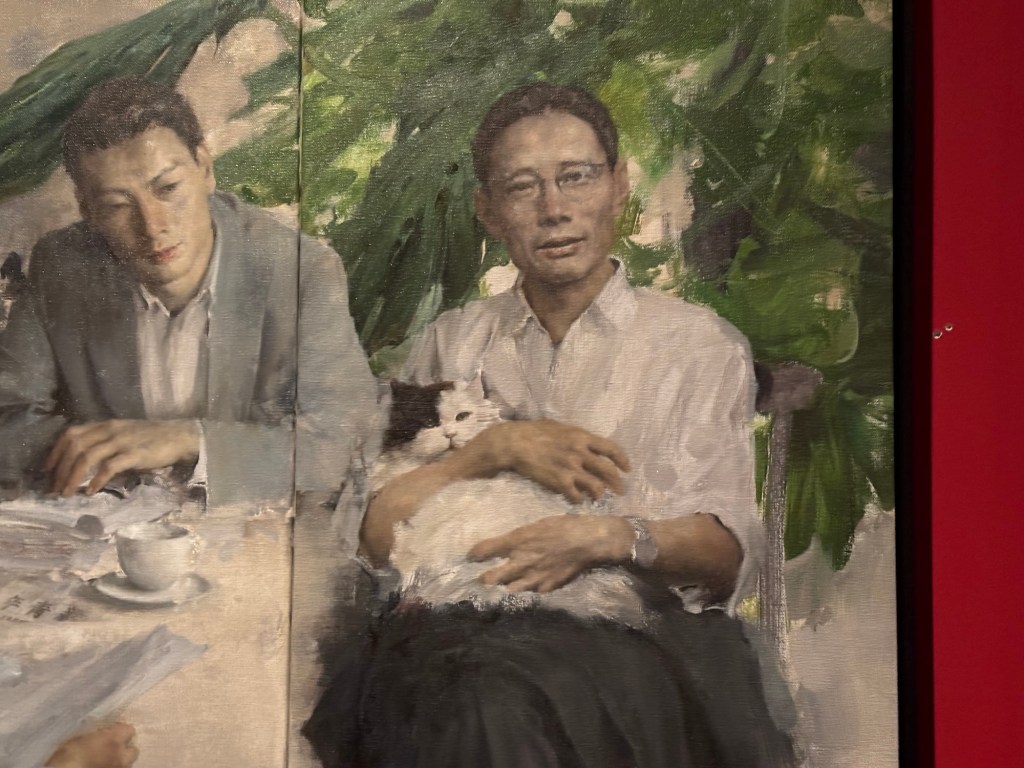
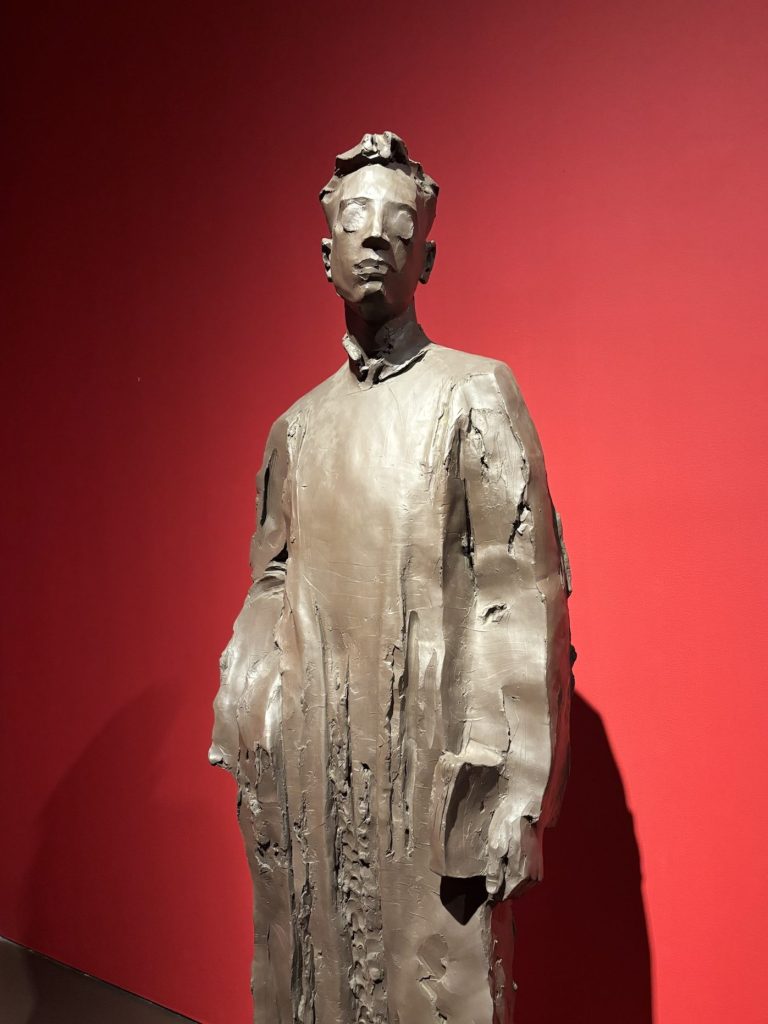
But I’m also beginning to see a pattern in my attraction to artworks that communicate much with little. I stand in front of this lump of clay for an age, marvelling that I somehow feel I know him, and I am reminded of my strong affection for the simplest of woodblocks.
How?
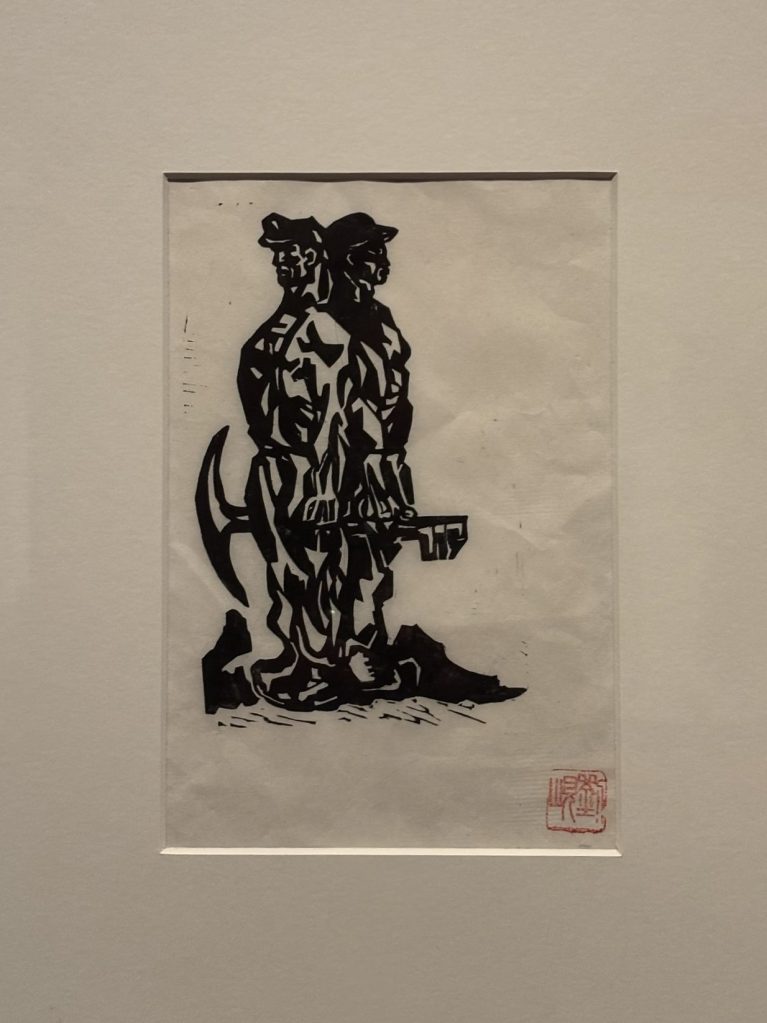
This gallery has been laid out extraordinarily well. It’s like IKEA, but in a good way. There is never any need to double back. Each area leads naturally into the next, creating a pathway through both art and space.
‘Shanghai Through Artistic Eyes’ leads down a ramp into ‘Childlike Dreams, Encountering Aesthetics,’ a collaboration between Chinese and Hungarian children (divine), and, finally, to ‘Lim Tze Peng: A Singapore Story in Ink.’
I love this one.
Peng helps me to understand two things.
One is that I am drawn to the poetry of the everyday. It explains why my heart lights up when I spot a market, or when I am gifted a handicraft. It explains why I take a photo of underpants beside an ancient canal.
It is the reason a non-conversation with a Chinese stranger rockets to the top of my travel highlights.
Here is his series of ordinary stores. See the washing?
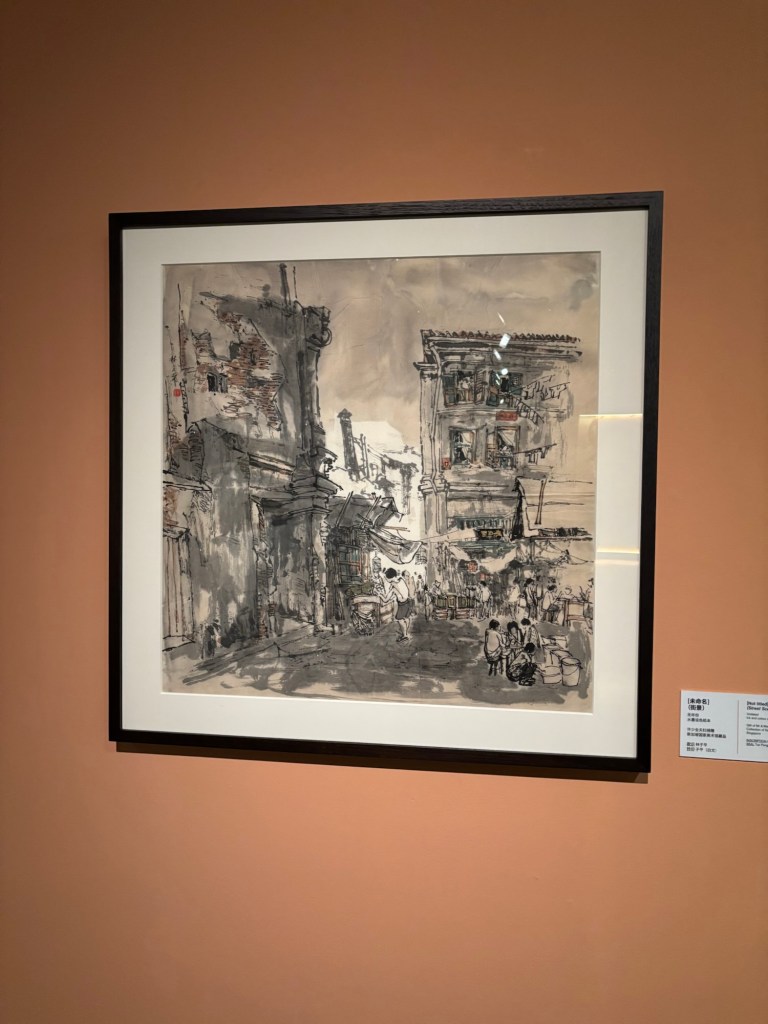
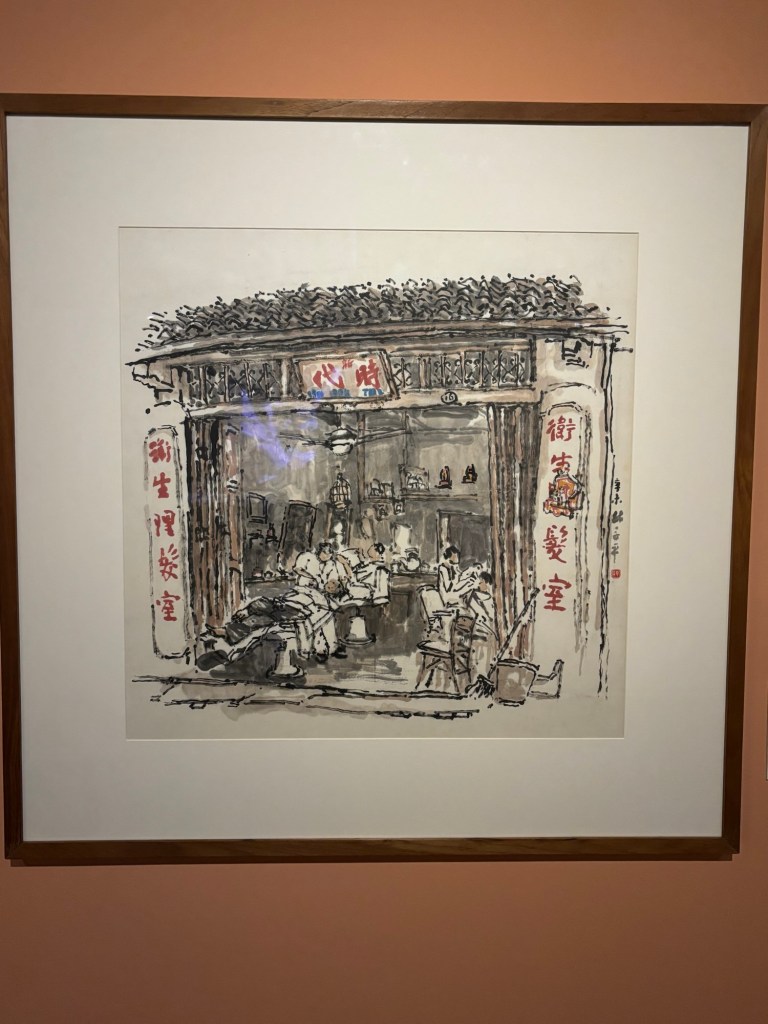
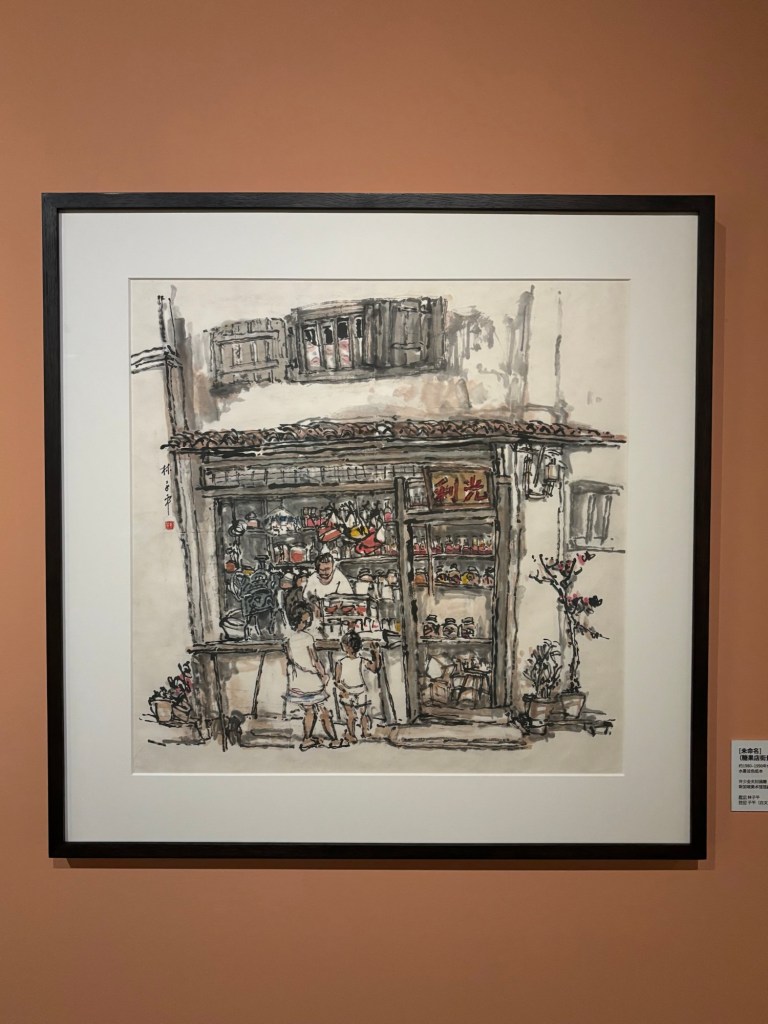
The second is harder to articulate, but it has to do with his description of how his art progressed.
‘Gradually, he moved from depicting what he saw to expressing what he felt, with landscapes giving way to ‘mindscapes’ and, ultimately, to what might be called ‘heartscapes,’ as his brush turned from the world before him to the world within.’
Look within. Trust what you feel.
Create heartscapes.
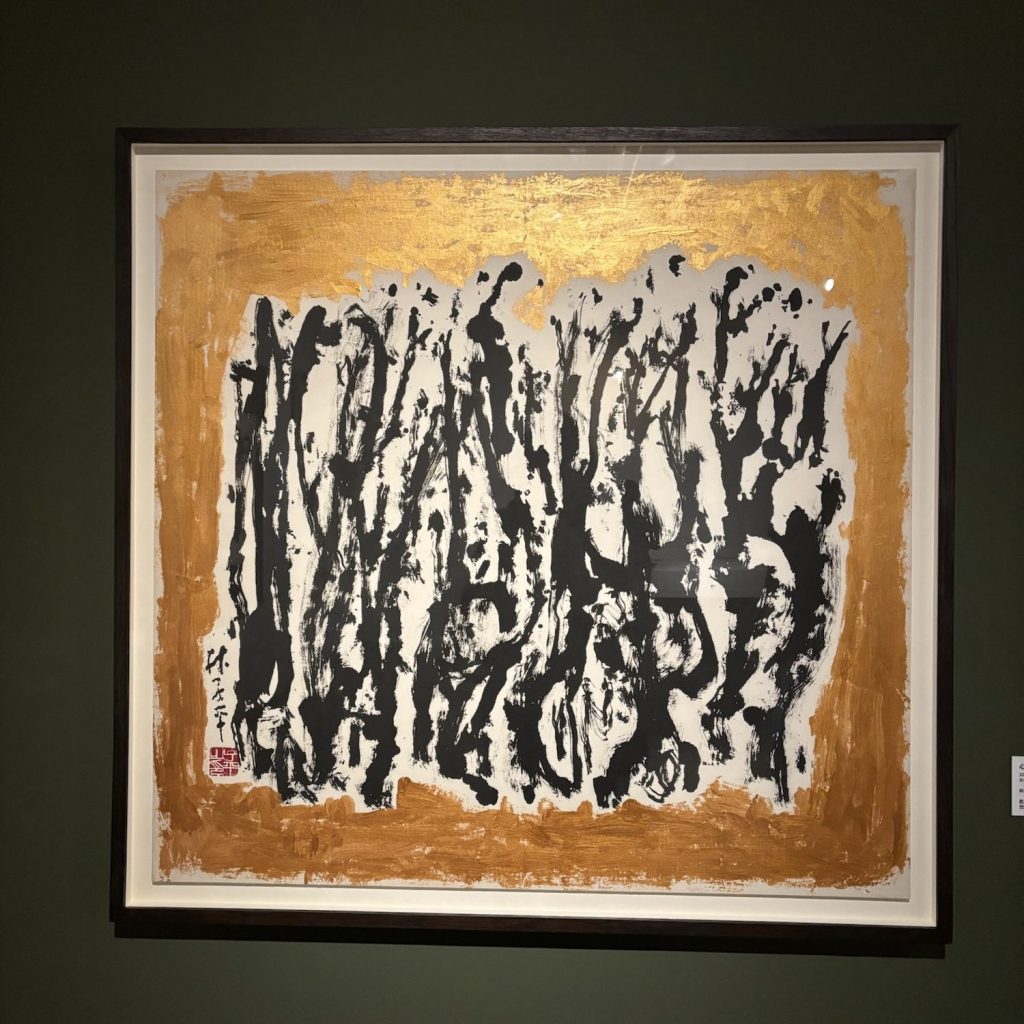
My cup runneth over.
I leave through the exit and smile at the security guard, to show him I harbour no ill will.
To get to the Fosun Foundation, I take Line 8 to Lujiabang Road (陆家浜路), change to Line 9 and get off at Xiaonanmen (小南门).
(never gets old)
The facade at Fosun changes for 10 minutes at two-hourly intervals, so I need to be there by 2pm. True to form, I take a photo of some washing on my way.
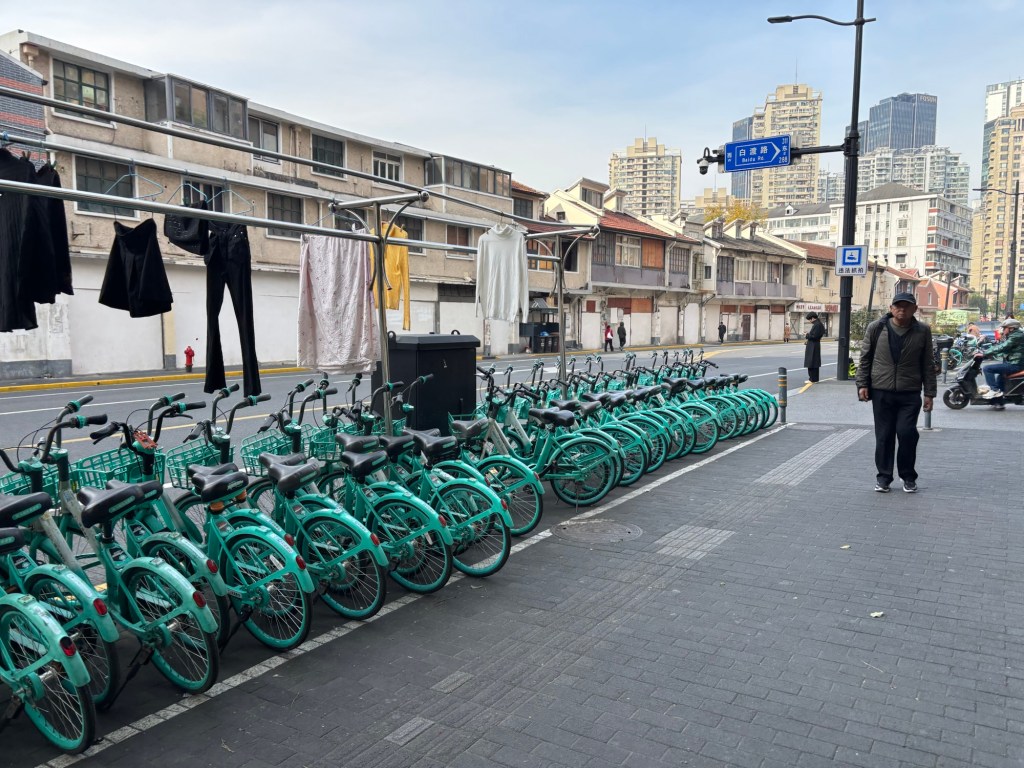
The best vantage point for Fosun is beside a red light, which means I feel the height of touristy embarrassment from a row of waiting cars as I wait for it to begin. Imagine, then, how I feel when the facade begins to change and I realise I am filming an absolute dud.
Don’t get me wrong. It’s clever! It changes! Hats off to all involved!
But Lordy me, it’s slow.
It’s time to check on the patient, via a bowl of noodles and a Tsingtao.
Later, I do a round trip for cucumber chips, dried hawthorn strips, and a panorama of the night lights at the Bund.
I was here, in Shanghai.
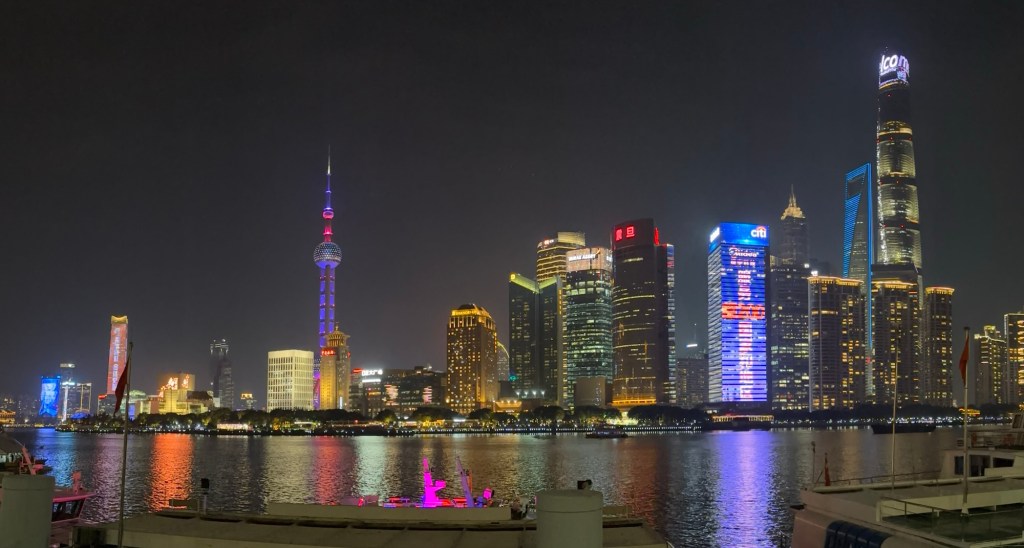


I loved seeing the lights on the Bund.
So did I…more than I anticipated!
I too have taken many a photo of washing in the street😁😁
Now, why doesn’t that surprise me?