The Humble Tour Guide’s Teahouse
by afatpurplefig
We meet our tour guide, Joe, at the front of the Holiday Inn at 9am. I found him on Instagram (https://www.instagram.com/shanghai.with.joe/), and was drawn to his tours because I’m partial to Joes and I liked his vibe. Highly technical stuff. Today, he is taking us to the French Concession, and to visit a private Chinese garden. I wasn’t really in a make-detailed-plans stage of my life in the lead-up to this trip, so was more than happy to let Joe take the reins.
We head straight to the subway, and march along a tunnel lined with illuminated signs featuring ‘Poetry on the Metro’ in multiple languages. I sure do like public transport. Granted, it has a low point here and there – peak-hour standing, man-spreading, youth posturing – but is otherwise a sterling microcosm of humanity.
Show me the subway and you will show me the city.
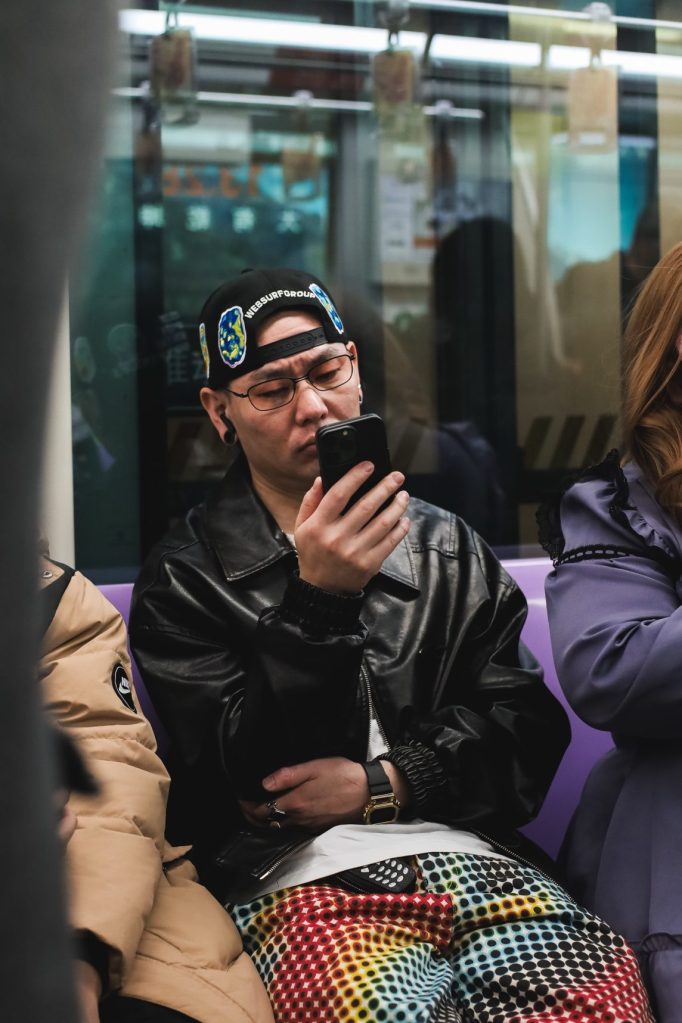
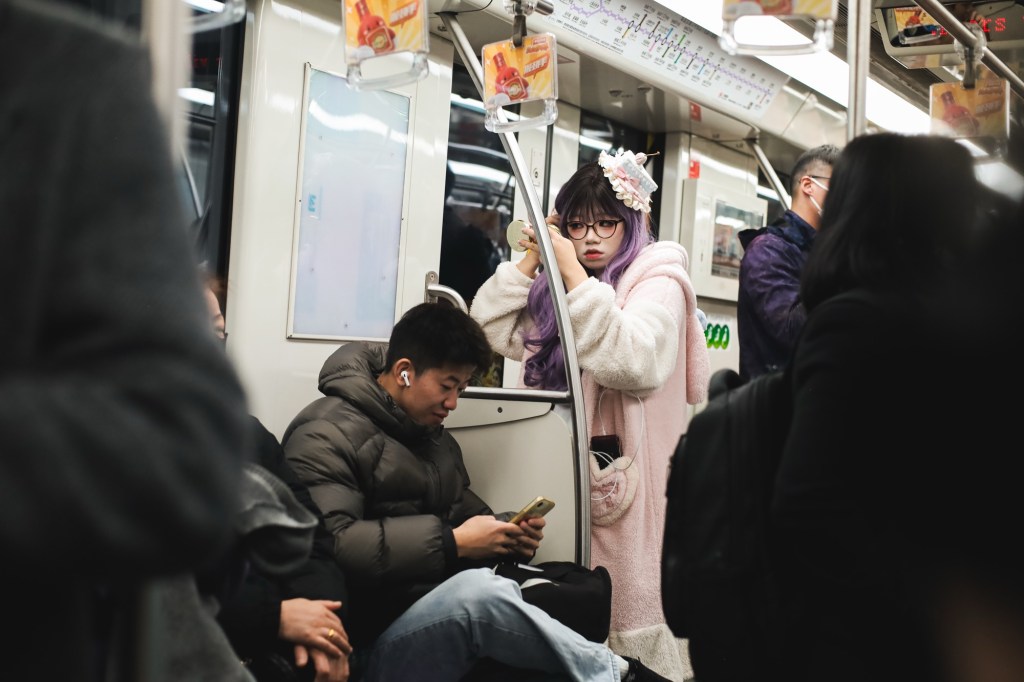
For a cosmopolitan city, we are stared at a fair bit. TR’s blacked-out arm is covered, so I’m not sure what makes us so fascinating. Perhaps it’s her nose piercing, or the height. In Jiamusi, Mum and I might as well have been in Lilliput.
Joe gives us an introduction to the French Concession.
‘The French and the English just stuck their flags in everywhere, didn’t they?’ I say, with a customary stab of coloniser guilt.
‘A concession is not a colony,’ he corrects, before giving us a subway history lesson as we clutch the overhead straps – the very best kind, I have decided.
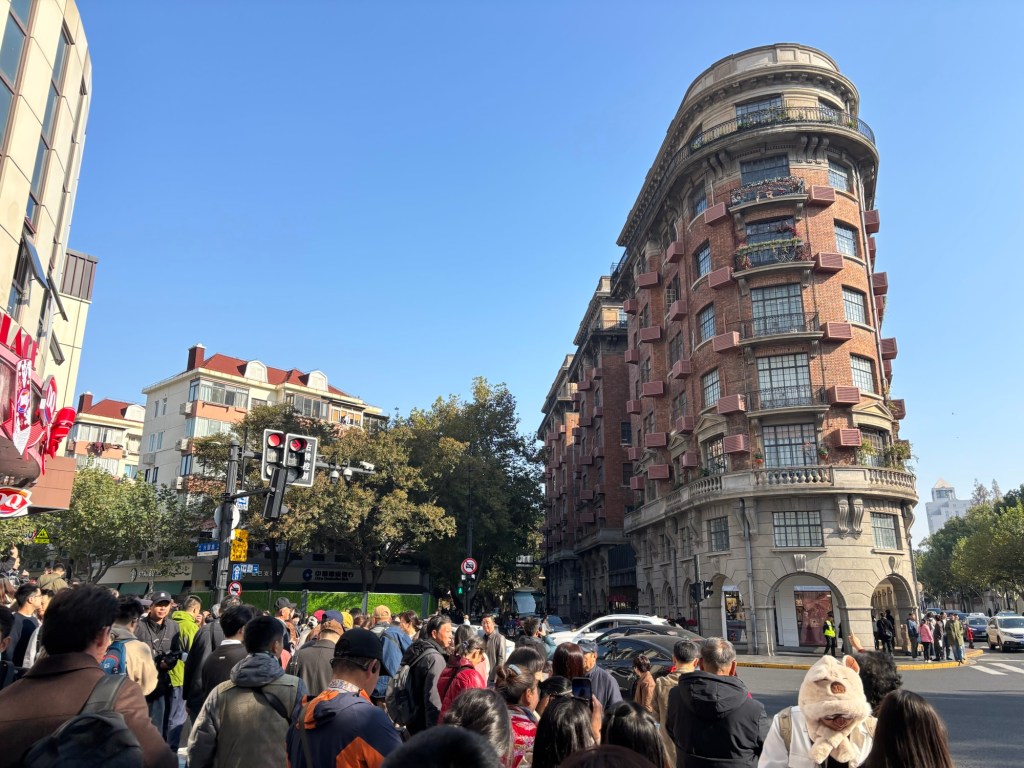
On Wukang Road, we find ourselves immersed in architecture. Joe points out examples – Art Deco, English, ‘Romeo’ – and we gather in clumps on the roadsides to photograph them.
‘This one looks Tudor,’ I tell him, pointing out wooden stripes and diamond detailing. Joe confirms the word, repeating it in a way that suggests he intends to remember it.
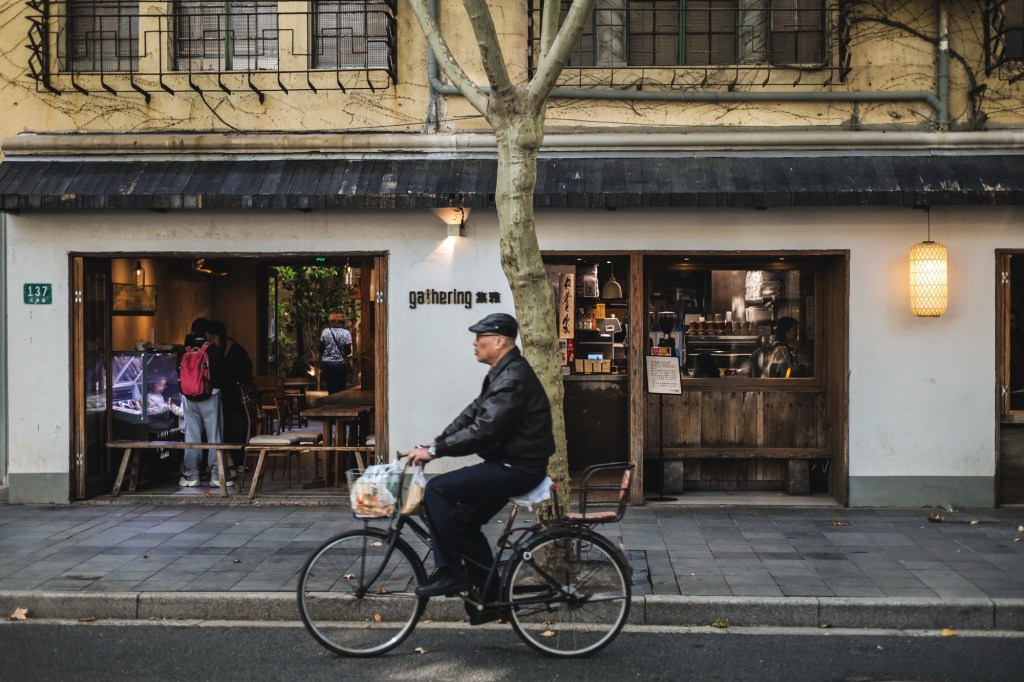
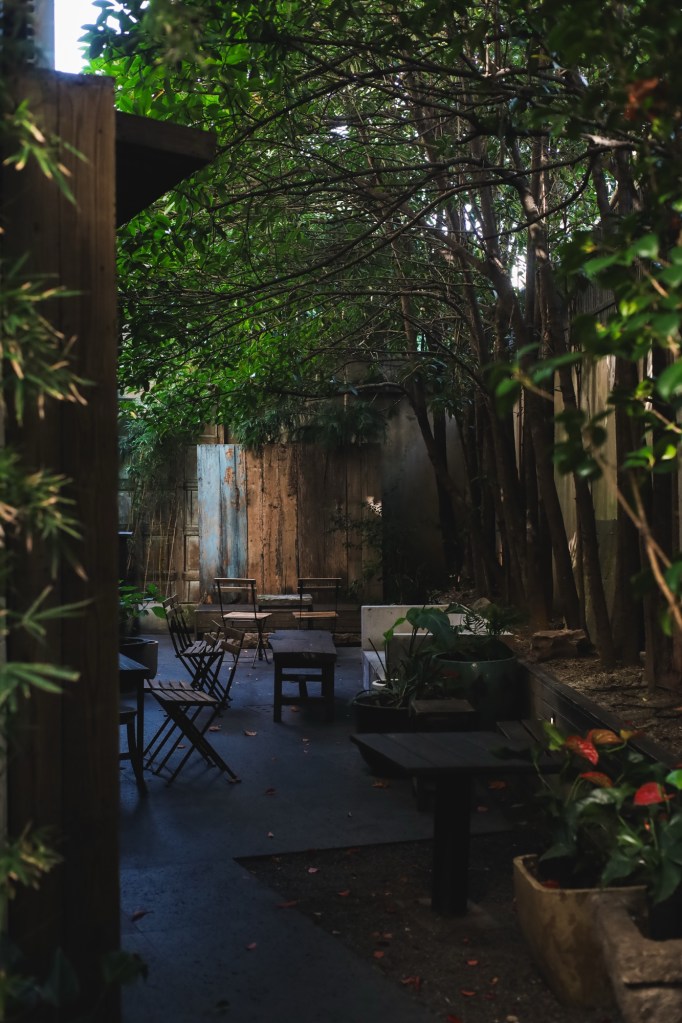
We are drawn, like water diviners, to Gathering Cafe, where we fork out gladly for $10 oat lattes and drink them in a garden of wood and stones and climbing vines. I photograph a girl having her hair curled in a nearby window as Joe admires VR’s boudoir Instagram photos.
‘Like Renaissance,’ he tells her, nodding.
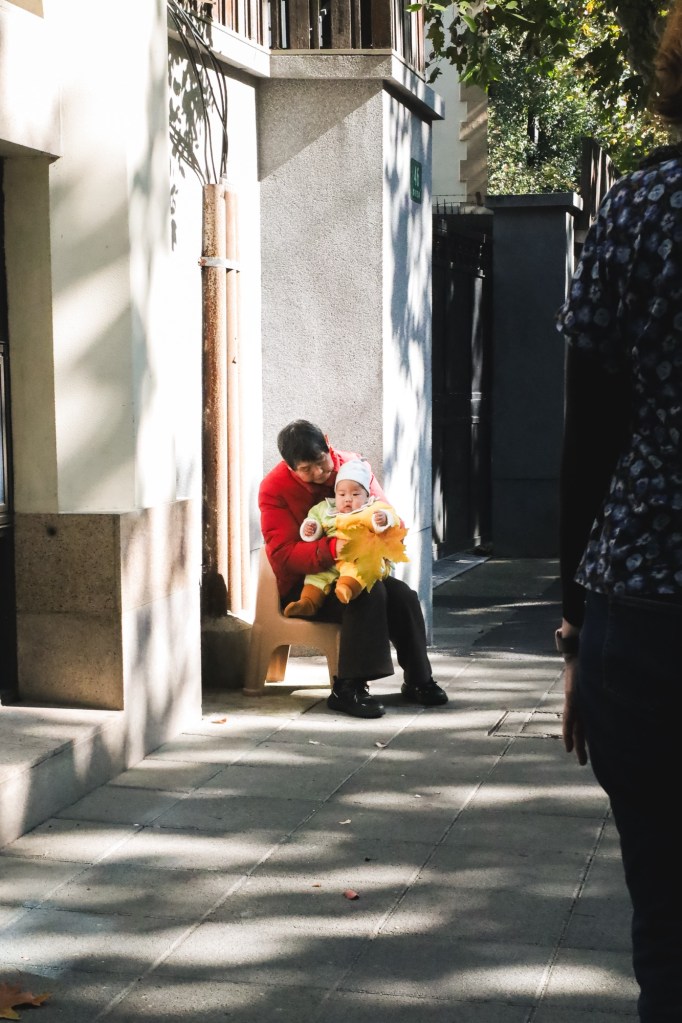
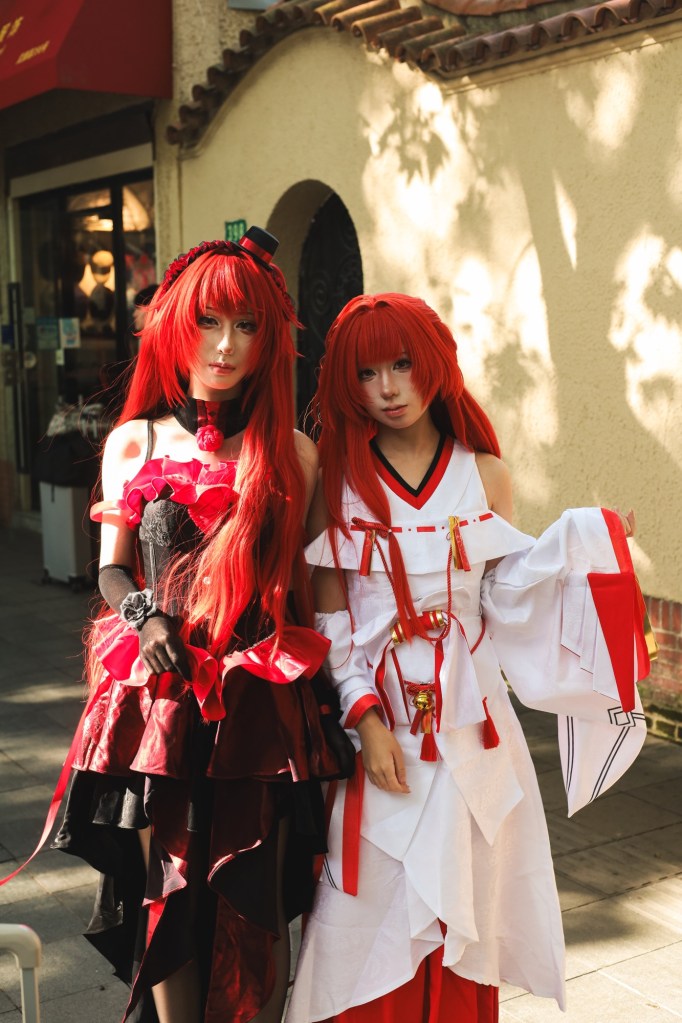
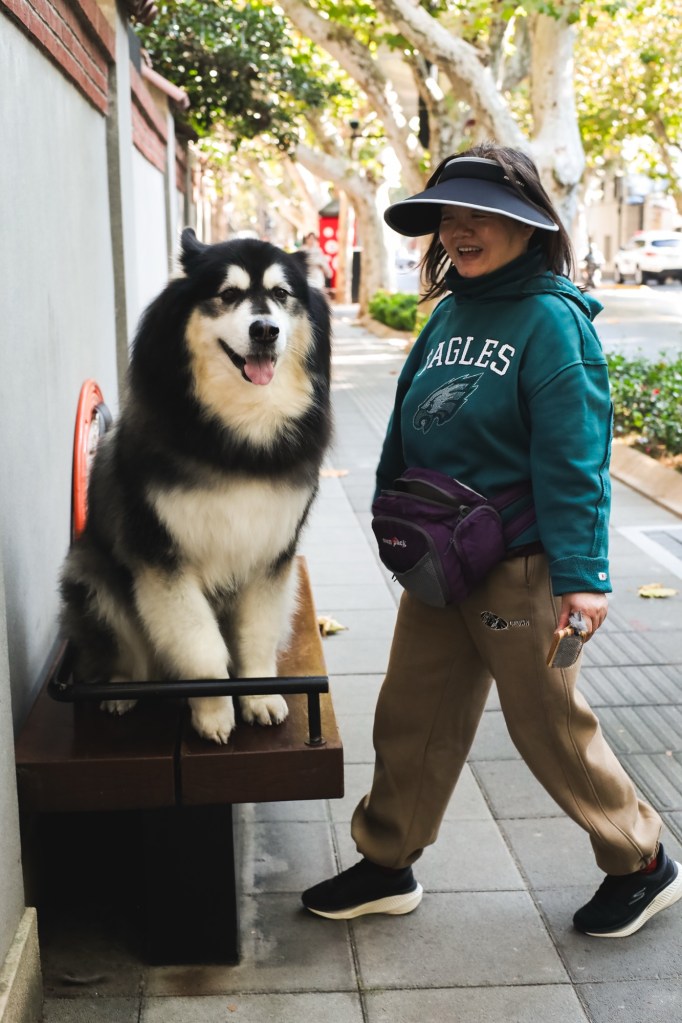
Walking again, we see puffy children, cosplayers, and an enormous dog smiling lovingly at his owner.
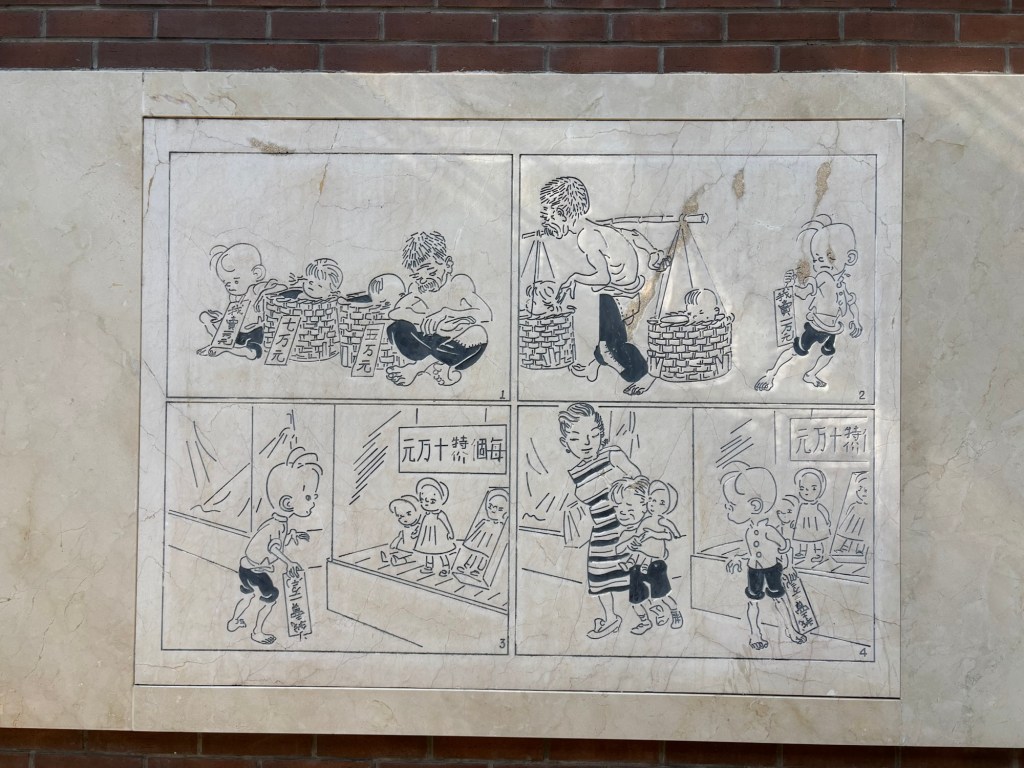
At the former home of artist Zhang Leping, Joe describes the way his cartoons move between seriousness and comedy. This one, depicting a boy trying to reconcile his own price tag with that of a doll, adds a small weight to my heart.
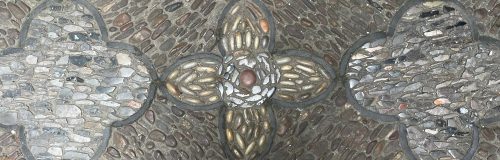
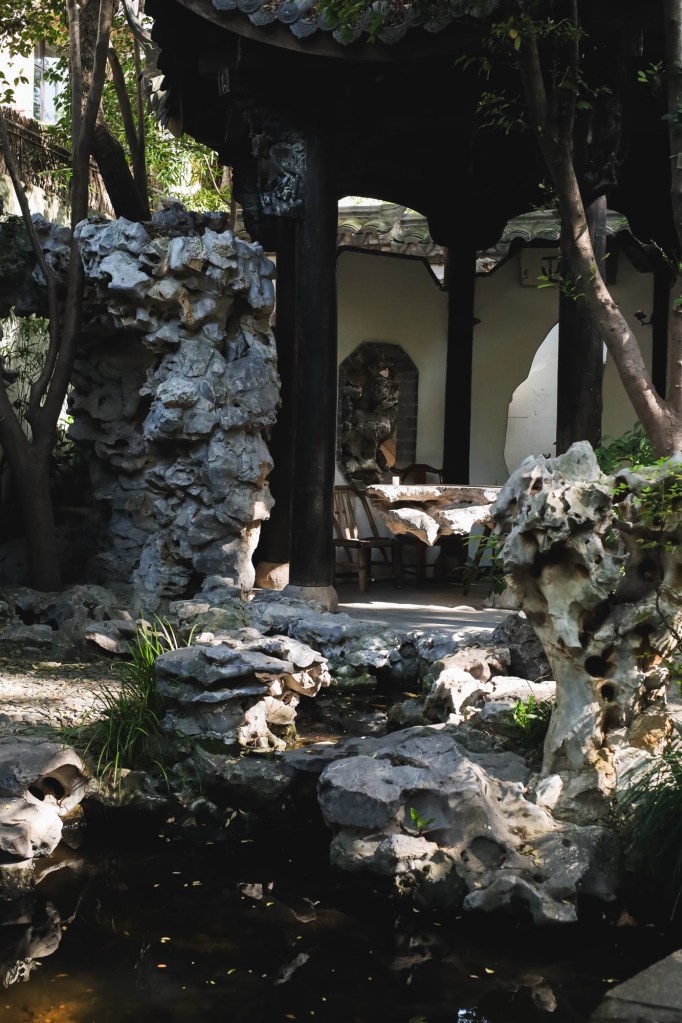
At the corner of Fuxing and Wulumuqi Roads, we walk past bamboo sentries into a garden, unaware that we have actually crossed the threshold into another world. We stroll on patterned stones, photographing hidden ornaments and chrysanthemums, and gazing through a wooden frame that transforms the fish in the pond into a living painting. A chicken claw maple takes centre stage, remarkable for being both strong and delicate.
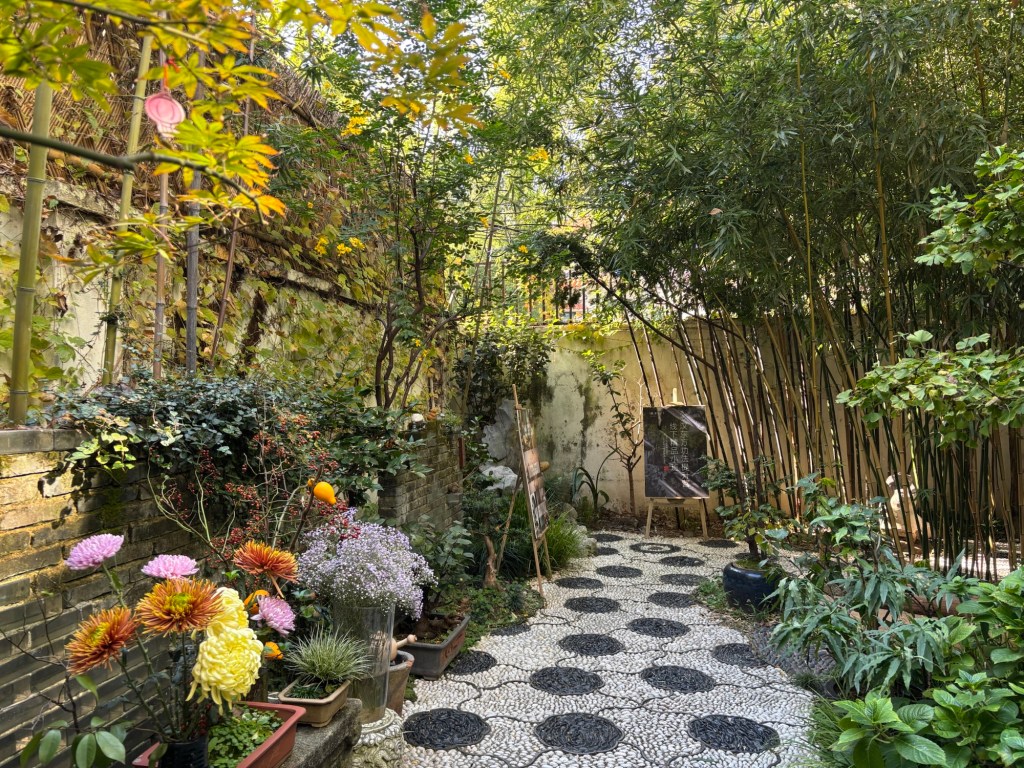
The garden’s pathways are lined with sculptural stones. Joe points out one whose particular curve looks like the head of a snake, or a frog.
‘Like looking at the clouds,’ I note, as a nearby waterfall trickles.
Set throughout are small spaces for sitting, either solo or in company. Colourful cushions sit beside stacks of books and diminutive tea tables.
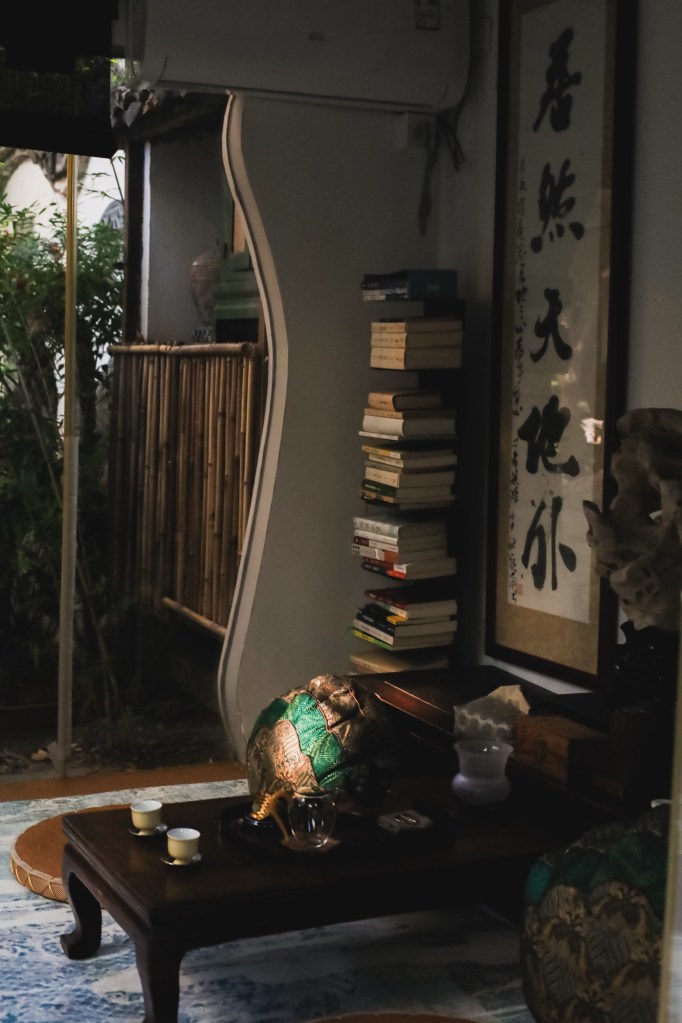
Inside, there is a series of fragrant, interconnecting rooms, set with containers of tea, loops of beads, and miniature wooden racks from which calligraphy brushes hang. Joe runs his fingers across an instrument, creating a sound with the strings that is unmistakably Chinese.
‘Where shall we sit? Inside or outside?’ he asks.
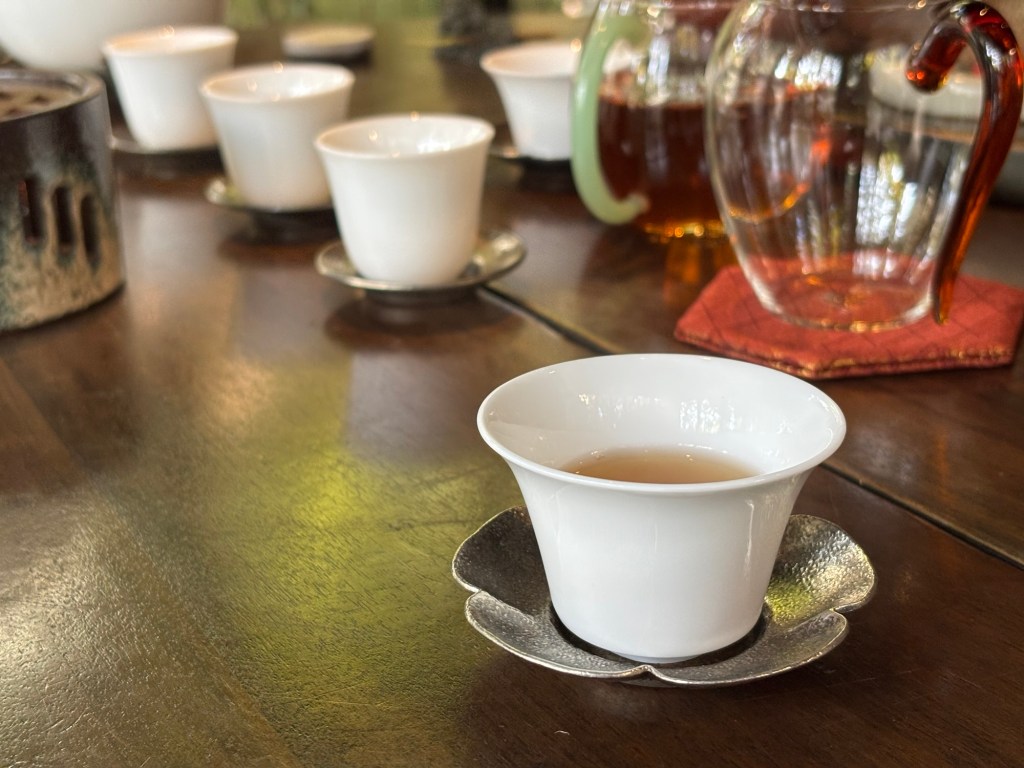
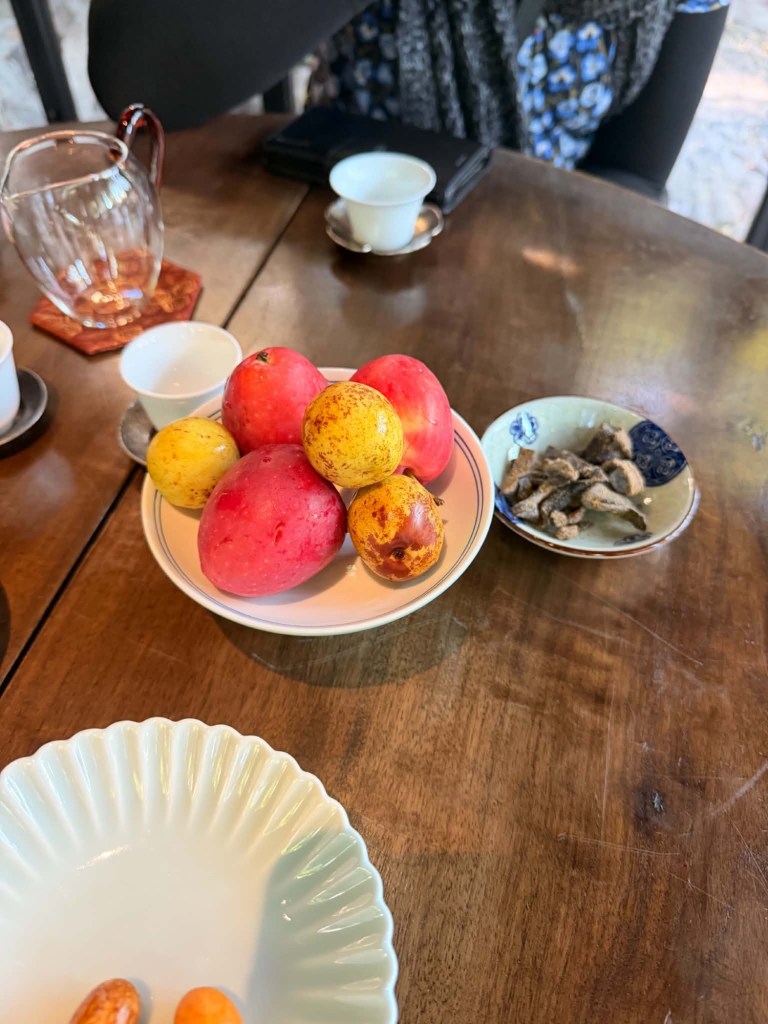
Ensconced in the pavilion, he pours our tea into tiny cups set in flower-shaped saucers, and offers us fresh jujubes, apples, and mandarins, dried fruit batons, and speckled nuts whose coating shatters between our teeth.
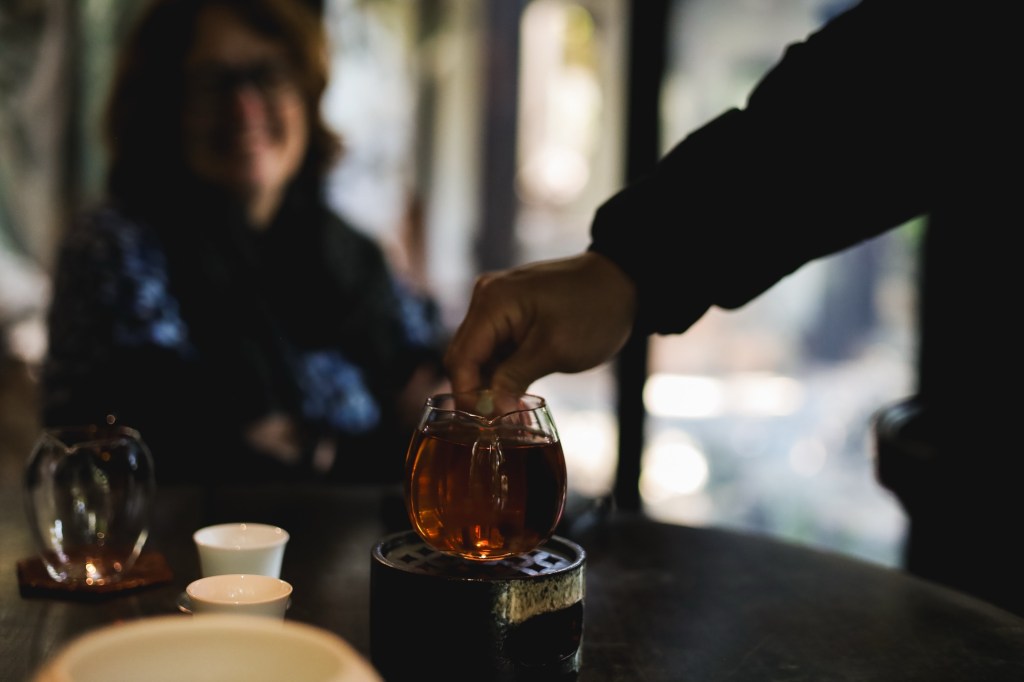
Joe tells us about the traditional four groups of Chinese society: scholars, farmers, workers, and businessmen. The scholars occupied the highest position, while the businessmen sat at the bottom, their pursuit of profit considered less valuable than the production of knowledge or goods. The garden, he tells us, was a place where scholars could retreat from the pressures of the outside world.
He tells us about the Humble Administrator’s Garden in Suzhou, our next stop, and the significance of its name.
‘There is a Chinese philosophy that says you should hide your money and your wisdom,’ he tells us. ‘You should act a little bit stupid. This is the way.’
We eat jujube confectionery whose flavour reminds me of milk powder, and mysterious dried fruit curls, that turn out to be orange rind.
‘It tastes like fragrance,’ VR notes, eating a curl in wonder, before leaping up to photograph a cat climbing across a nearby rooftop. As I follow it, I notice that each tile has an intricate pattern carved into its end.
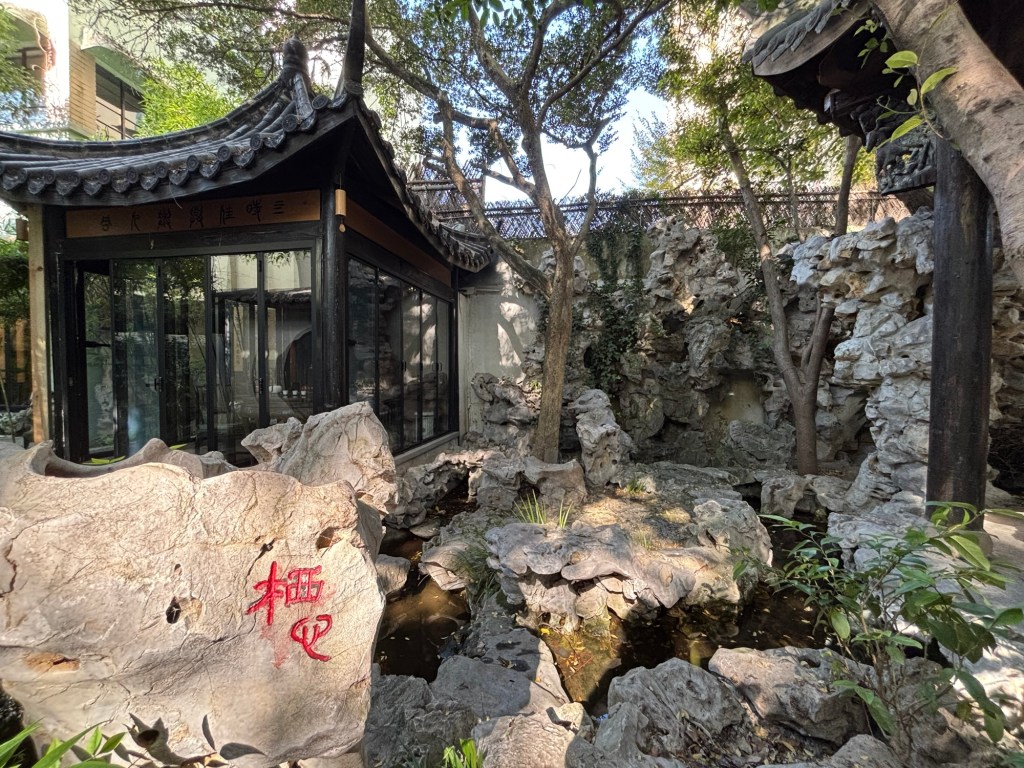
I ask Joe what he did before he became a tour guide.
‘I owned a tea house,’ he replies, handing me his phone.
It is a time-lapse video of the garden being built, from the ground up. There he is, Joe of the good vibes, laying each stone of the paths by hand.
Later, on the footpath, a car thunders down the road beside us. I introduce Joe to the Australian term ‘revhead.’
‘He does not understand Chinese philosophy,’ he replies.
We all laugh as we enter the subway.


You definitely made friends if the boudoir photos came out.