Xiǎo Qiáng Māo
by afatpurplefig

I am in two minds when I awaken. Yesterday’s next-level touristing (13hrs, 12.4km) has punished my feet and lower back, and my social battery is as flat as a tack. On the other hand, today’s hot ticket is the Great Wall of China…so there’s that.
Our driver beeps and crawls through the stagnant Beijing traffic. We had planned to leave much earlier, but coordinating the group is like herding cats. Shan Lǎoshī, Grace Lǎoshī, and Fangfang should receive patience awards, amongst the many others they deserve.
From an urban sprawl of concrete and industry, the landscape gradually transforms, its wide expressways giving way to narrow roads through farmland and rolling hills. Cabbage patches line the roads, as do stalls selling shuǐguǒ hé shūcài (fruits and vegetables), and gourds, strung up in bunches.
水果 (shuǐguǒ) = fruits (water fruit)
蔬菜 (shūcài) = vegetables (leafy plants food)
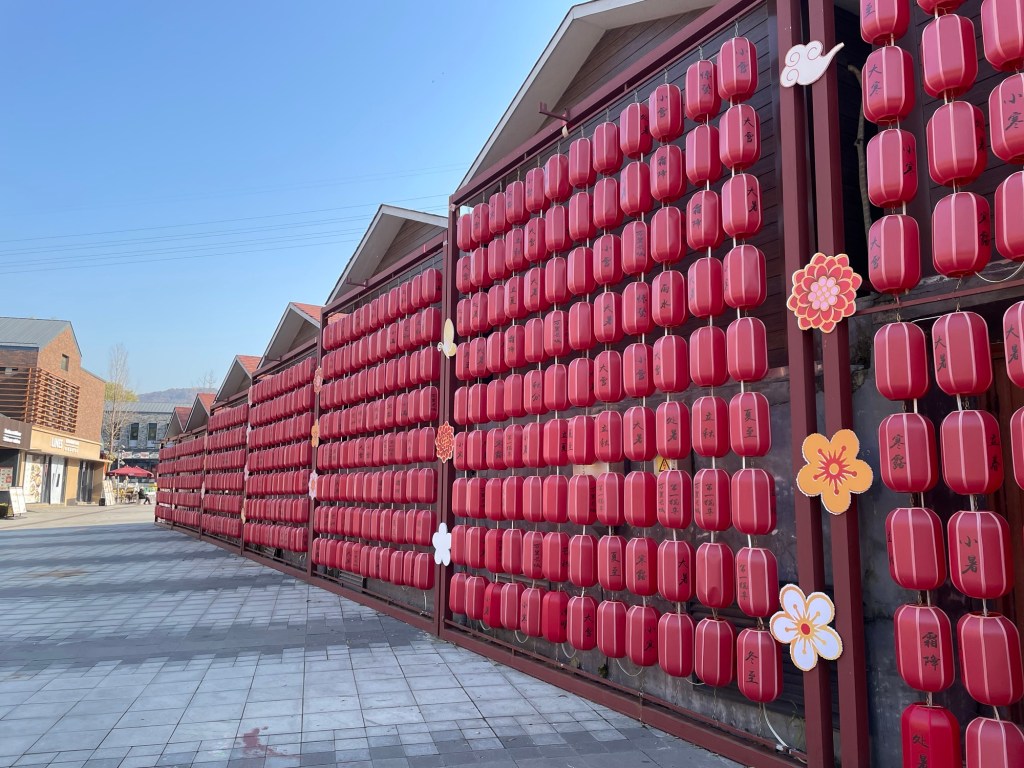
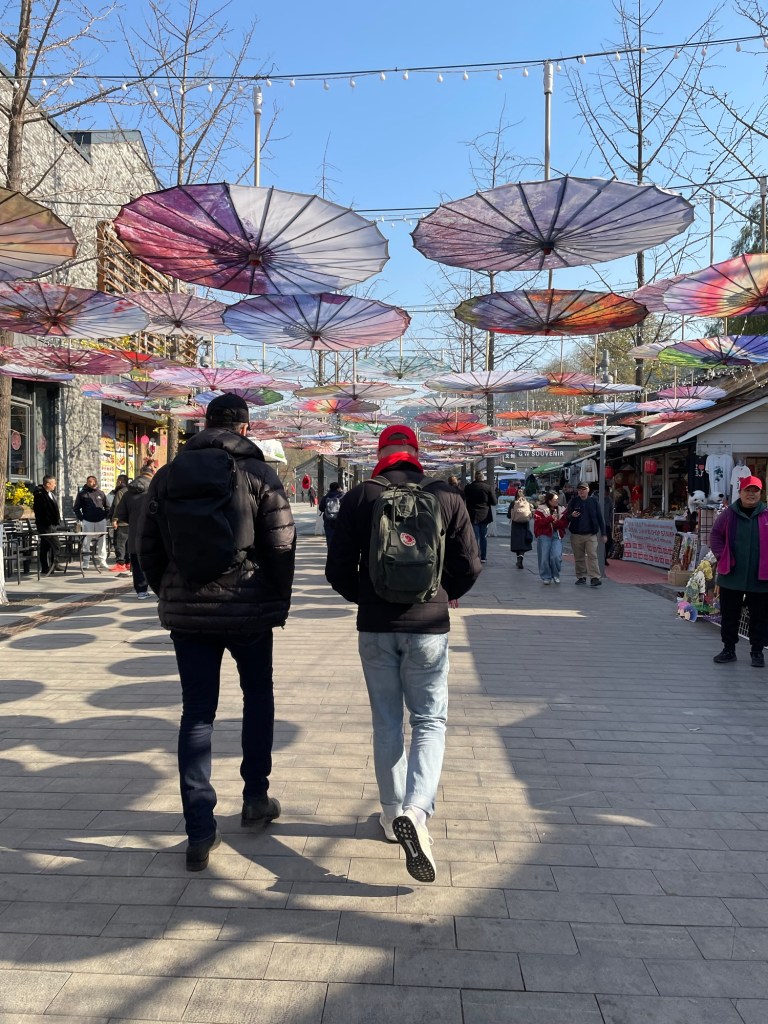
The bus soon pulls up, and we spill out in a red-dappled stream. As with any tourist attraction, its surrounds are designed to capitalise on the hearty stream of visitors. We pass a wall of red prayer wheels and walk beneath a ceiling of coloured umbrellas, flanked by food and souvenir vendors, vying for our attention.
I chat to Shan Lǎoshī as we wait in the queue for the (please-be-freestanding) toilet. We talk about terracotta warriors, ancient Chinese mathematics, poetry and the cyclical nature of natural disasters.
‘I think Chinese people are very wise,’ Shan Lǎoshī states.
I nod in agreement, as it is clear I am conversing with wisdom.
老师 (lǎoshī) = teacher (respected master)
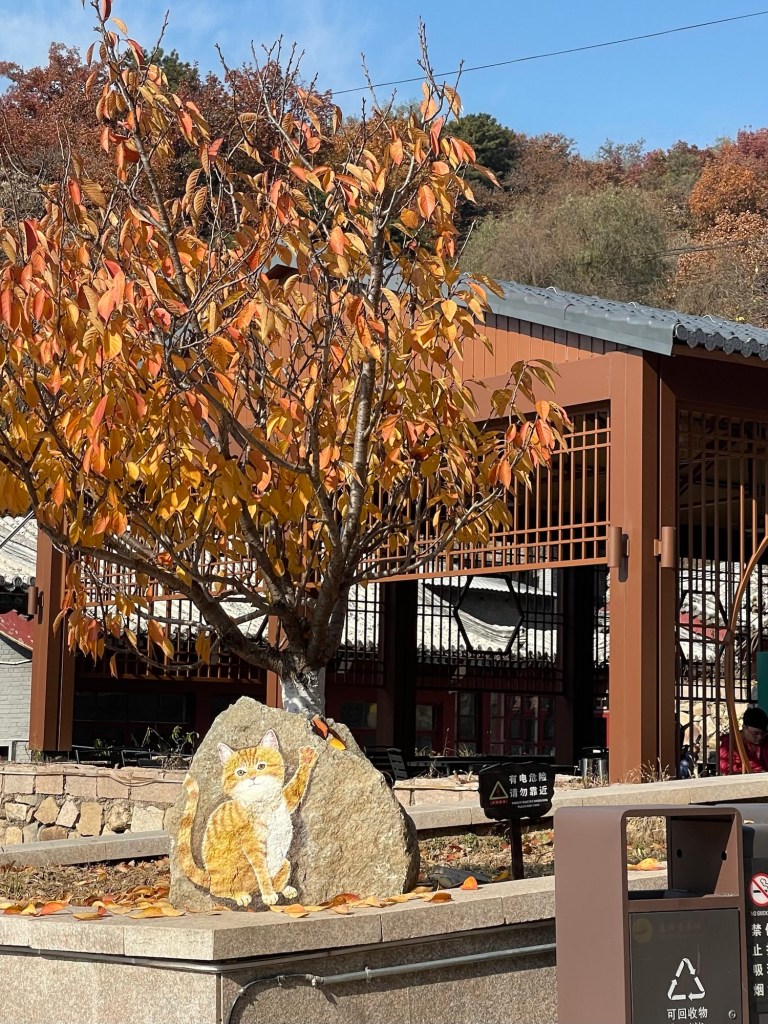
As we climb ever upwards, we pass this picture of a ginger māo, the very best of omens. I love that the first tone used in māo, flat and high, makes it sound like a cat.
猫 (māo) = cat
We catch a cable car up the mountain. It is a lovely time of year, with a warm sun and cool air. The leaves of the birch and maple trees add a splash of colour to the mountains, which are otherwise green, but far from lush. The foliage here feels hardy.
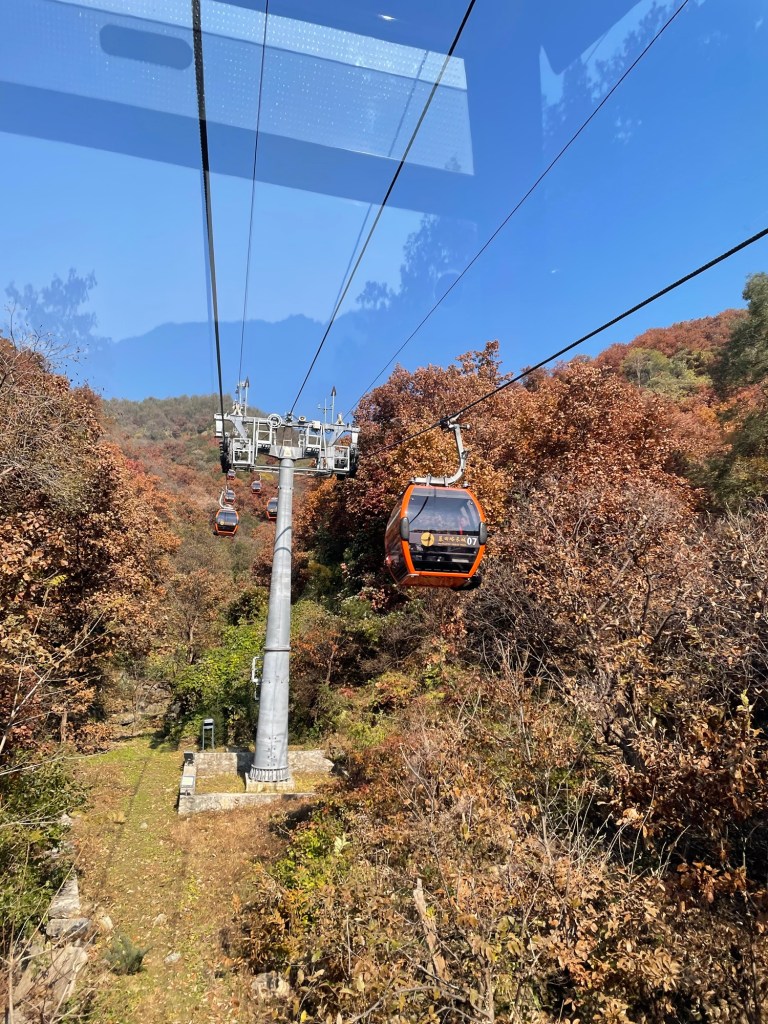
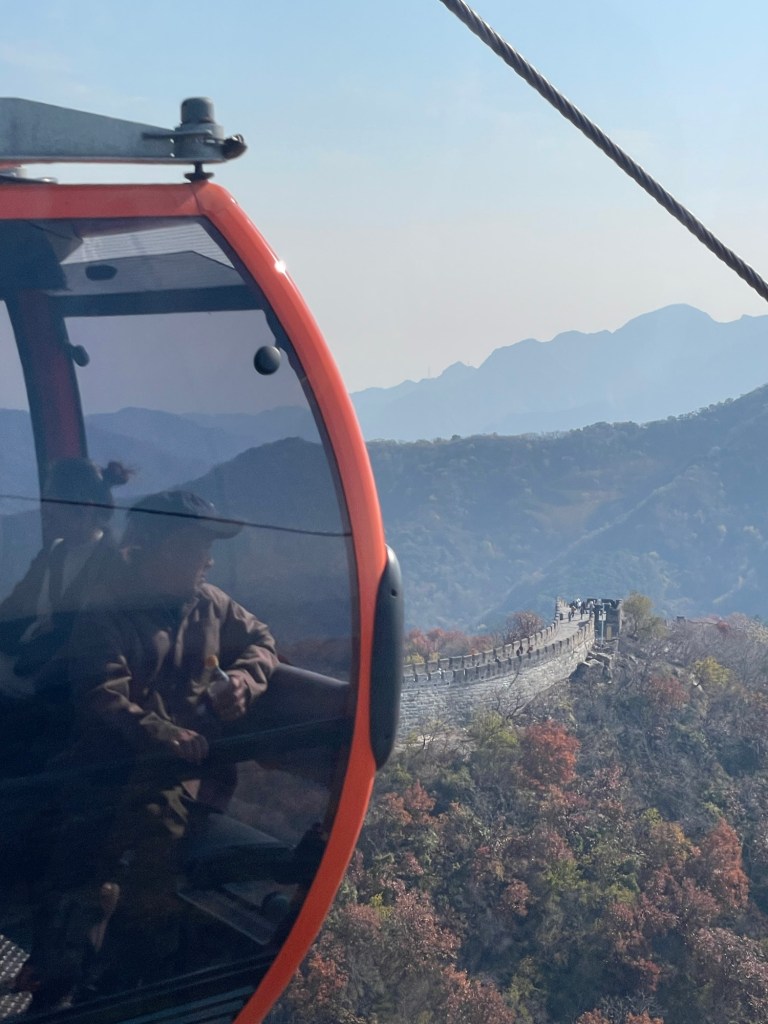
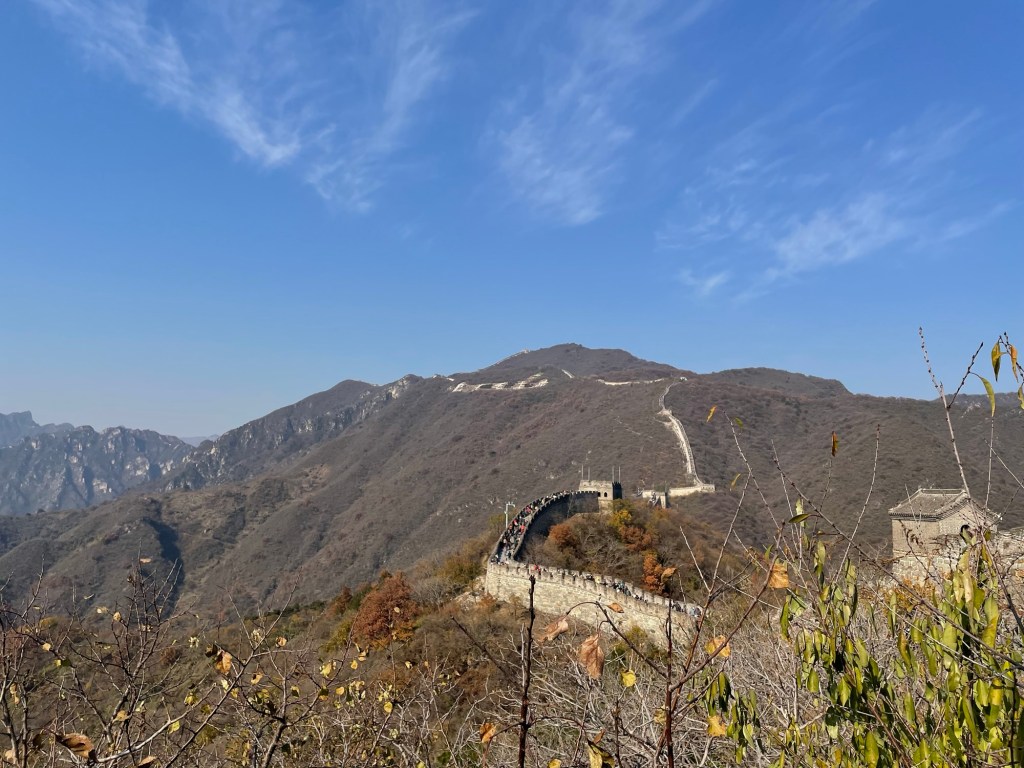
There have been glimpses of the wall, as we craned from our seats on the bus, and twisted for photos in the cable car. But when I see it clearly, I think of lines of Oodgeroo Noonuccal’s ‘China…Woman’, as was planned:
High peaked mountains
Stand out against the skyline.
The great Wall
Twines itself
Around and over them,
Like my Rainbow Serpent,
Groaning her way
Through ancient rocks.
I can well imagine what she imagined.
As we are coordinating our plans and timings, something catches my eye through the queue of people waiting to take photos beside a stone moment that reads:
‘If you haven’t climbed the Great Wall, you are not a real hero.’ (Máo Zhǔxí)
This little māo.
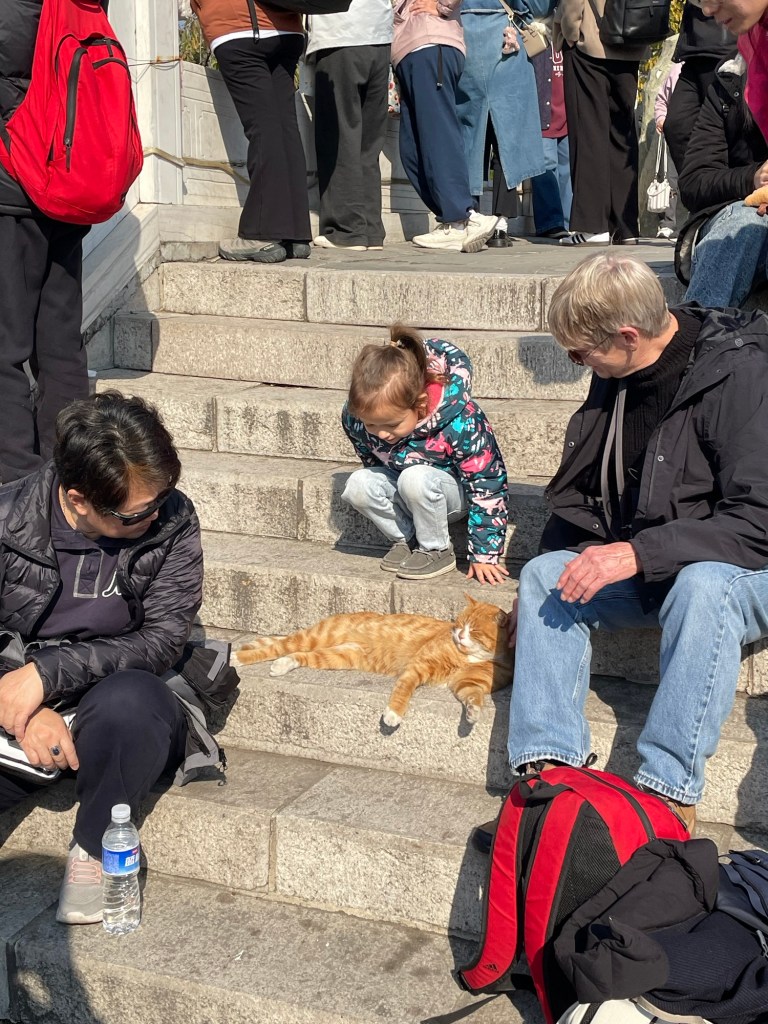
This section of the wall, Mùtiānyù, receives around two million visitors a year, and here she is, being stroked by an endless litany of strangers, as she slumbers beside an ancient monument.
Destined for heroism, we are duly hustled onto the wall. Tourists are not skilled at merging, and struggle to form a single line on, and a single line off. The stair attendant shouts at everyone, and I am completely on board with that.
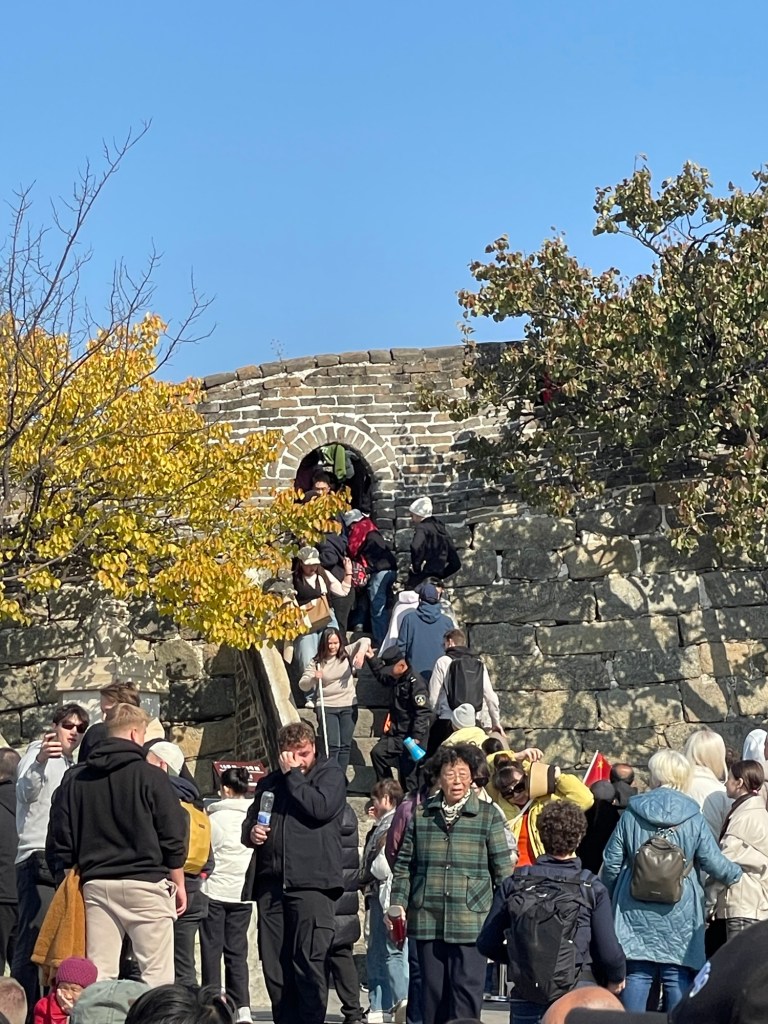
After we climb the oh-so-steep steps and assemble for a group photo, I am again in two minds. Part of me wants to climb a section, so I will feel intrepid, but the other has sore feet and a distinct lack of respect for the now-or-never of it all.
We traipse up to the flat section near the No. 14 Watchtower, and perch ourselves near its entrance, legs dangling off the stone benches that line either side of the walkway. It is a prime spot. The wall is visible through a vantage point cut from its edge, twining itself down the mountain, and the stone of the watchtower rises beside us. I think of the sticky-rice mortar that was used for its construction.
Languages swirl around us. Rising up most often is the 一 二 三 (yī, èr, sān) count to Chinese photos. Shan Lǎoshī takes a photo for a father and son from Uzbekistan, and we overhear a Spanish couple boasting of the haggling that saw them pay 150 yuán for two conical straw hats.
‘Sounds expensive to me,’ Shan Lǎoshī whispers, which makes me laugh.
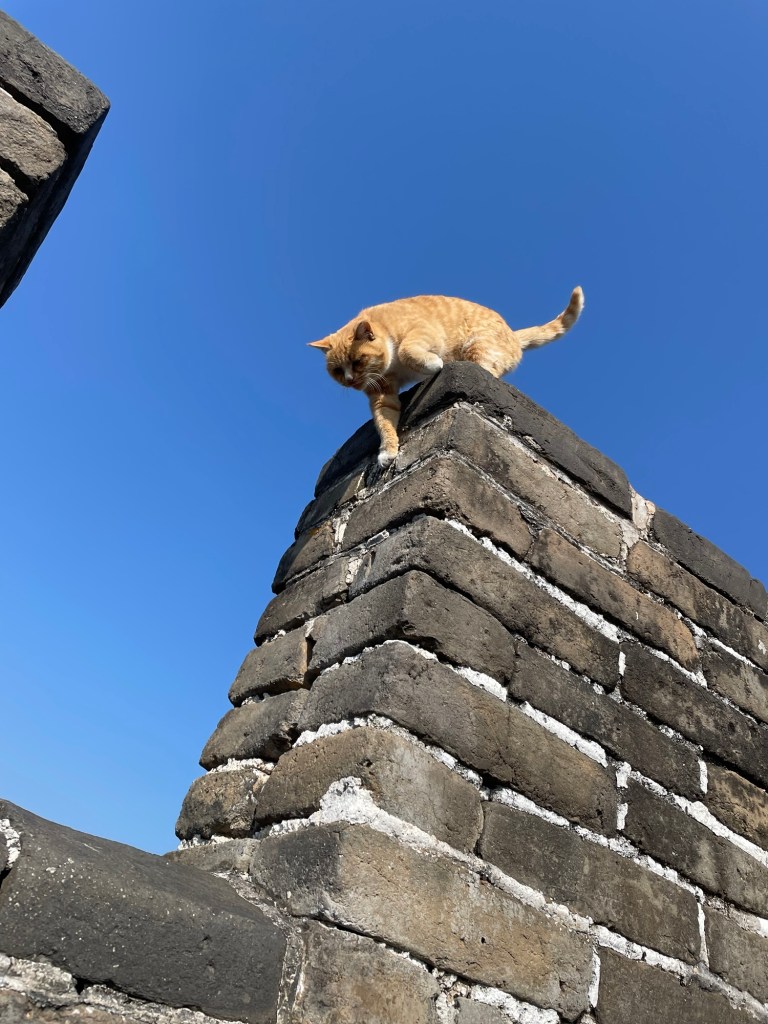
Then, she appears…my ginger māo. She is a stocky girl, with strong, short legs, and a round, flat face. Fangfang offers her some leftover breakfast yoghurt, which pleases her.
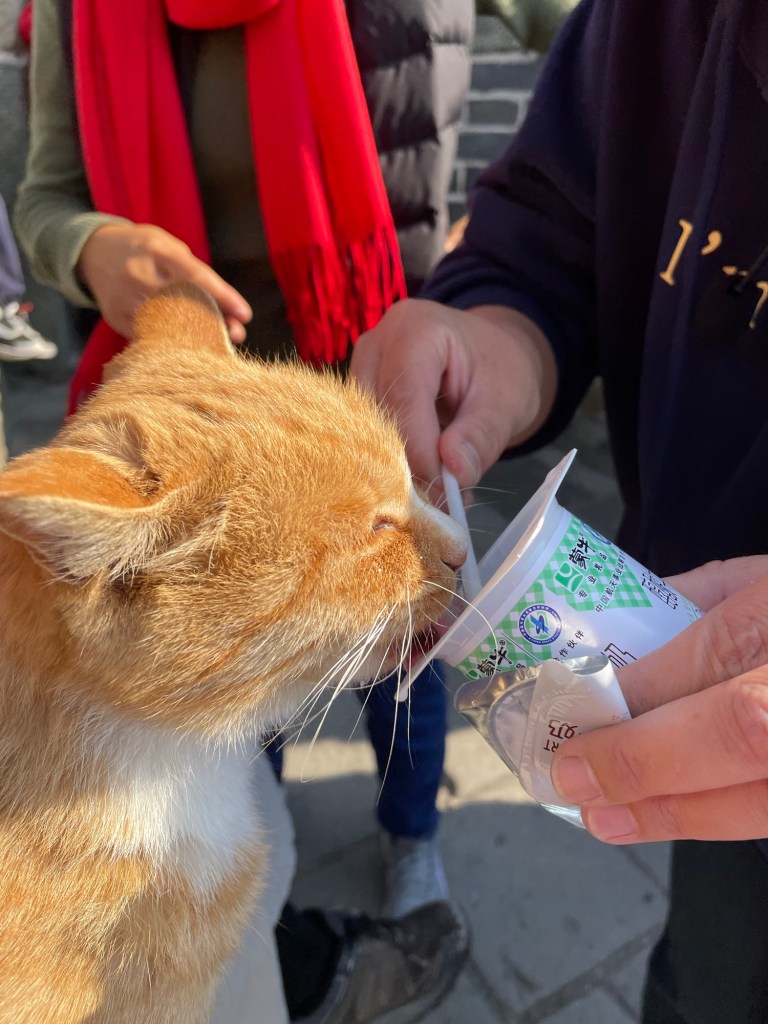
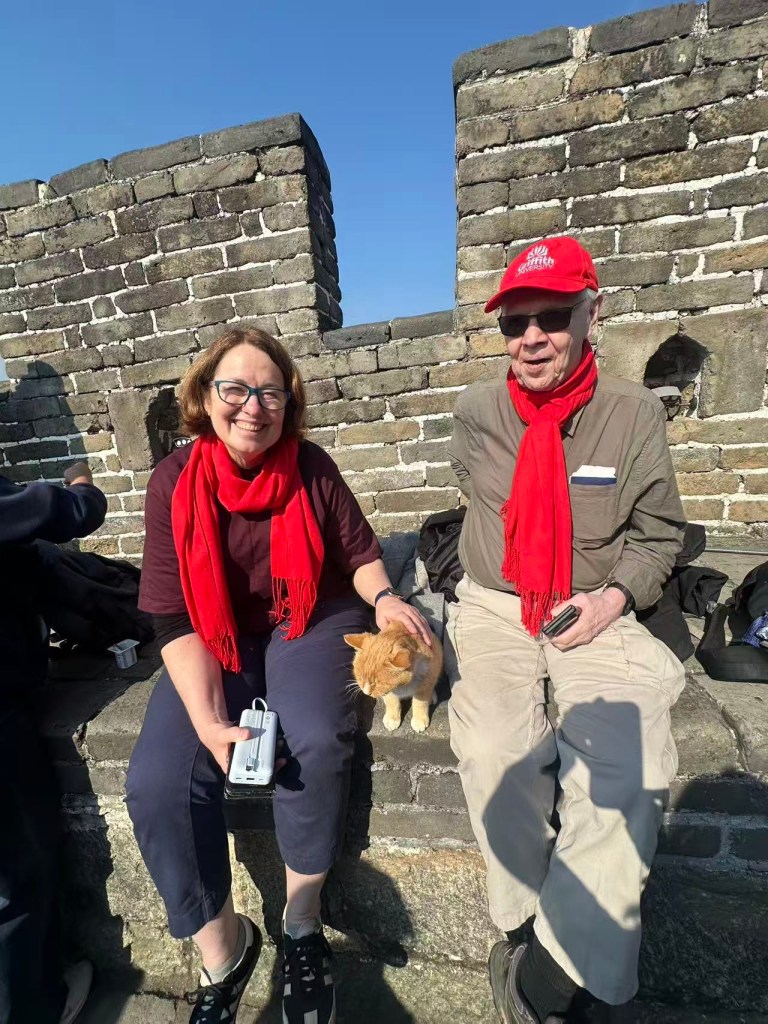
She hangs out with us for a while, fawning with Magnus while I pull the prickles from her fur. Shan Lǎoshī drapes her in a Griffith scarf to take photos (‘our new mascot!‘), as a flock of tourists take photos of her taking the photos. She isn’t one for pats and scratches, our girl, but doesn’t begrudge us them either. About all things, she is remarkably nonplussed.
When she is done, she leaps up onto the edge of the wall behind us, then jumps higher still and disappears into a small hole between the stones of the watchtower.
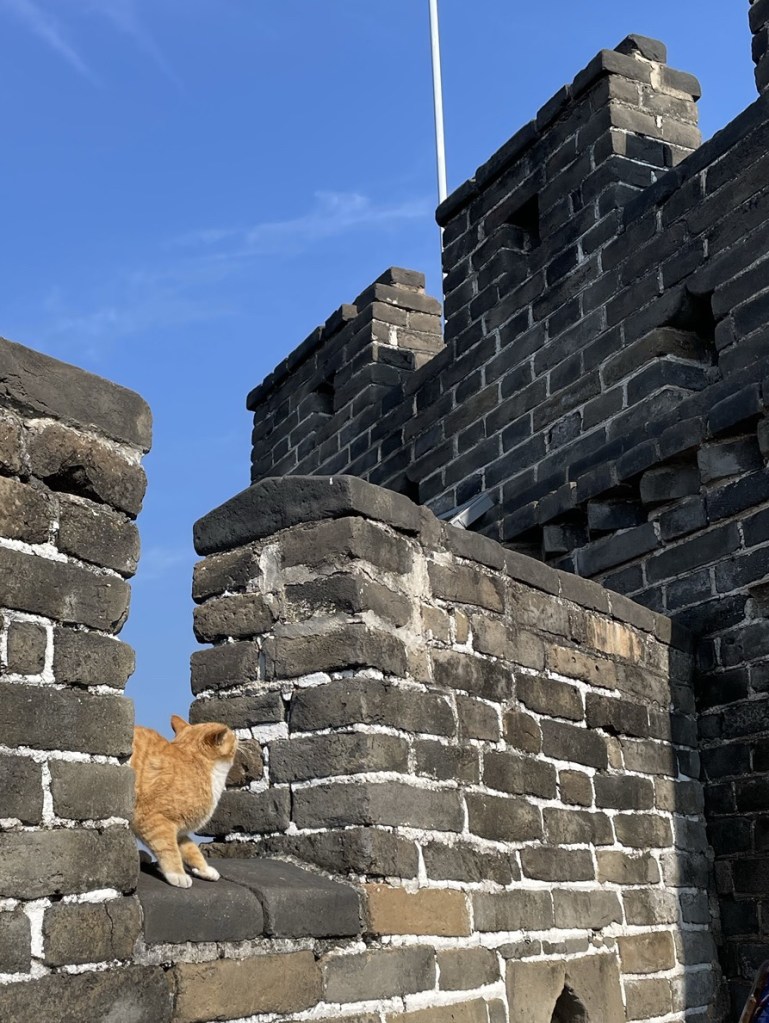
She comes to visit us once more, stretching and curling in the sun. We give her a drink of water between cupped hands, then, just like that, she is gone.
I spend the rest of our time bumping my feet against the wall, turning my cheek to feel the sun on my face, and watching the day stroll by.
Intrepid? A hero? No.
Today was all about the xiǎo qiáng māo.
 A Fat Purple Fig
Trying to think of a witty comment and all that is coming to mind is “Māo, I love you”
‘Māo, wǒ ài nǐ’. I loved her too… ❤️