The Gift of Imminent Failure
by afatpurplefig

I will almost certainly fail my HSK2 exam. I elected to level up in a moment of sheer hubris, reassured by it being the second of two test levels that don’t require knowledge of Hànzì. After all, 一 二 三 四 五 人 喜 and 囍 do not a conversation make.
After a couple of weeks of slow-release anxiety, I confessed as much to Shan Lǎoshī, who replied:
“It doesn’t matter if you can’t pass it. And I am thinking maybe you can pass.”
I appreciate her faith (whilst being certain it is unfounded).
In the face of imminent failure, I stop trying so hard to learn.
On one of our bus journeys, I notice 人 on the road signs, and wonder if the messages say something akin to ‘no pedestrian access’, given it is the character for ‘person’.
Alas, it isn’t the shape of a person, but 入, the character for ‘enter’. It is combined with 口, which means ‘mouth’. I also see 口 combined with 出, and guess (correctly) that it must mean ‘exit’. Therefore:
入口 (rùkǒu) = entrance (‘enter mouth’)
出口 (chūkǒu) = exit (‘exit mouth’)
I love seeing them painted on the road in fat, white lines.

I realise that these characters are two-fers (two for the price of one), so wonder if 口 appears in any other combos.
It certainly does.
吃 (chī) = to eat
说 (shuō) = to speak/tell
唱 (chàng) = to sing
问 (wèn) = to ask
See the little mouth, hiding in each of them?
When I’m done with the mouths, I play a game of ‘Spot the (recognisable) Hànzì’. Despite limited options, there are opportunities aplenty:
四季青桥 (‘I see a four!’) = Sijiqing Qiáo (four seasons green bridge)
五棵松桥 (‘I see a five!’) = Wǔkēsōng Qiáo (five pine trees bridge)
(Both four-fers!)
I can now spot all signs for a 桥…with a bonus score if its name includes a number.
I chat to Conall about my bridges the next morning. He tells me it all might seem challenging at first, but I will soon start to figure out how it all works.
‘A mobile phone is called shǒu jī,’ he smiles, ‘it literally means ‘hand machine.’
手机 (shǒu jī) = mobile phone (but forever ‘hand machine’ to me)
Mandarin does have a remarkably straightforward way of handling many words. The days?
星期一 (xīngqī yī) = week one (Monday)
星期二 (xīngqī èr) = week two (Tuesday)
星期三 (xīngqī sān) = week three (Wednesday)
…and so on. And, as anticipated, the Hànzì characters that make up the word ‘week’ are historically resonant.
星期 (xīng qī) = week (‘star period’)
Isn’t that lovely?
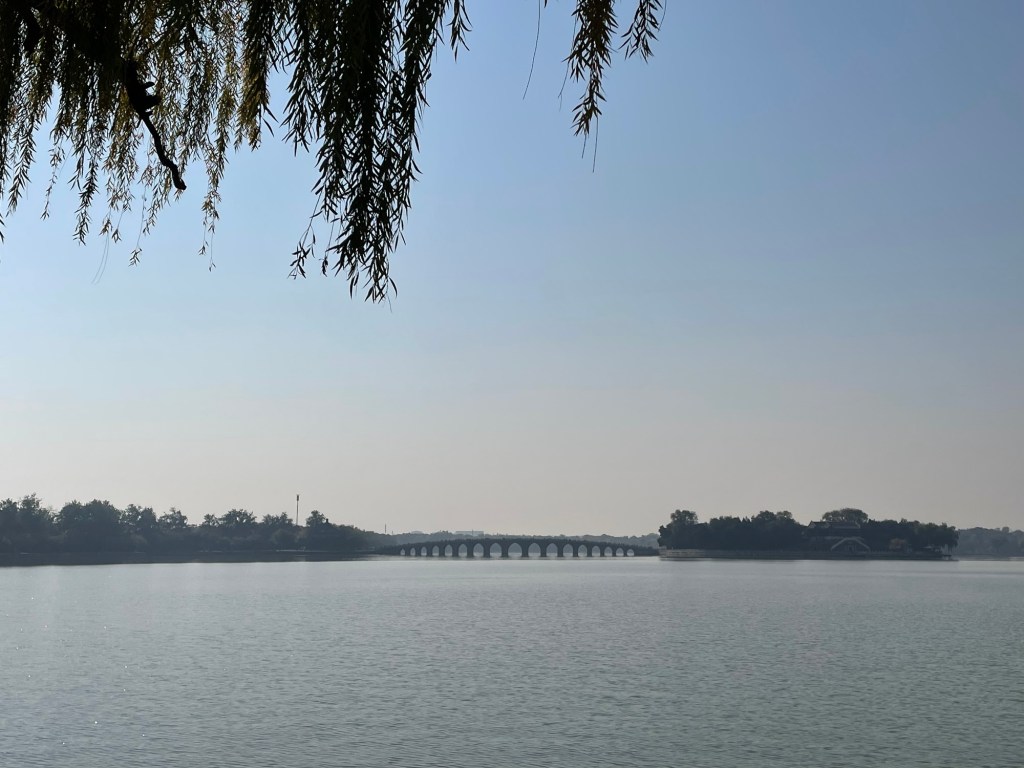
At the Summer Palace, Conall points to the horizon and says, ‘there’s a bridge for you.’
九孔桥 = Jiǔ Kǒng Qiáo (nine arches bridge)
Bonus score!
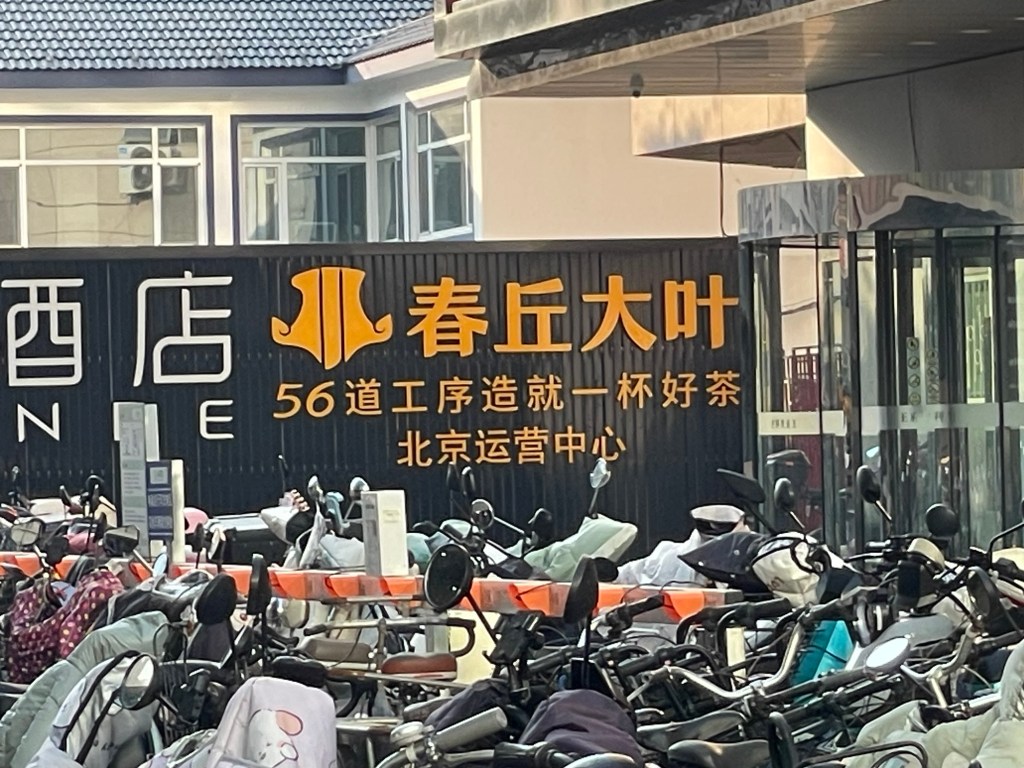
On our next lengthy bus trip, I play a different iteration of ‘Spot the Hànzì’. In this variation, I attempt to identify characters, then look for repeats to cross-check. Case in point:
I see ‘Hotel’ in Yīngyǔ, so am certain its character must be amongst the group of accompanying Hànzì characters.
I choose a candidate, then search…
(box with double roof, box with double roof, box with double roof…)
Aha! Spotted. Only this time it looks like a sign for a shop. It turns out 店 (diàn) means ‘store’ or ‘shop’, and is used in the names of many business establishments, hotels included. I’m chuffed to bits when I begin to notice it everywhere.
See?


We are given over two hours of free time, to shop on Wangfujing Street, but I’m not a shopper…I’m a Hànzì-spotter.
I follow the same pattern – looking for the familiar, and trying to identify repeats of the unfamiliar. Soon, I have 北京 (Běijīng), which translates to ‘north capital’ (answering the question of the character that appears on car number plates)…


…and 大 (dà), which means ‘big’.
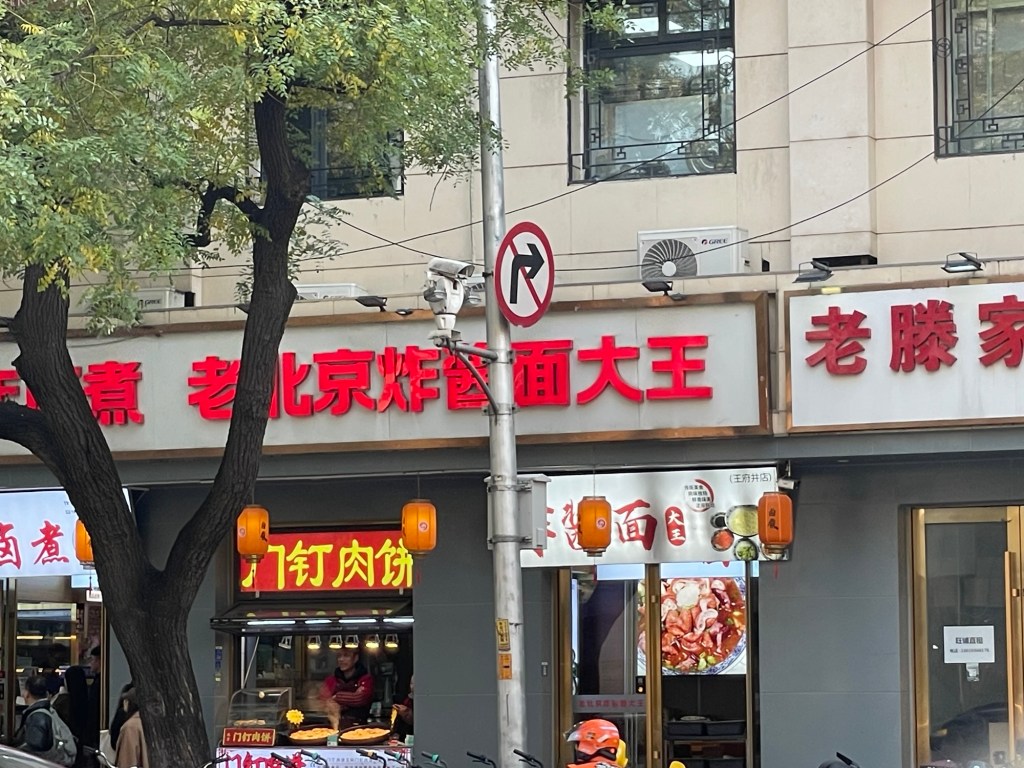
I have no idea what these guys are selling, but it’s BIG. After figuring this one out, I wander down the streets, thinking ‘got anything big in there?’ as I pass each 店.
Ha!
This store is committing a typeface crime against clear communication:
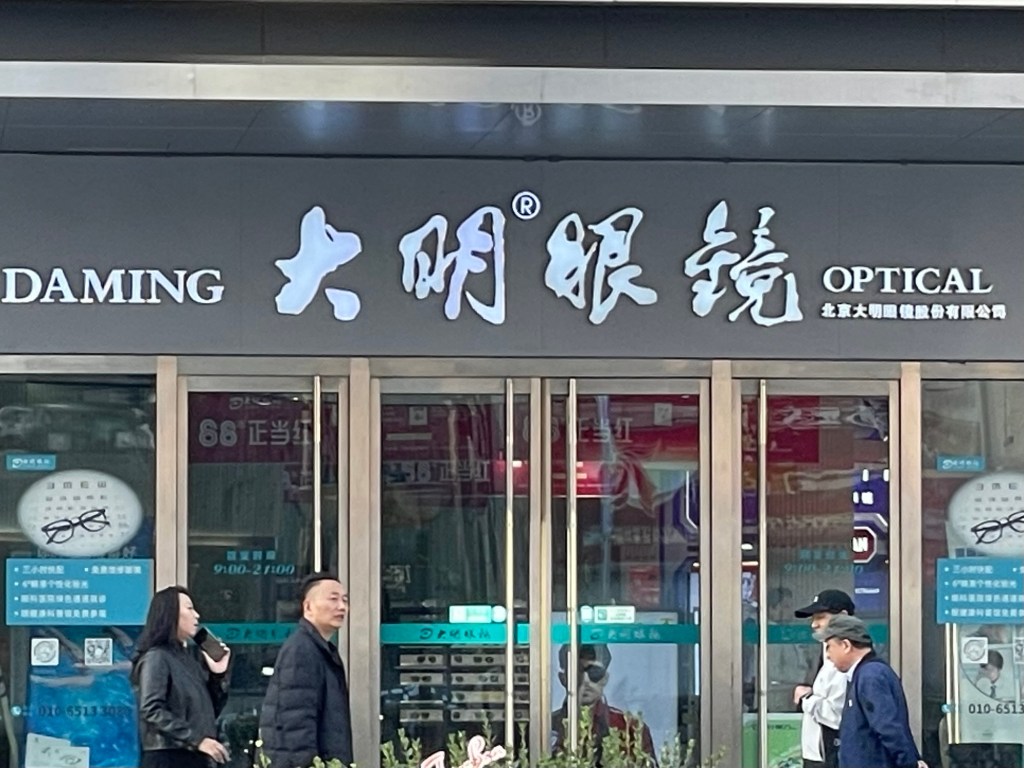
At Wángfǔjǐng Shūdiàn, I explore the aisles of books, spotting familiarities and learning the character for shū (book), which is 书.
书店 (shūdiàn) = bookstore


‘Qǐngwèn,’ I say at the counter, ‘nǐ yǒu zhè běn shū ma?’ (ok, maybe not quite like that…)
They do have the book.
I purchase a children’s copy of ‘Journey to the West’ in Hànzì and pīnyīn.
This 人 went to a 大书店 in 北京 on a 星期二 and bought 一书.
(The flash cards didn’t stand a chance.)

 A Fat Purple Fig
This person went to a big bookstore in Beijing on a Tuesday and bought a book!
Aghhhh! You’re the best…xx