Single Happiness
by afatpurplefig

I climb, red-clad, onto the tour bus, offering our driver a casual zǎo shang hǎo as I pass. Our itinerary includes The Forbidden City, Tiananmen Square, and Wangfujing shopping street. Once on the road, our tour guide, Fangfang, begins by teaching us how to speak like Beijing locals.
“In Beijing, we greet one another by saying ‘chī le ma?’ This means ‘have you eaten?‘”
I wonder if a positive response fits if you haven’t eaten, but are still feeling pretty good.
(chī le ma, chī le ma, chī le ma…)
Bus access is challenging in the city centre, so we cover the last leg on foot. As we walk, my mind turns to typefaces. I wonder which versions of Hànzì would not meet essay approval from school teachers, and which is the equivalent of Lucida Handwriting on Chinese wedding invitations.
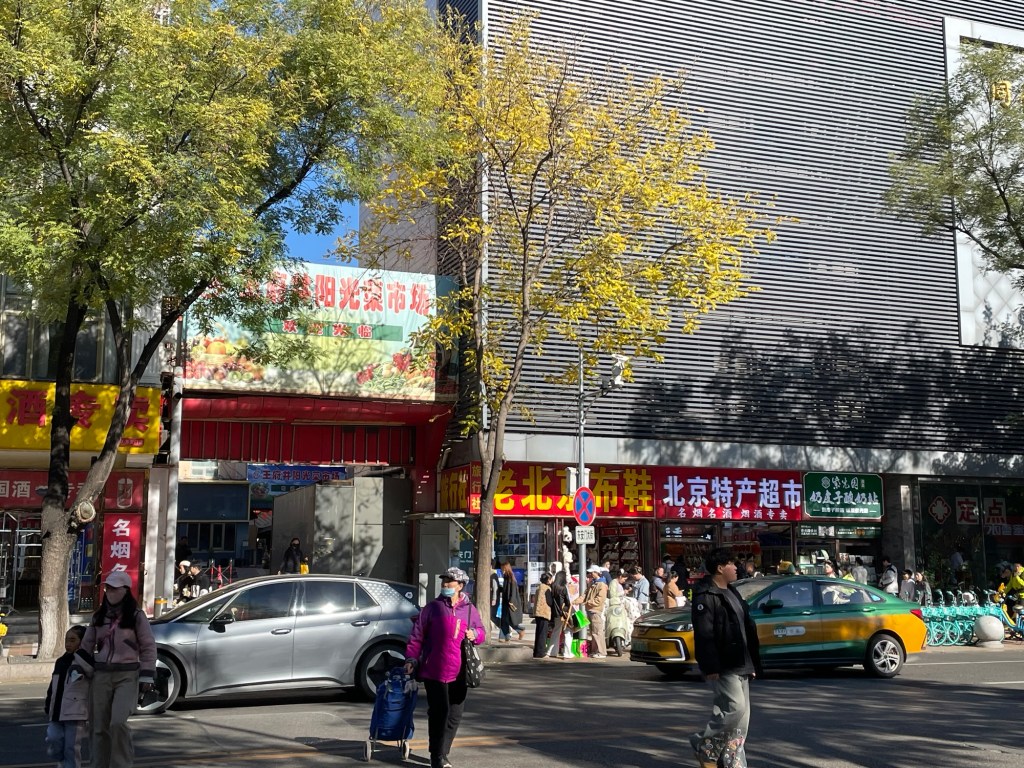
We pass sprouting stands of tánghúlu, sugar-coated fruit skewers, made mostly with hawthorn berries. I want one, but don’t want to draw attention to myself.


Our first stop, Zǐjìnchéng (The Forbidden City) is a marvel. Constructed over 600 years ago, it is the largest preserved palace complex in the world, at 178 acres. I am better able to consider this size through its purported jiǔ qiān jiǔ bǎi jiǔ shí jiǔ (9,999) rooms. Jiǔ being a lucky number, we all rub our hands along the ninth row of doorknobs in the grid of one of the doors we pass through, made shiny through countless hopes for good fortune.


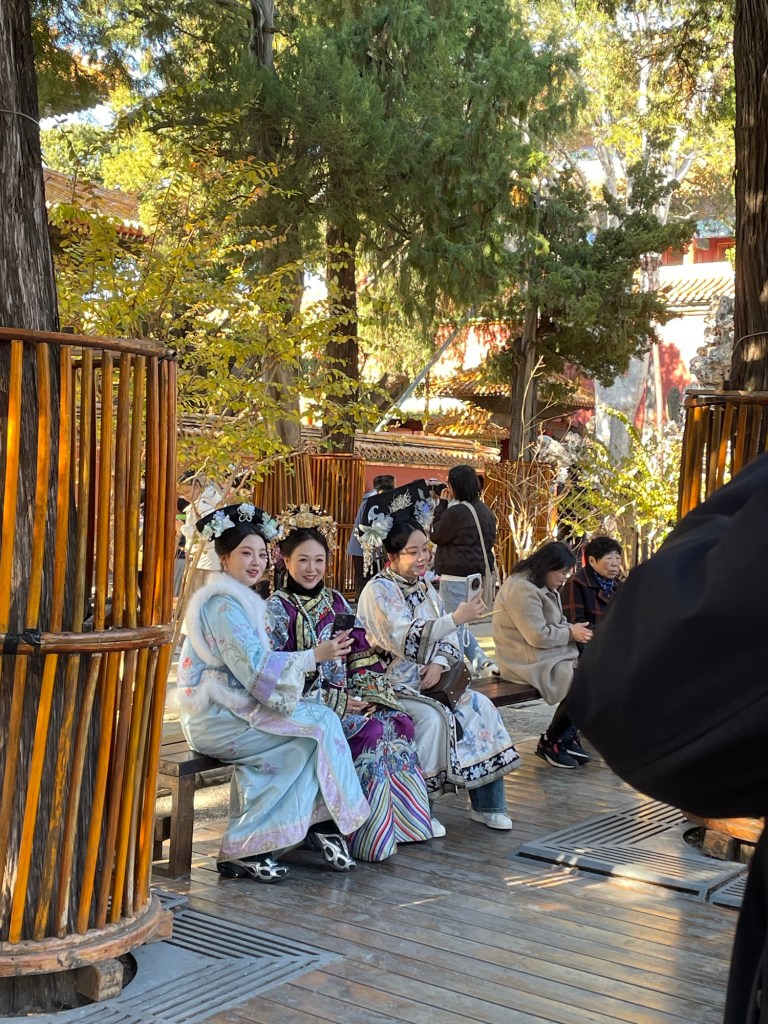
The people we had noticed on our way to Zǐjìnchéng, dressed in gǔzhuāng (ancient/traditional costume), have converged here en masse. Once inside, they gather at the best vantage points, posing for photos. Even paired with contemporary handbags and shoes, their presence gives the place a ‘somewhere in time’ feel. I take far too many photos of photographers taking photos, but my favourite subject remains the gǔzhuāng selfie.
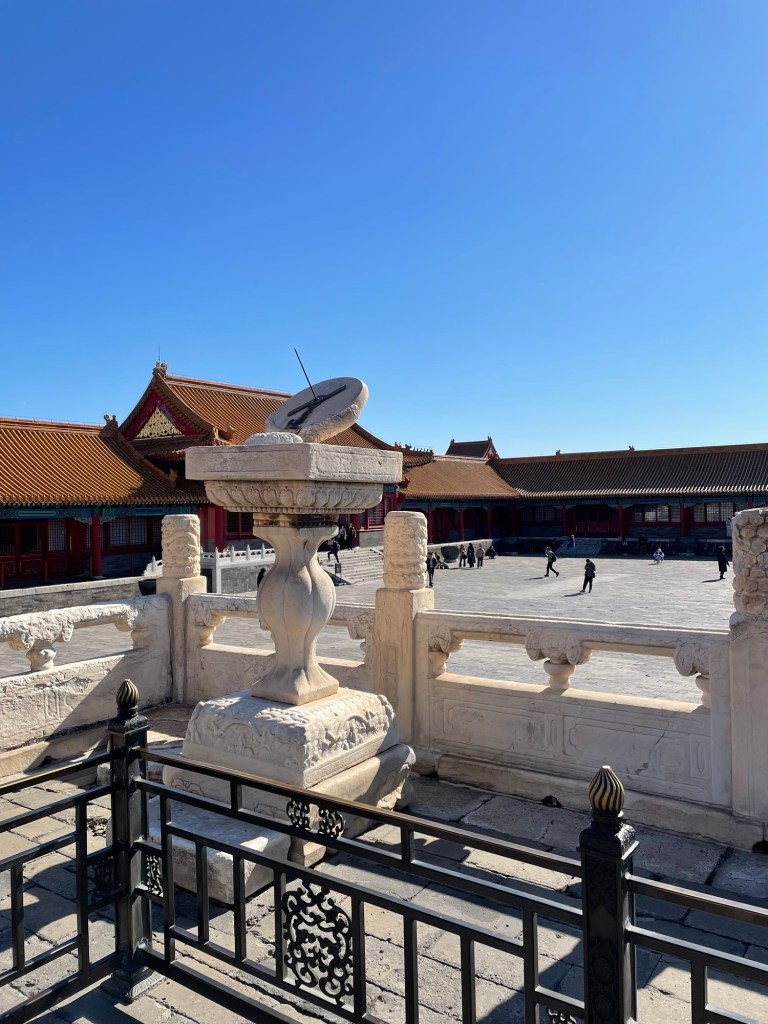
Fangfang is a magnificent guide, measured by how many times she doesn’t lose her cool when I absolutely, most certainly, would have. She confers her prodigious knowledge though small, orange headsets we wear hooked over our ears. My favourites? Tiled ceilings, sundials, and learning the word for tap, shuǐlóngtóu (water, dragon, head), which dates back to when metal spouts for flowing water were often shaped like dragons’ heads.

I also enjoy seeing the concubines’ quarters, and hearing about the structure of their visits to the emperor (one concubine a night, for two hours at a time). If he had plenty, it probably wouldn’t be a bad gig. Plus, having seen Eternal Love, I know some of those girls will do anything to get extra time.
I learn a new Hànzì character. Shuāngxǐ – 囍 – is made by writing the character 喜 (xǐ, meaning ‘happiness’ or ‘joy’) twice, side by side, so it literally means ‘double happiness’. It symbolises marital joy, which tracks, given all the support she has from the concubines. Technically, this means I have learned the Hànzì for single happiness too.
We head to Jǐngshān Gōngyuán (Jingshan Park), just north of Zǐjìnchéng, where the last Ming emperor, Chongzhen, hanged himself on one of the trees in 1644 after rebel forces took Beijing. We climb its artificial hill, built from the earth dug to form the palace moats, to get a view of Zǐjìnchéng from on high. At the summit, a woman asks if her mother can stand between us for a photo, and we readily acquiesce. I tell my classmate this has never happened to me before, to which she replies “well, you do have an ‘important academic’ vibe”.
It is my third-favourite compliment of all time.
As we wait for our bus, I score a tánghúlu, courtesy of Shan Lǎoshī (teacher), and delivered by the most-exuberant person I have ever met.

My phone is rapidly losing charge, so I snap a single photo of Hòuhǎi (Back Lake), in Shíchàhǎi, an historic scenic spot in the old city area of Beijing. I like it here. The roads are bumpy and narrow, and the pullers of the sān lún chē (three-wheeled vehicles) emulate horns by calling “beep, beep” when they want to pass. There is a karaoke setup, and I hear what sounds like a drumming circle. Fangfang clarifies that they are retirees who gather together to stay active and play music together. I mean, I’m already predisposed to enjoy buskers, but come on.
I pass by, wistfully.

Later, we walk across the shadowy expanse of Tiananmen Square by night, and take group photos before an image of Máo Zhǔxí, before landing around a table for wǎn fàn. It is a thrill to rotate the dishes, taking a little of each.
(Note to self: cook lettuce).
Chī le.
I have eaten.

 A Fat Purple Fig
I love me some typefaces…😁
I was thinking of you…x
Glad you got your tánghúlu! Did you like hawthorn?
Loved it. The break-your-teeth seeds, not so much… 😬