From the Outside, Looking In
by afatpurplefig
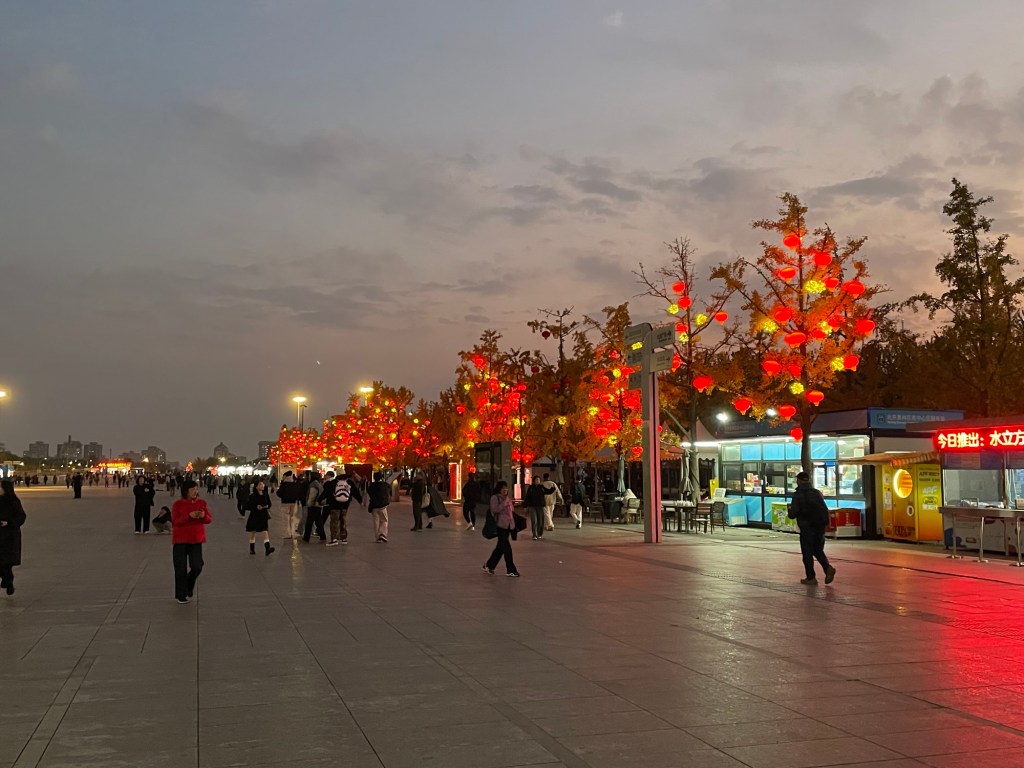
We see many sights while in 北京 (Běijīng), keeping up a cracking pace that mostly sees us home after dark. I struggle occasionally. To be fair, I tend to keep up a cracking pace on my own trips, and have a capacity for physical endurance, if not actual fitness. In China, it is the social aspect that pushes me to my limits.
中国 (Zhōngguó) = China (middle country)
We are a large group of 二十同学 (èrshí tóngxué) and 二老师 (èr lǎoshī). The students from the New Colombo Plan will stay on at the 大学 (dàxué) for 四 (sì) weeks of intensive language learning after the conclusion of our trip. They have the kind of energy that reminds me I am in the second half of my life. In between stays, they drag enormous suitcases, festooned with the plastic bags that contain their growing number of purchases. They are curious and intrepid, and I admire their energy and tattoos with equal measure. On Jemima’s arm are the words alis volo propriis. Conor climbs the Great Wall of China in his bare feet.
同学 (tóngxué) = classmate (together study)
纹身 (wénshēn) = tattoo (mark body)
The rest of us are from the Tourism Confucius Institute. I enjoy discovering the myriad reasons we are learning Mandarin, and opportunities for one-on-one chats. Magnus is outstanding company, with his wealth of knowledge about Icelandic history, languages (of which he speaks plenty), and sites of interest, such as the Dujiangyan Irrigation System, near Chengdu. I am anxious about [insert items here], and exist in the same place as always: outside, looking in. On one day, I realise I have been humming the same two bars of a JJ Lin song, over and over, for hours.
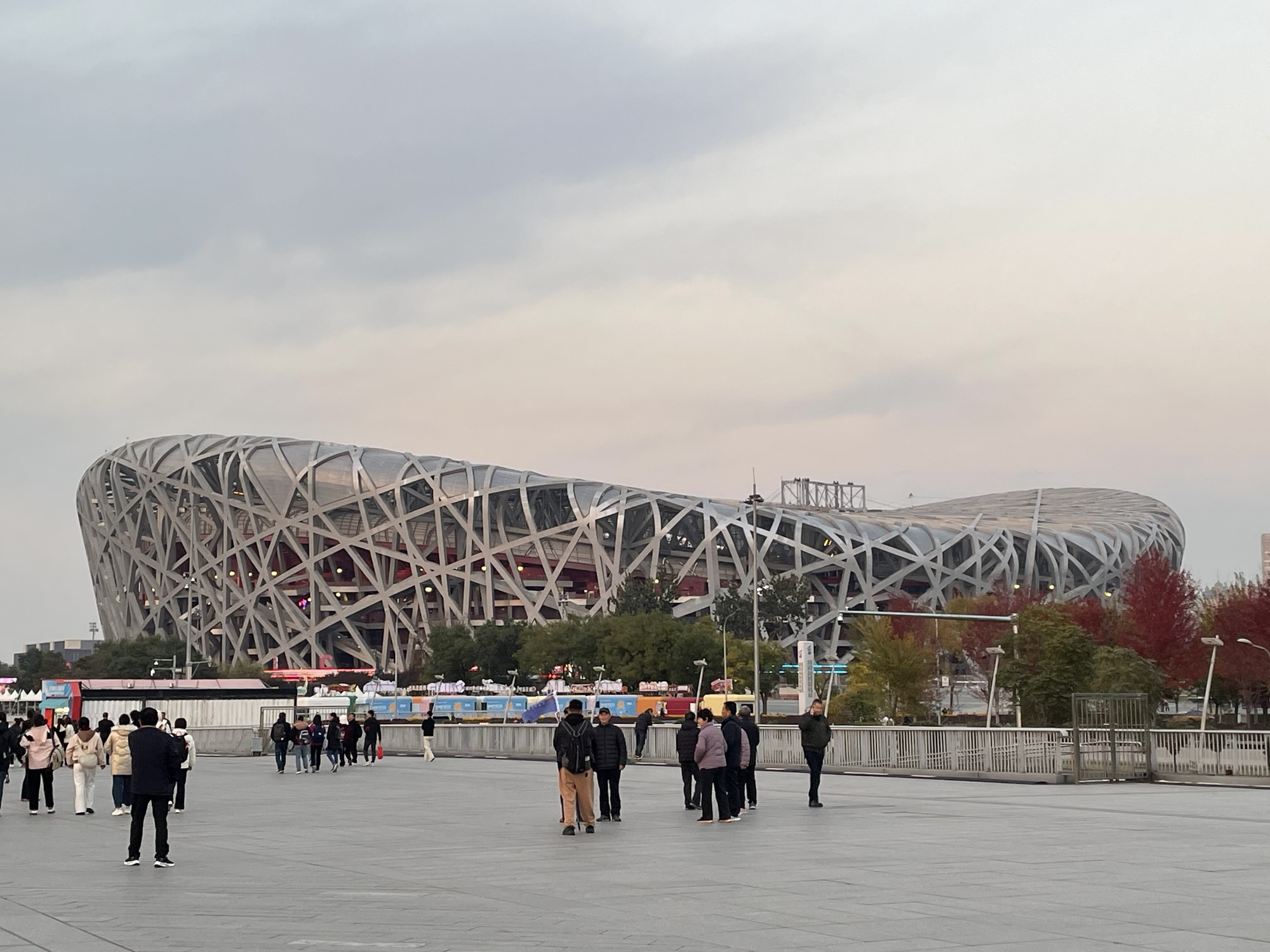
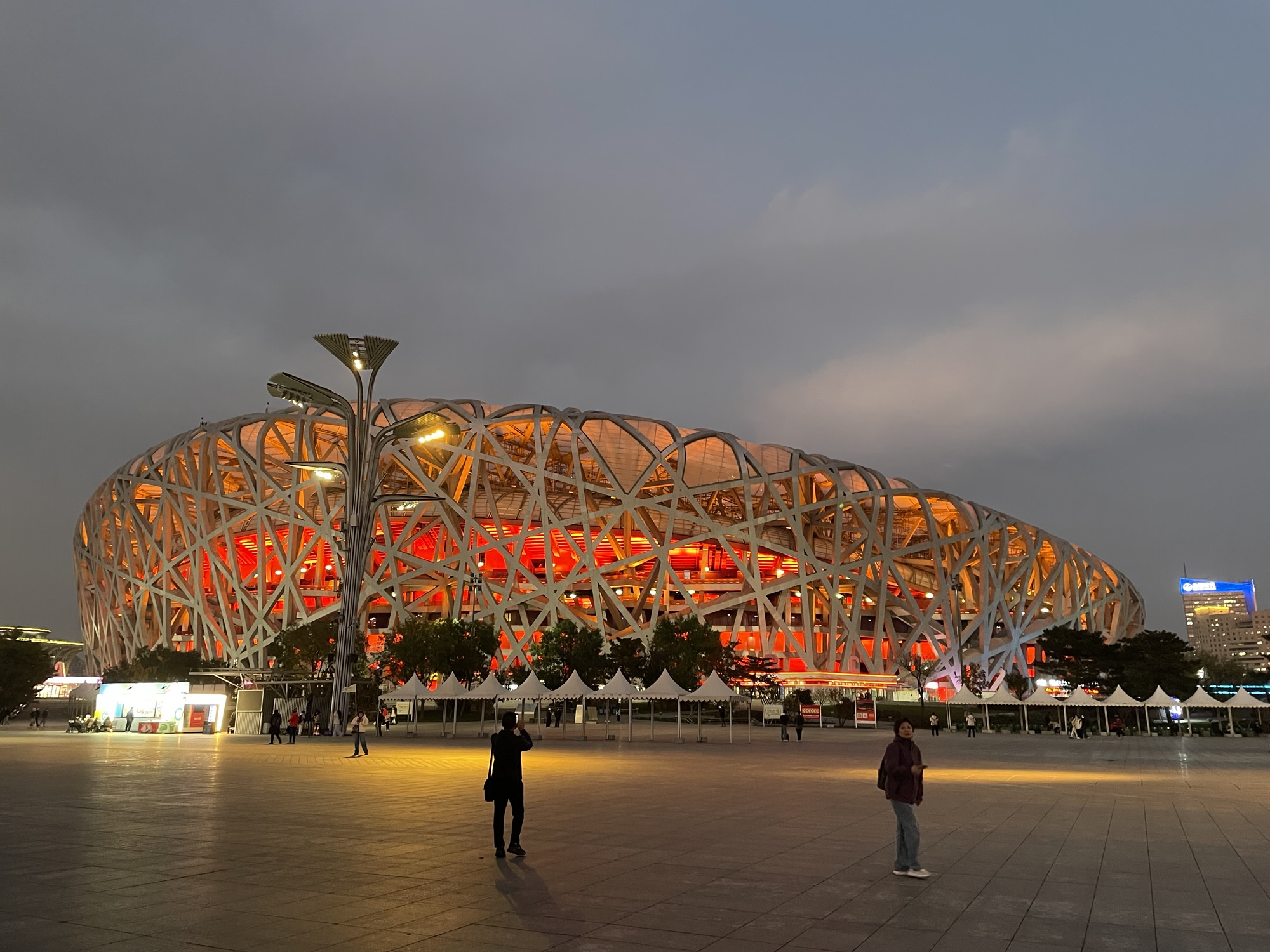
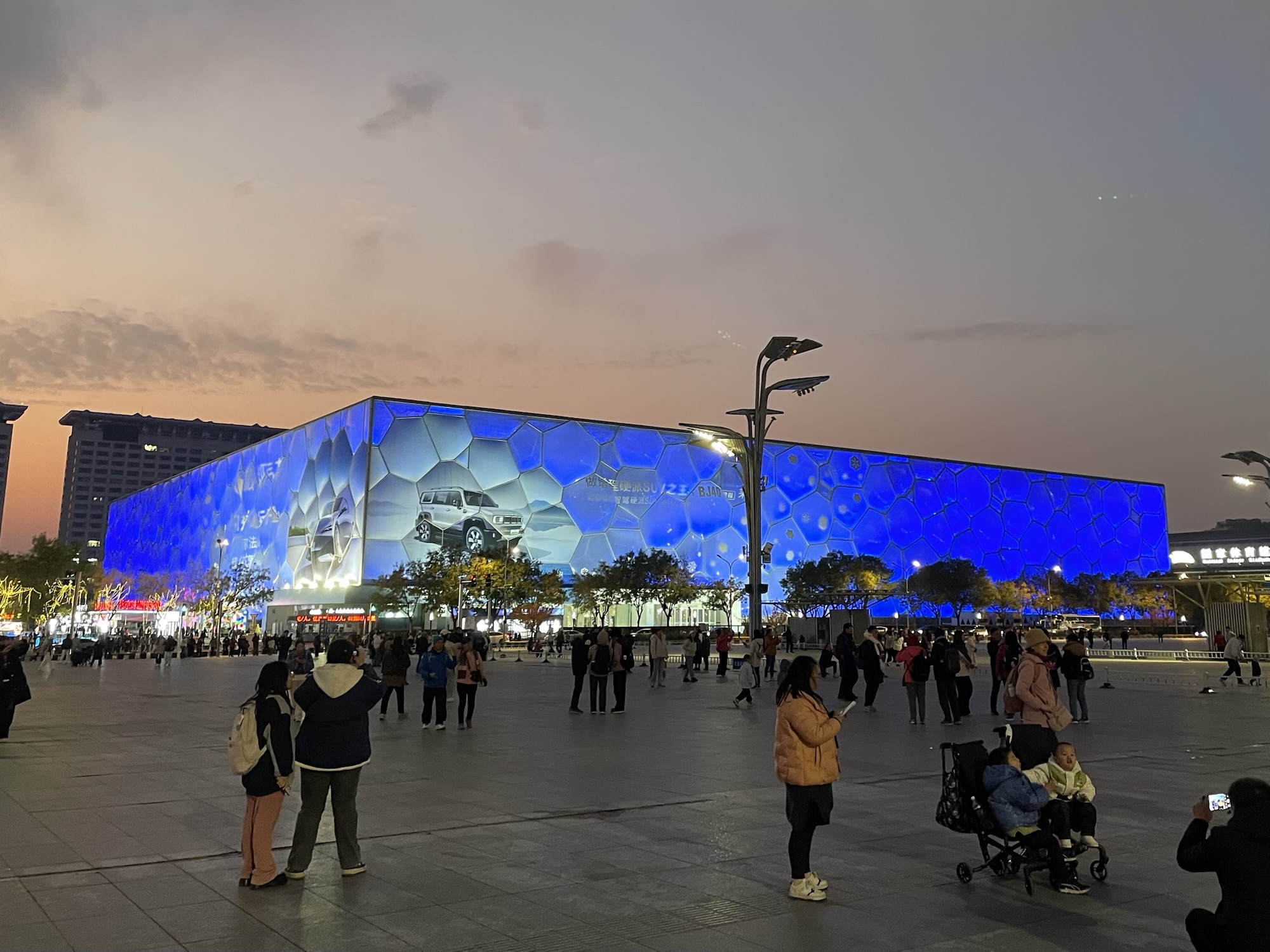
Shan Lǎoshī’s 北京 itinerary ensures ‘no regrets’, so we see it all. We visit the National Stadium – ‘Bird’s Nest’ – at dusk, just in time to see it light up in red, a perfect foil to the blue of the Beijing National Aquatics Center – ‘Water Cube’.
Their nicknames do them justice.
红色 (hóngsè) = red (red colour)
蓝色 (lánsè) = blue (blue colour)
颐和园 (Yíhé Yuán) = The Summer Palace (to nourish harmony park) or ‘Garden of Nurtured Harmony.’
颐和园 isn’t actually a single palace, but rather an imperial garden that contains man-made structures, such as buildings, temples, and bridges, alongside natural features, like lakes and hills.
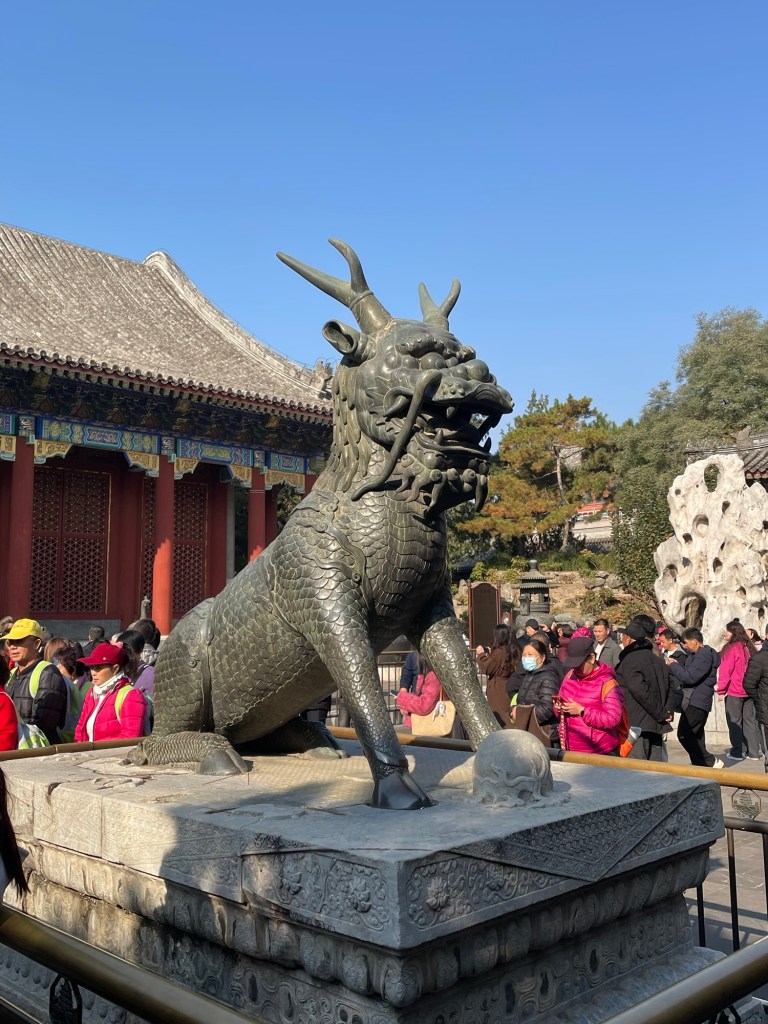
At its entrance are Chinese guardian lions, to ward off evil spirits and protect its inhabitants. The male has a ball under his paw, representing supremacy and power, and the female (wouldn’t you know it) has a cub, to represent nurturing and the continuation of family. They ought to give the balls to the women once in a while, I think, before remembering Fangfang’s description of Cíxǐ Tàihòu, the Empress Dowager Cixi.
There was a woman to be reckoned with.
女人 (nǚrén) = woman (female person)
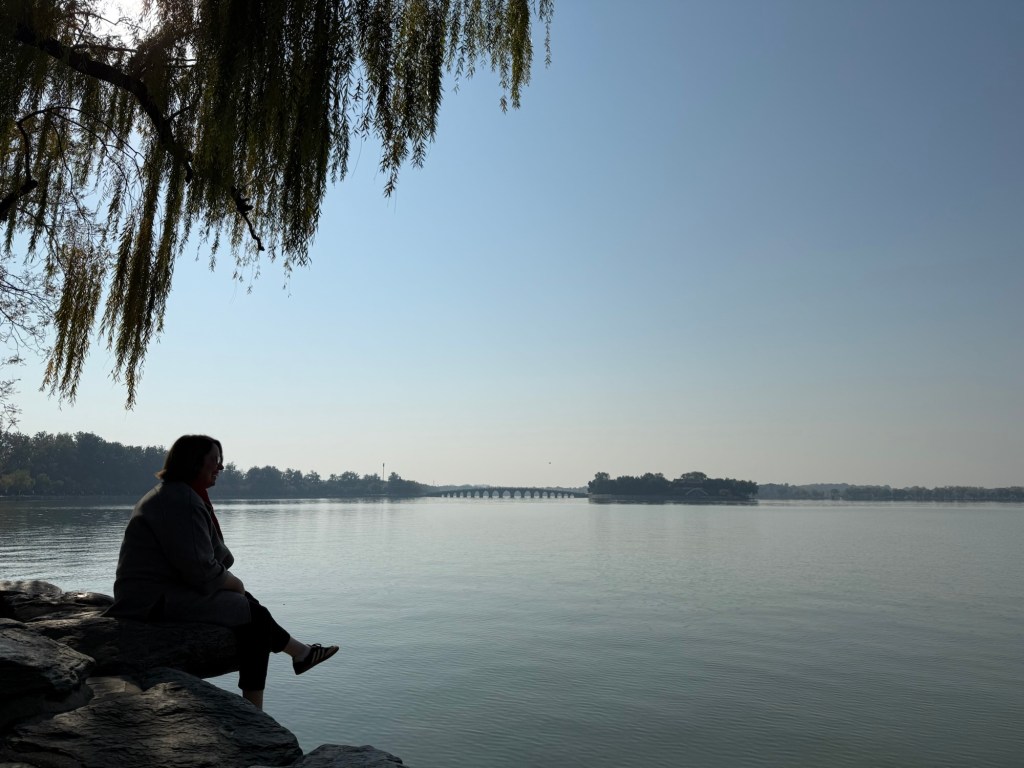
The shòu shān (Hill of Longevity) was constructed from the earth excavated from kūnmíng hú (Kunming Lake). It reminds me of Jongshin Park, which was similarly formed with earth from the moat that surrounds the Forbidden City. To have a hill behind and water in front follows the principles of feng shui and I can feel its influence in the area’s serenity (albeit after a turbulent history). I spend my time here sitting quietly and looking out at the water. When Takeru asks if I would like my photo taken, I resist only briefly.
I quite like a silhouette.
风水 (fēng shuǐ) = feng shui (wind water)
Our final stop in 北京 is to the Centre for Language Education and Cooperation. We are offered a warm welcome, and invited to enjoy a range of activities designed to draw in the least-participatory visitor (ie. me).
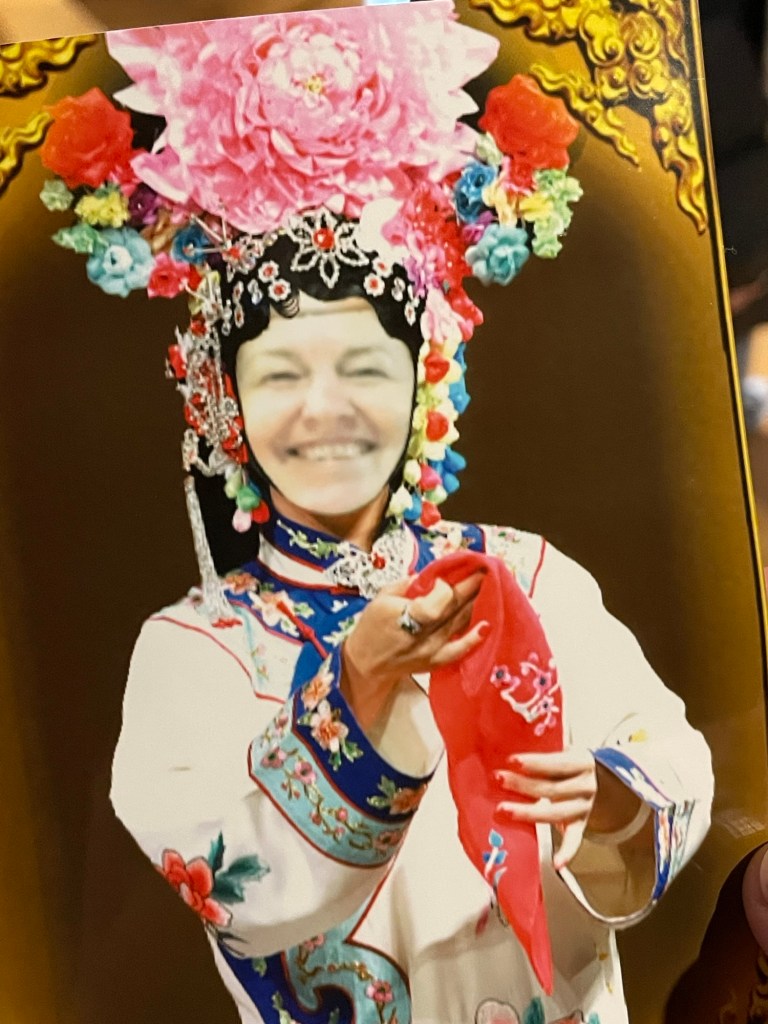
It begins at a novelty photo booth, where I can’t resist taking and printing this photo:
I learn many things at the centre. The Chinese philosopher Hán Fēizǐ tells me:
‘The difficulty of determination lies in overcoming oneself rather than overcoming others.‘
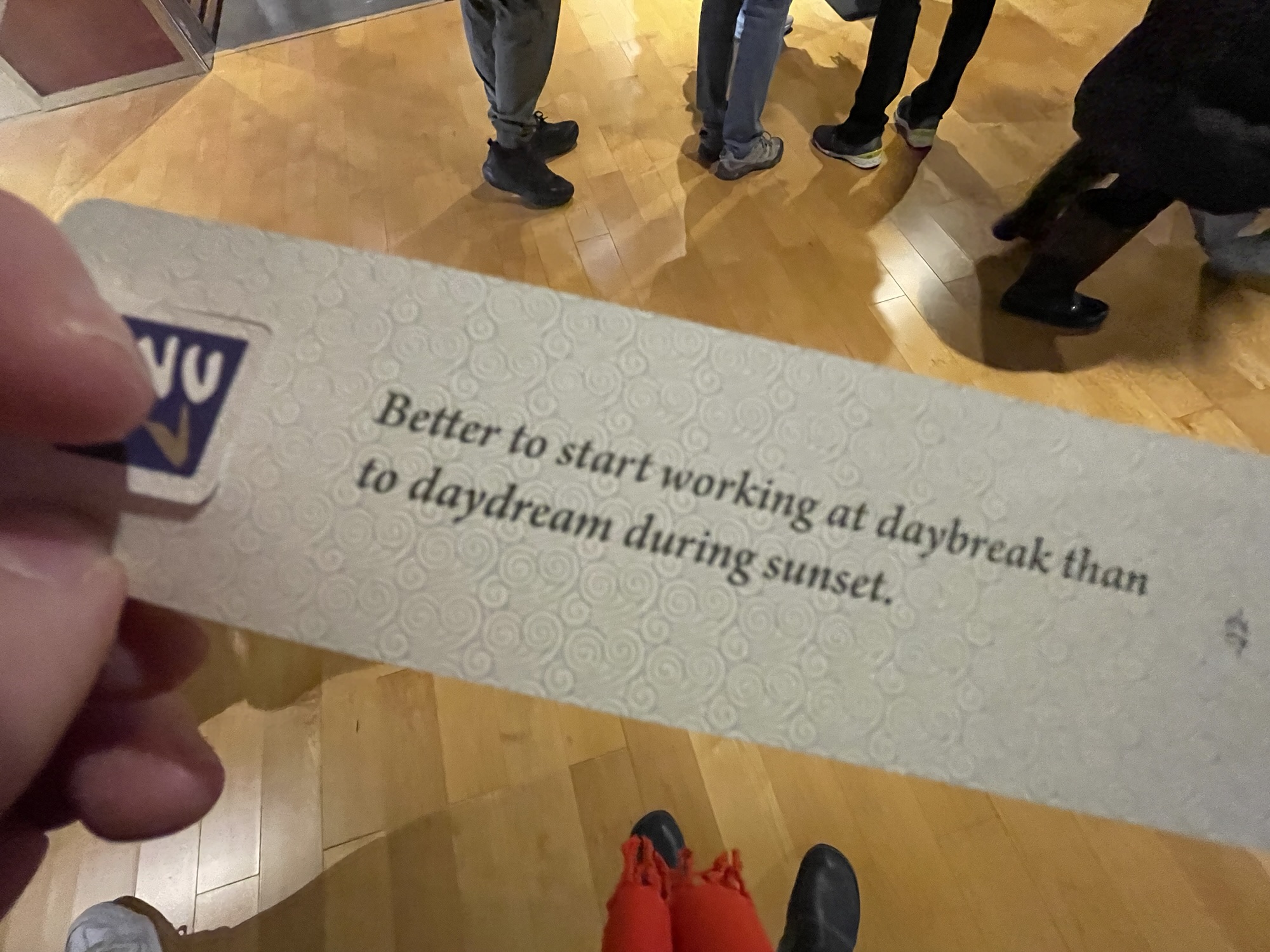
We pull bookmarks from a series of numbered barrels. I choose 二十二, my all-time most-favourite of all numbers. My bookmark reads:
‘Better to start working at daybreak than to daydream during sunset.‘
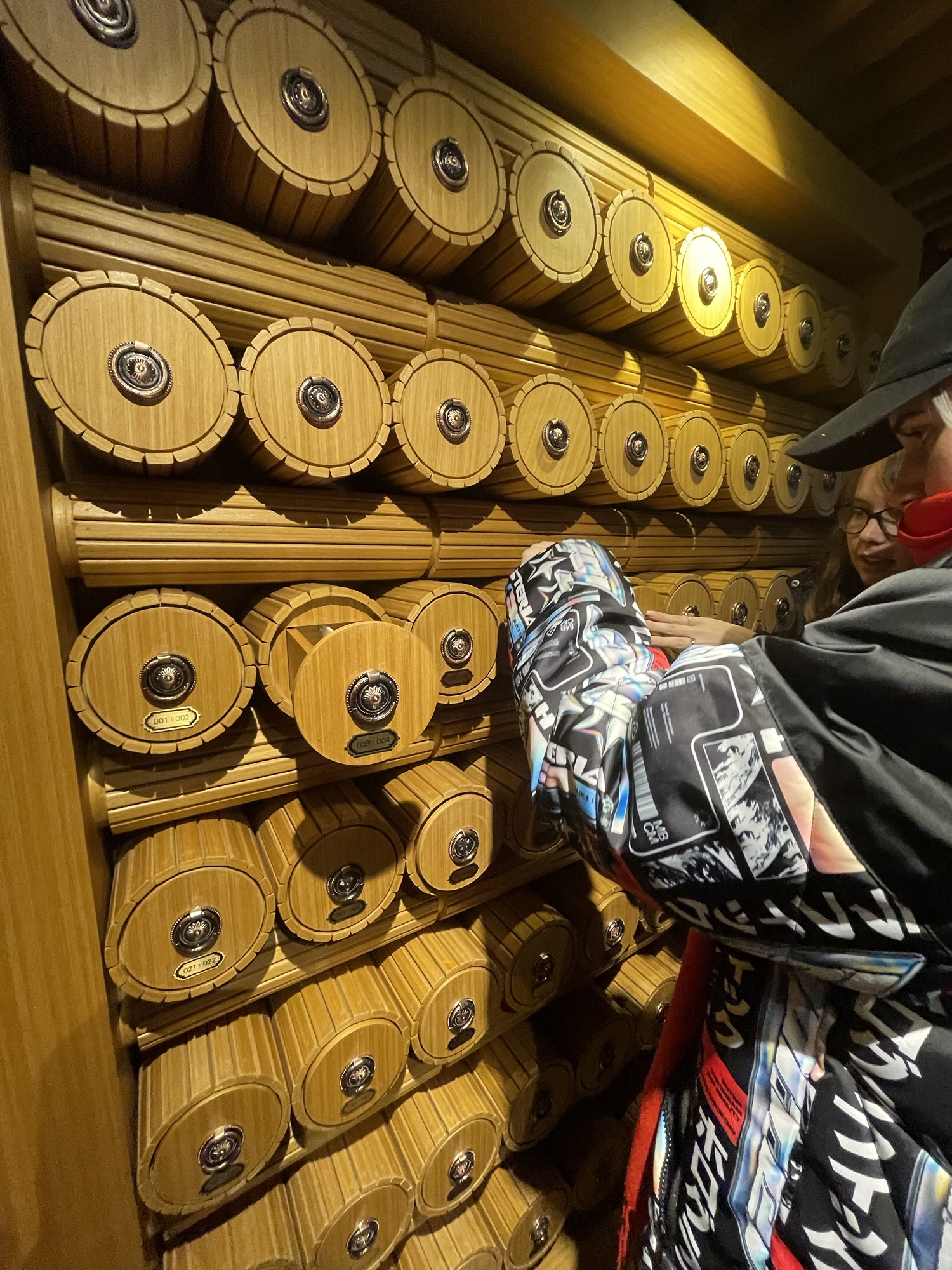
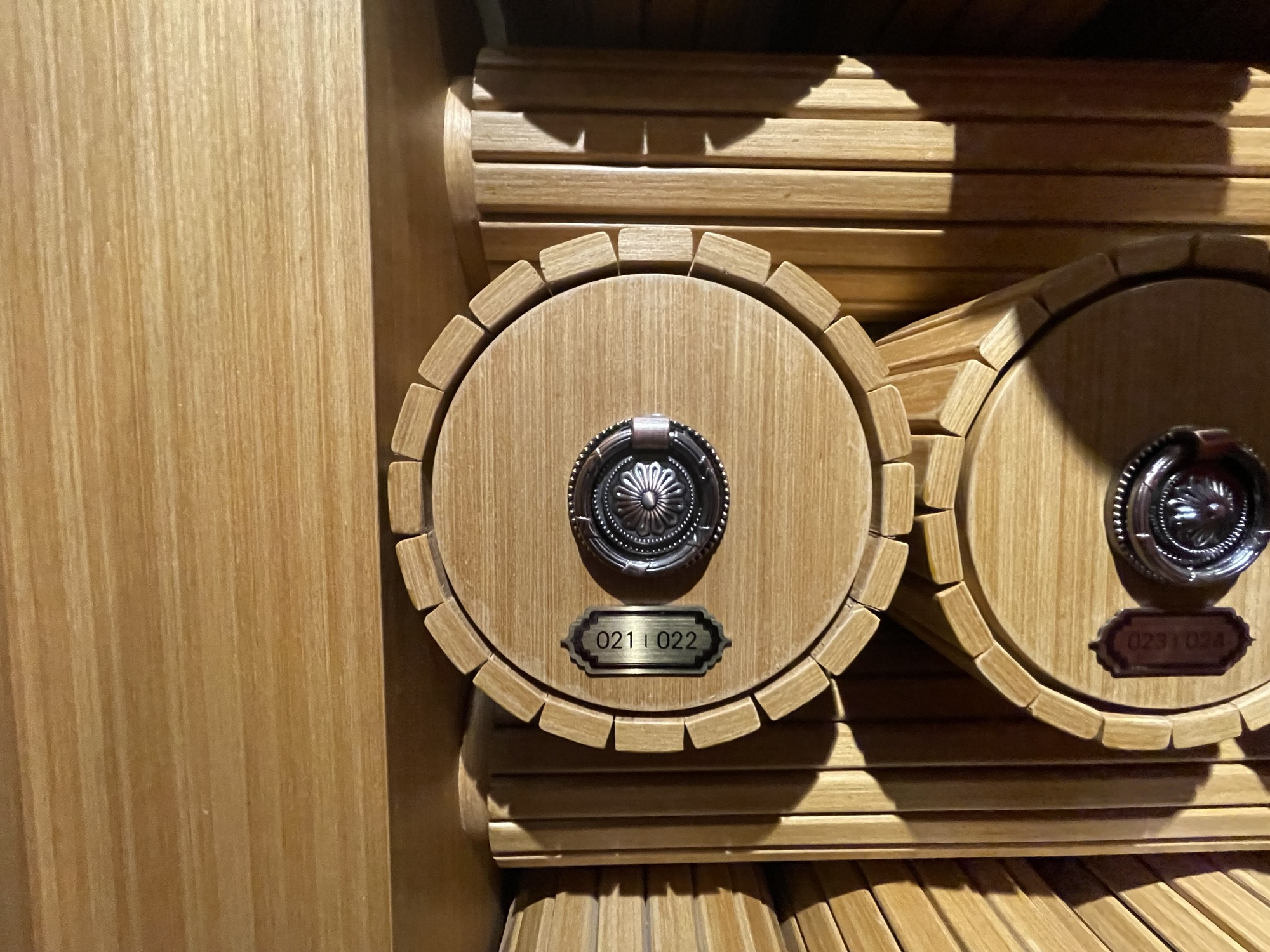
I learn of the four great inventions of China – papermaking, printing, gunpowder, and the compass – and search to see if any of JJ Lin’s songs feature the erhu (a Chinese two-stringed fiddle), which is on display.
I tell Shan Lǎoshī that I had always believed I was born in the Year of the 鼠 Rat, before discovering quite recently that it was actually the Year of the 猪 Pig.
‘I am a 猪,’ she tells me, pleased, ‘we are reliable…and I think you are reliable.‘
I look up the girls and the boy (carefully) and collect a Chinese zodiac papercutting for each.
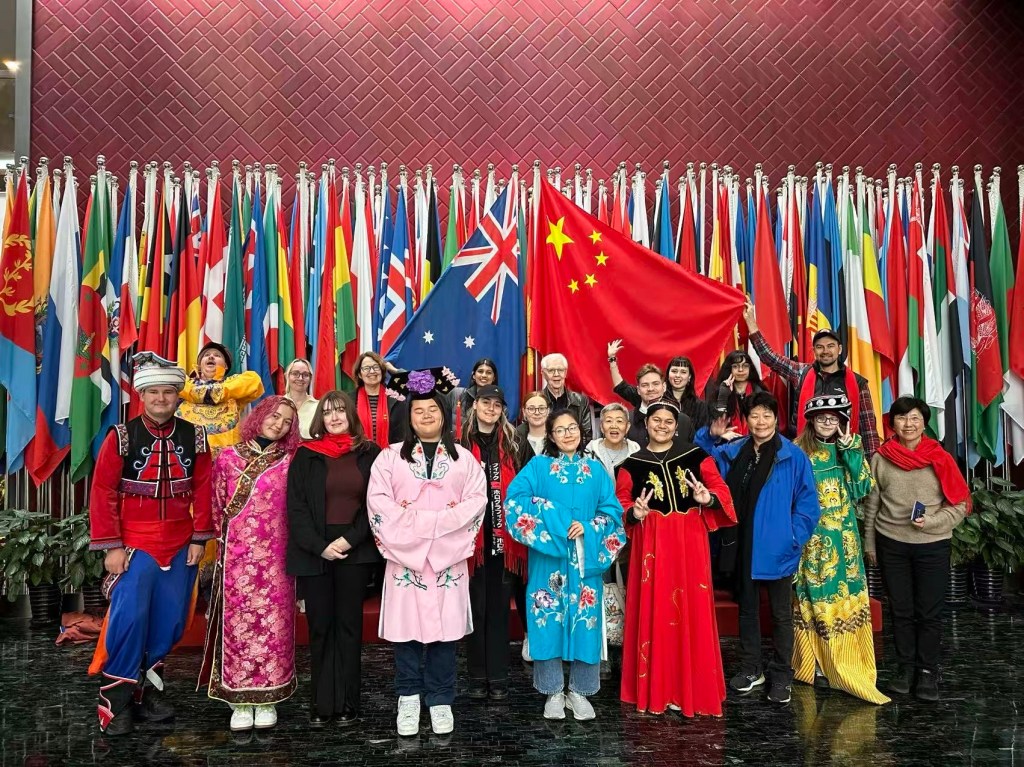
Shan Lǎoshī encourages us to dress up, which is where I really throw caution to the wind.
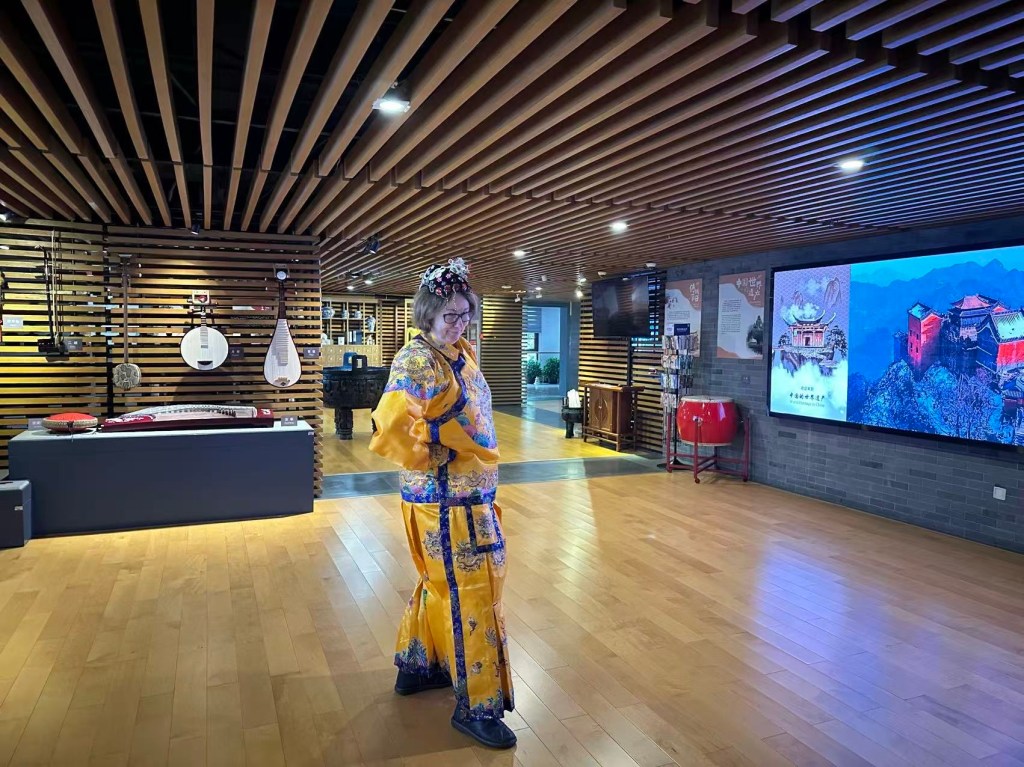
Before our departure, we take a group photo before a riot of flags, each representing a country that the centre works with, through teacher training, resource development, and promoting cross-cultural understanding.
Here I am, on the inside, looking out.
 A Fat Purple Fig
I cannot believe you dressed up😂
Neither can I.