Running in Coyoacán
by afatpurplefig
Taco-heavy, I meet Citla outside The Red Tree House at 6am, for our 5km run through one of the oldest areas in Mexico City, Coyoacán. As we drive through the darkened city streets, we compare running notes; Citla’s longest run (60km) to mine (6km), and her 25 years of trail running to my months-long resurgence of gritted-teeth laps of the local oval. I steel myself, ready to face the music.
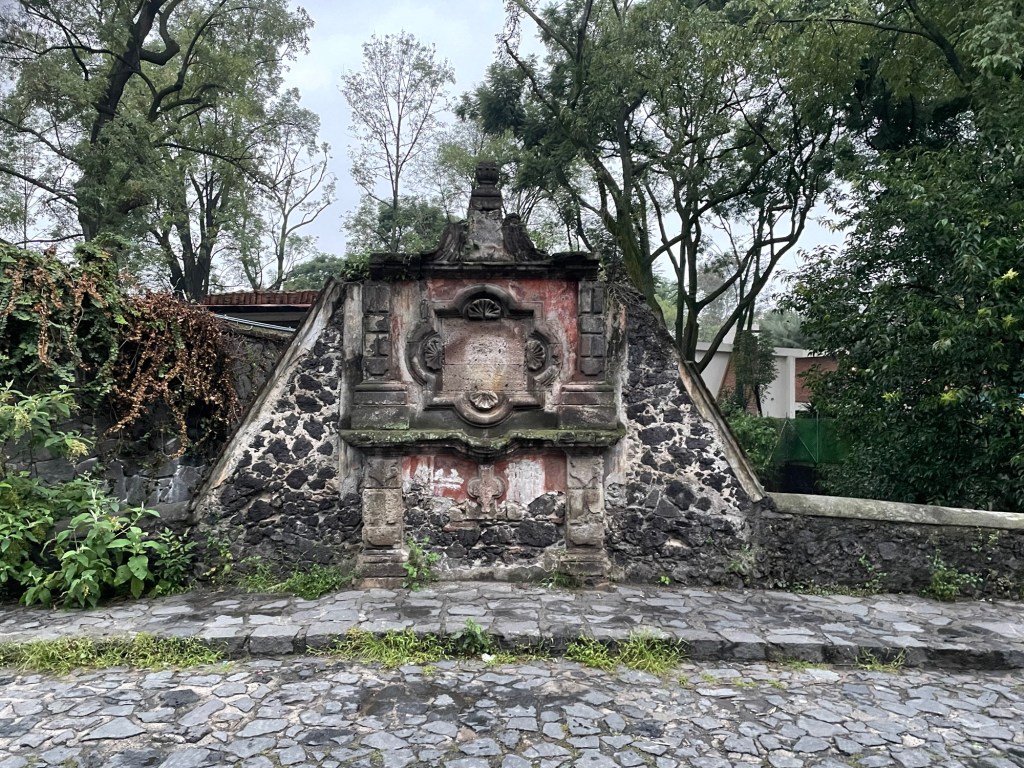
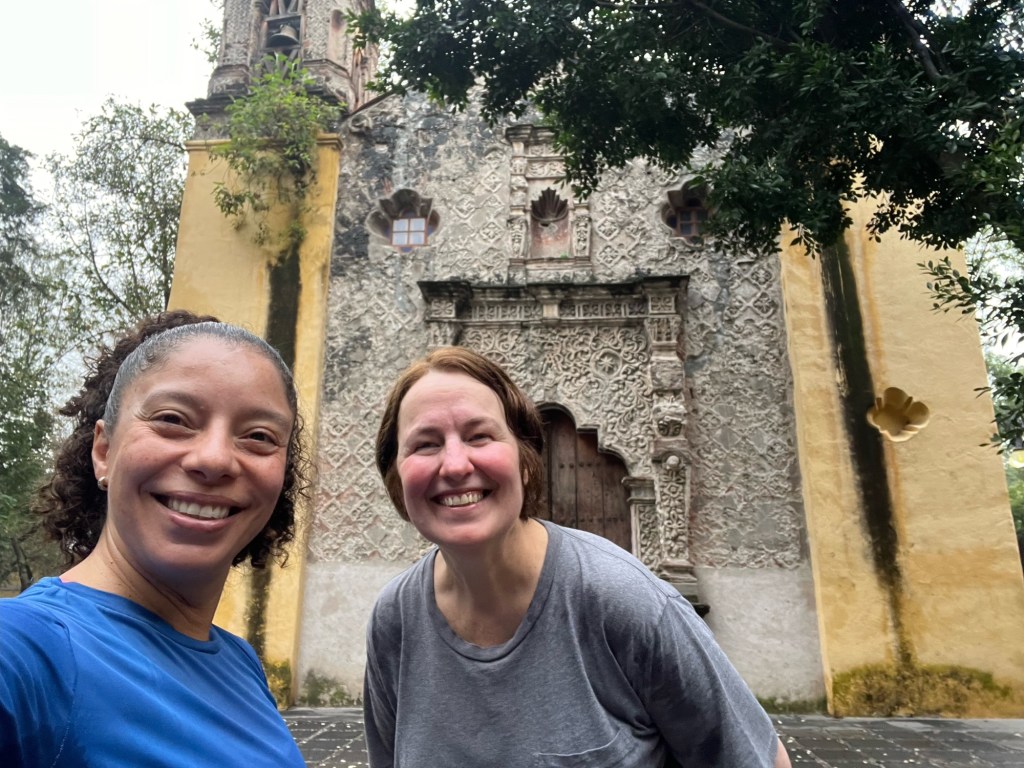
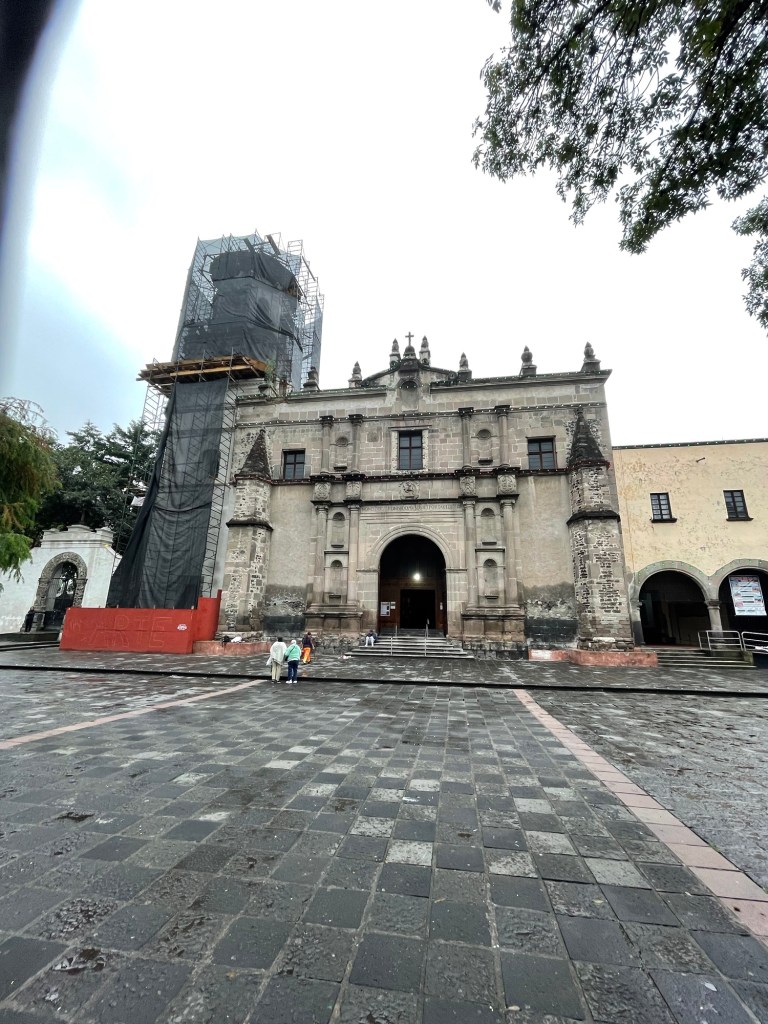
We begin at the San Antonio de Padua Chapel, which sits on the banks of the Rio Magdalena, the only living river that runs through the city. Citla comments on its pollution, but it is beautiful in spite the rubbish. She also warns me about the footpaths and roads, which are narrow and cobbled. Being here is like stepping back in time.

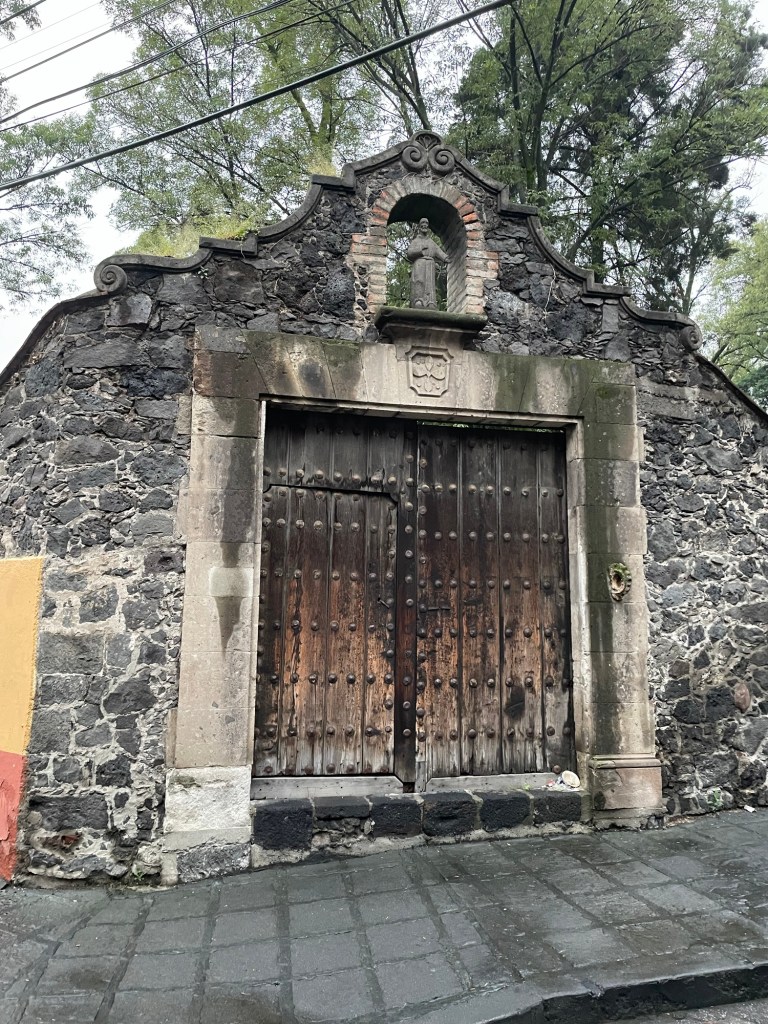
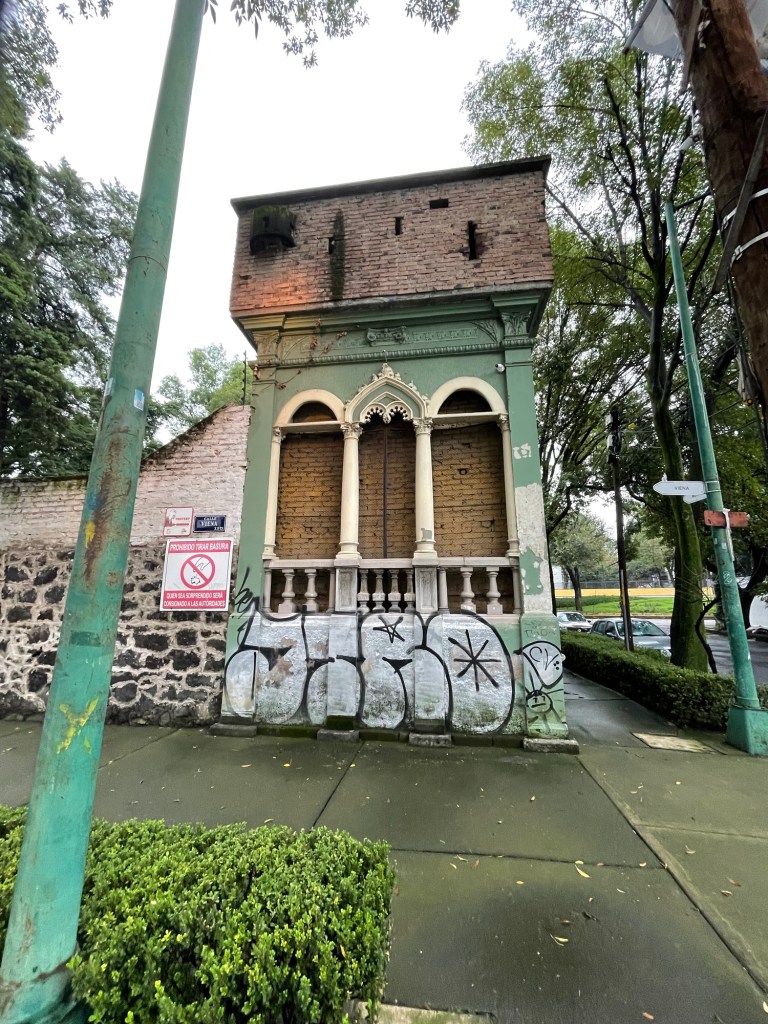
We stop to discuss the Spanish influence in the decorative features of this building. I’m both interested in the information, and relieved to discover that there will be brief stops along the way. All the better to breathe, methinks.
I regret continuing to search ‘running in Mexico City’ after booking with Citla at Go Running Tours. If I’d left well enough alone, I may not have discovered that Mexico is 2250m above sea level, and that visiting runners ‘may have difficulty breathing.’ Awesome.
The paving in the centre of this laneway is to accommodate reenactments of the crucifixion, so Jesus doesn’t need to drag the cross over the stones.
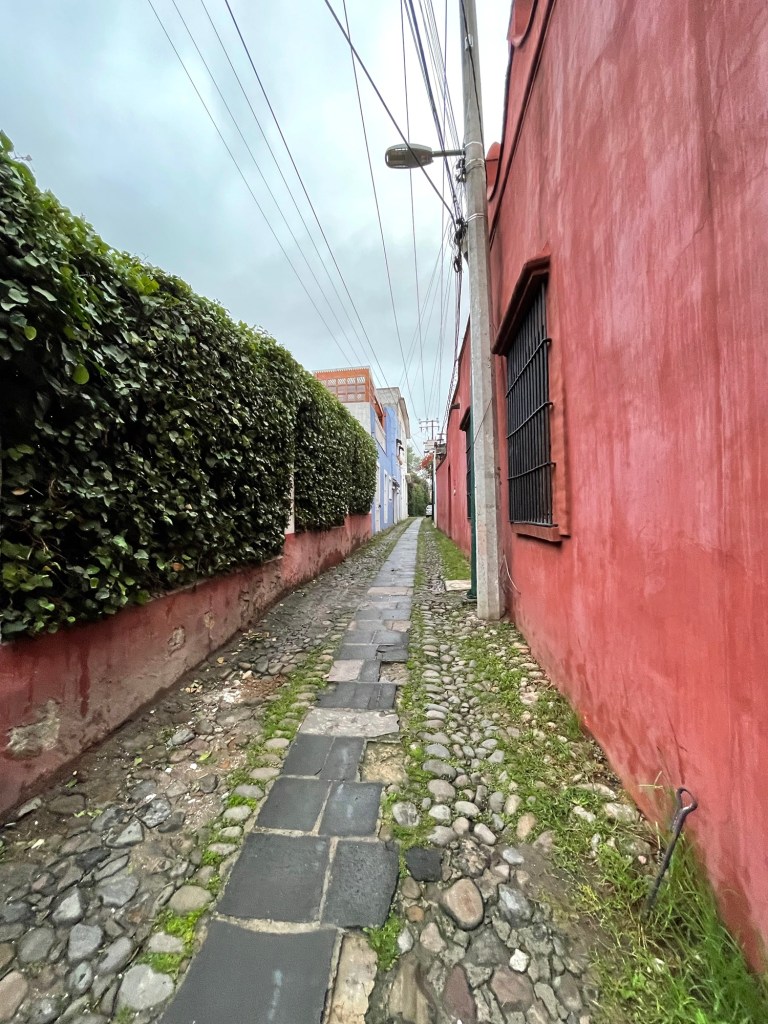
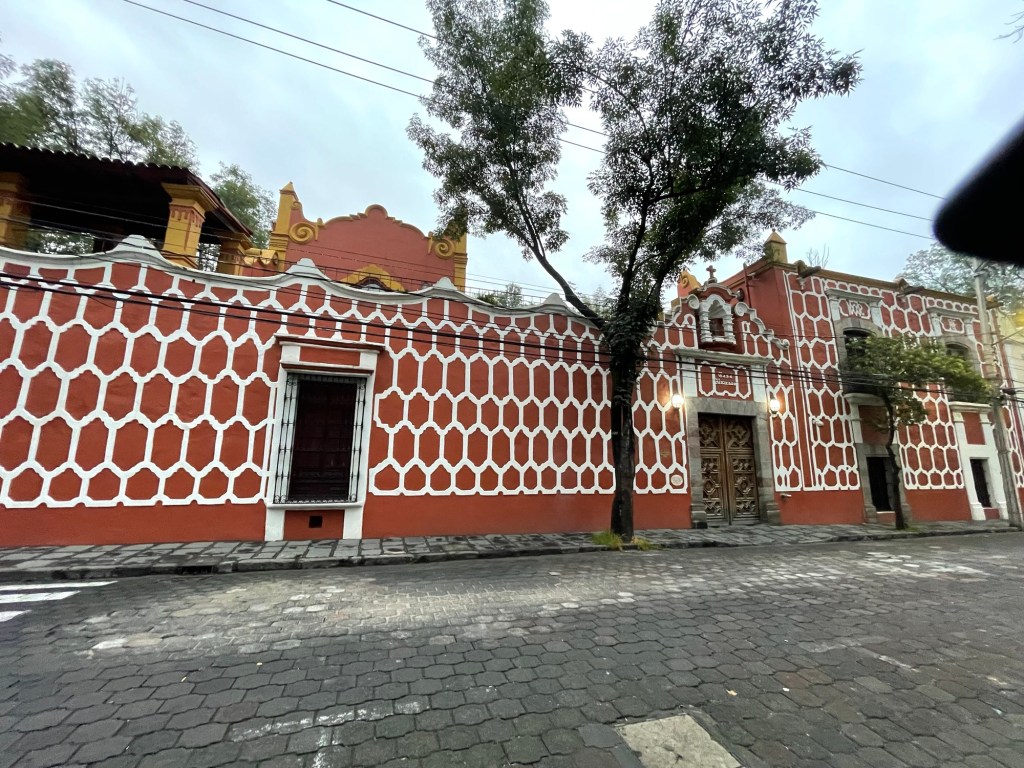
The houses in Coyoacán are large, which is why it is now one of the most expensive areas in Mexico City. I love the name plates and the colours best. Cars rattle over the roads, which are made of stones. I make a comment about the stress on their suspension. ‘Mexican cars are built different,’ Citla replies.
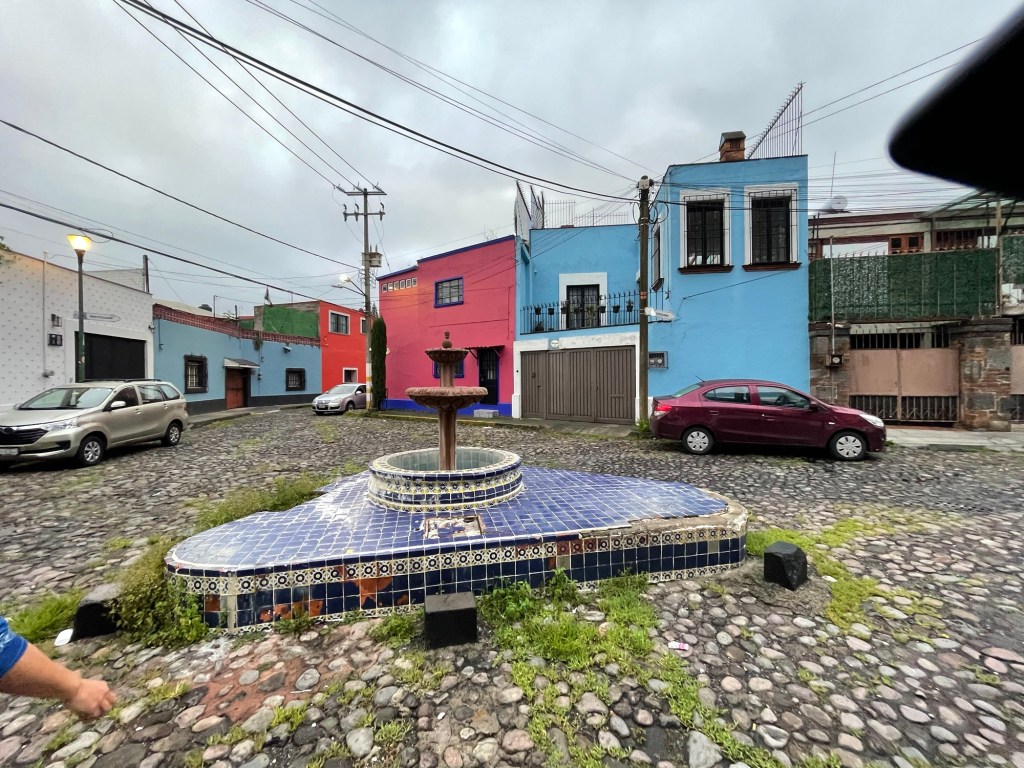

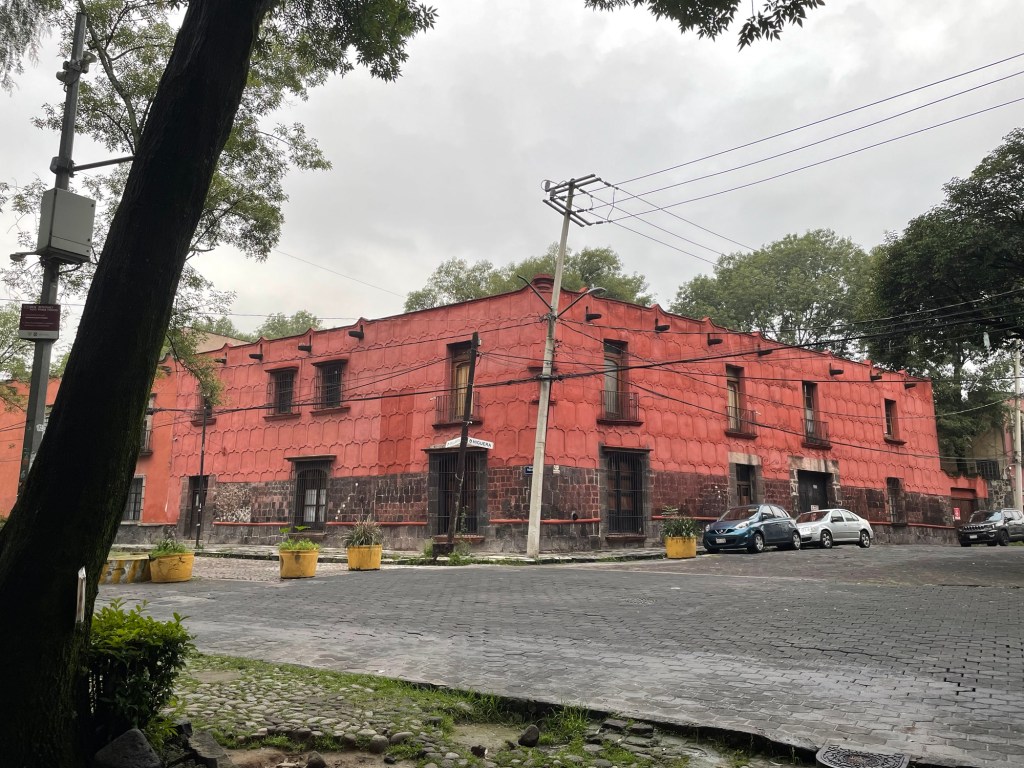
This red house is imputed to have once been the home of Marina, otherwise known La Malinche, the former Nahua slave girl who acted as an interpreter for the Spanish conquistador Hernán Cortés, and eventually gave birth to their son. I am filled with admiration for her.
The Church of Immaculate Conception is the first European church in Mexico. One of Cortés’ many homes was said to have been built in the surrounding La Plaza de la Conchita. Cortés eventually left Marina, so the church is now believed to preside over cursed marriages that end in divorce.
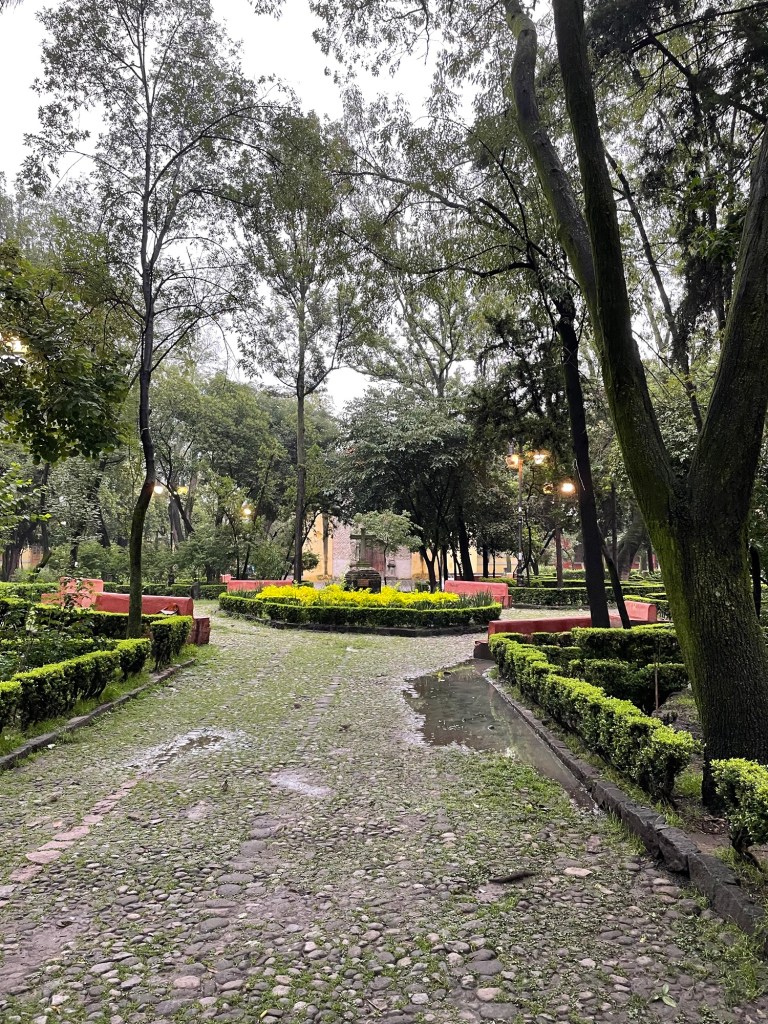
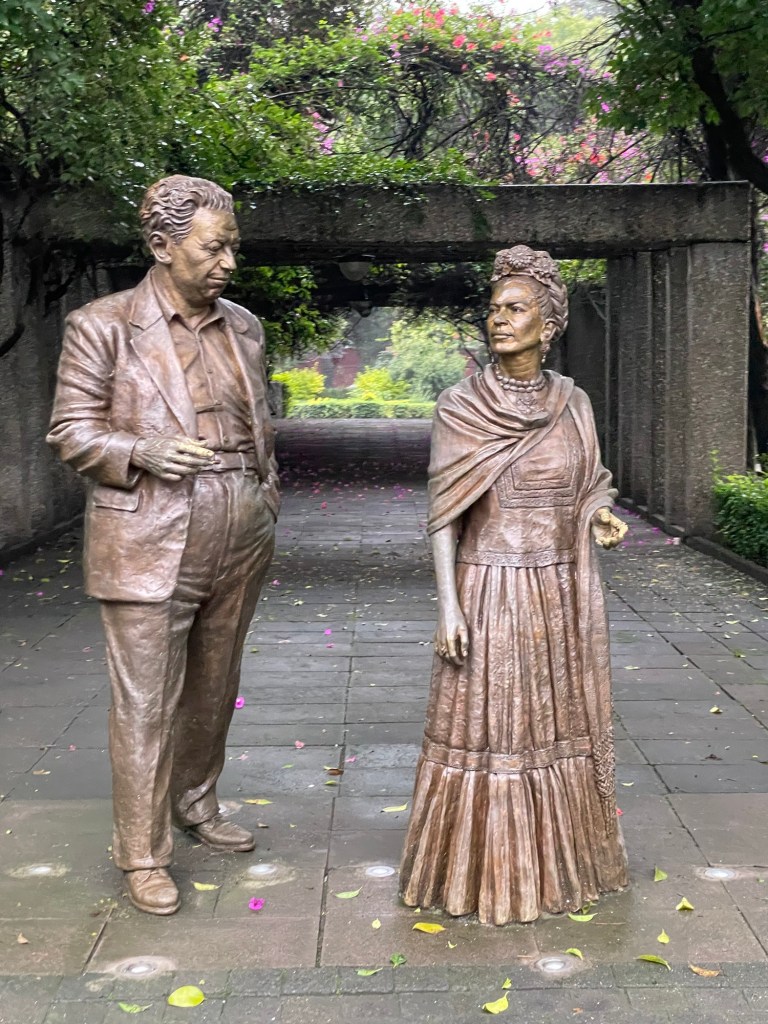
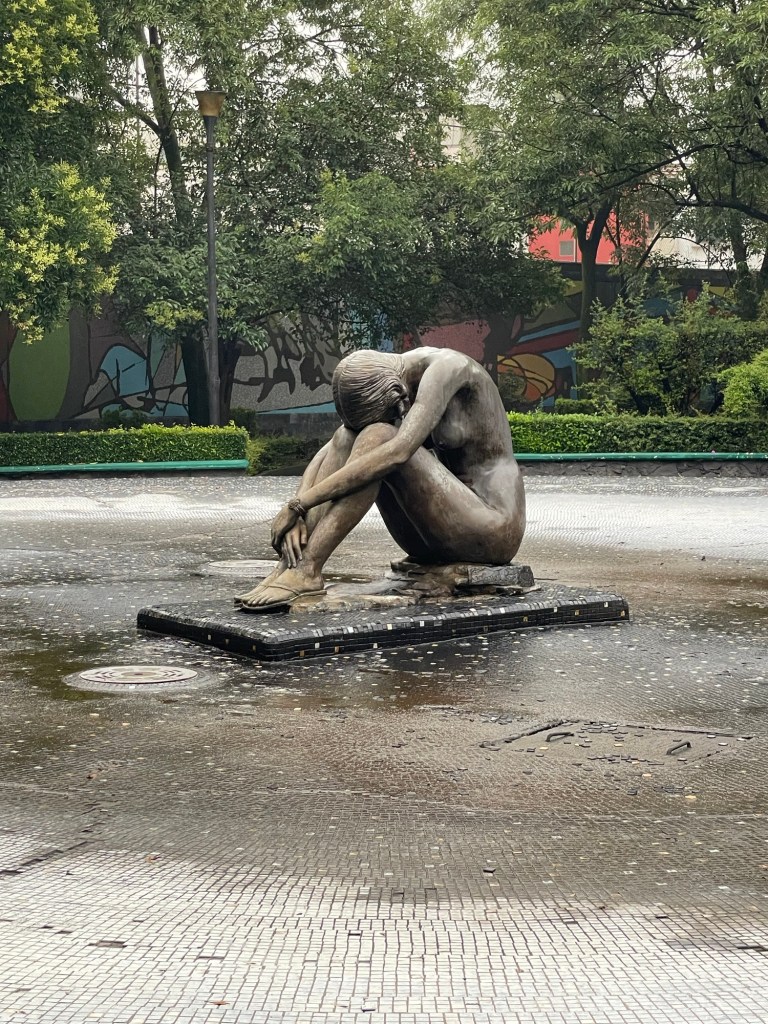
Once a public lot used for livestock auctions, Parque Frida Kahlo was developed in the 1980s to honour the artist. The sculptures of Frida and Diego, and of the woman in the fountain, are by Gabriel Ponzanelli, who lived with the artists briefly at the age of eight.
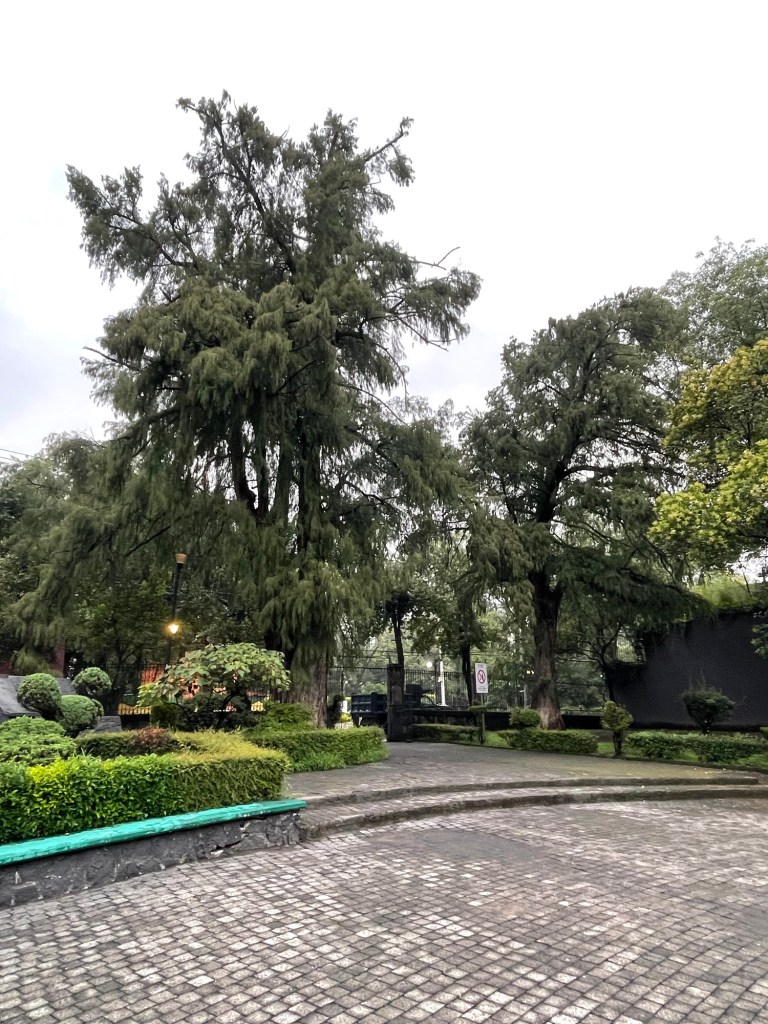
Citla explains that the ahuehuete trees, or Montezuma cypresses, near the park’s entrance are also known as the ‘old man of the water’, because of their love of water. An ahuehuete tree in Oaxaca has the stoutest trunk of any tree in the world.
The stops between running seem to be stretching to further apart now, or perhaps I am getting tireder and can’t tell the difference. Citla’s steps are small and light; it is almost as though she is running on her toes. She tells me of her love for trail running, and the secluded mountaintops and volcanos where her paths lead. I am puffed, and start madly trying to spot blue houses, since I know Frida’s can’t be too far off, and we will no doubt stop to admire it.
Instead, we come across the villa where Trotsky moved with his wife, Natalia, when she discovered his affair with Frida. The brick ramparts and wall extensions were added after his first assassination attempt. Alas, they did not prevent the second, by an ice pick in the head, no less, at the hands of an insider.
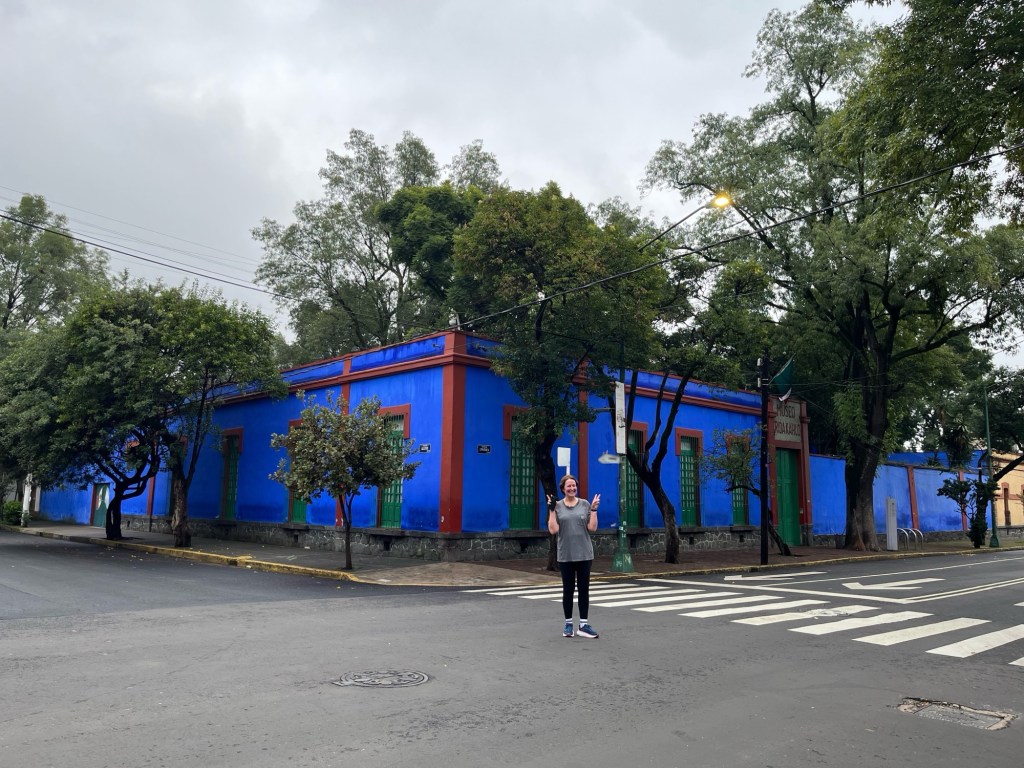
I am relieved to finally see La Casa Azul, the now-famous ‘blue house’ where Frida Kahlo spent much of her life. It is much bigger than I expected. I’m pleased to be here at dawn, having learned that, later in the day, queues can snake around the block. Citla takes another of the realistic photos she will send to me later. I appreciate them, regardless.
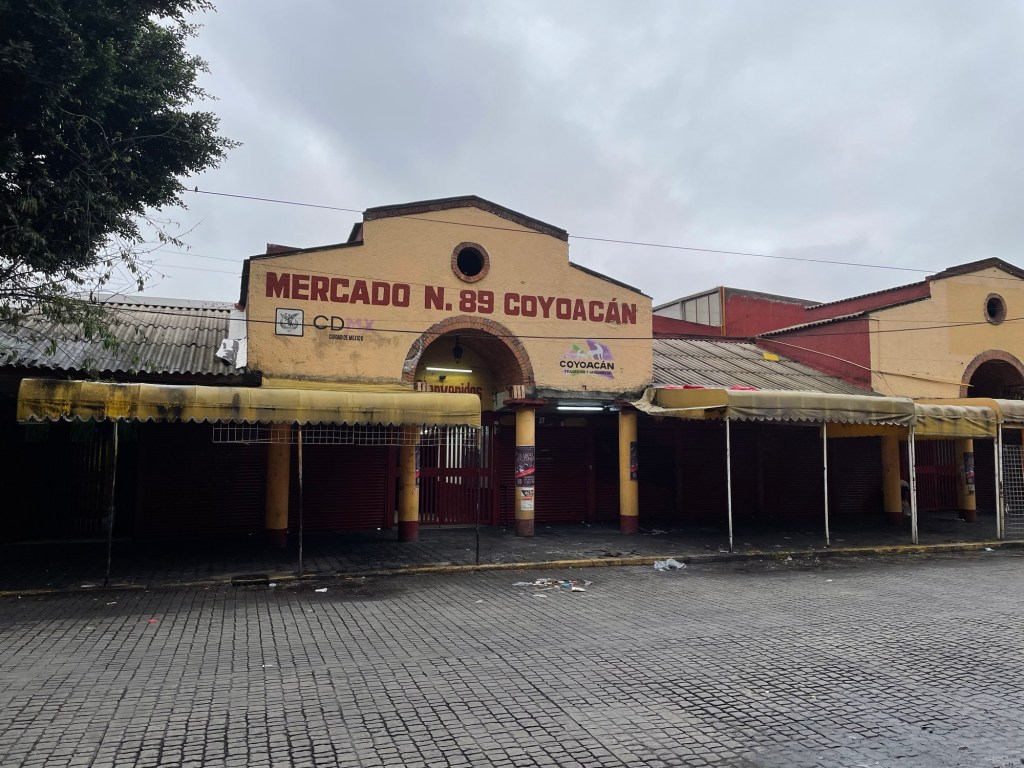
There is so much to discover in Coyoacán, about its marketplaces and town halls, Dominican churches and Spanish architects. And there is much to learn about Citla: about her sport-filled childhood, bike-riding father, and the sorrow she and her husband are feeling at the death of their beloved dog, Papacito.
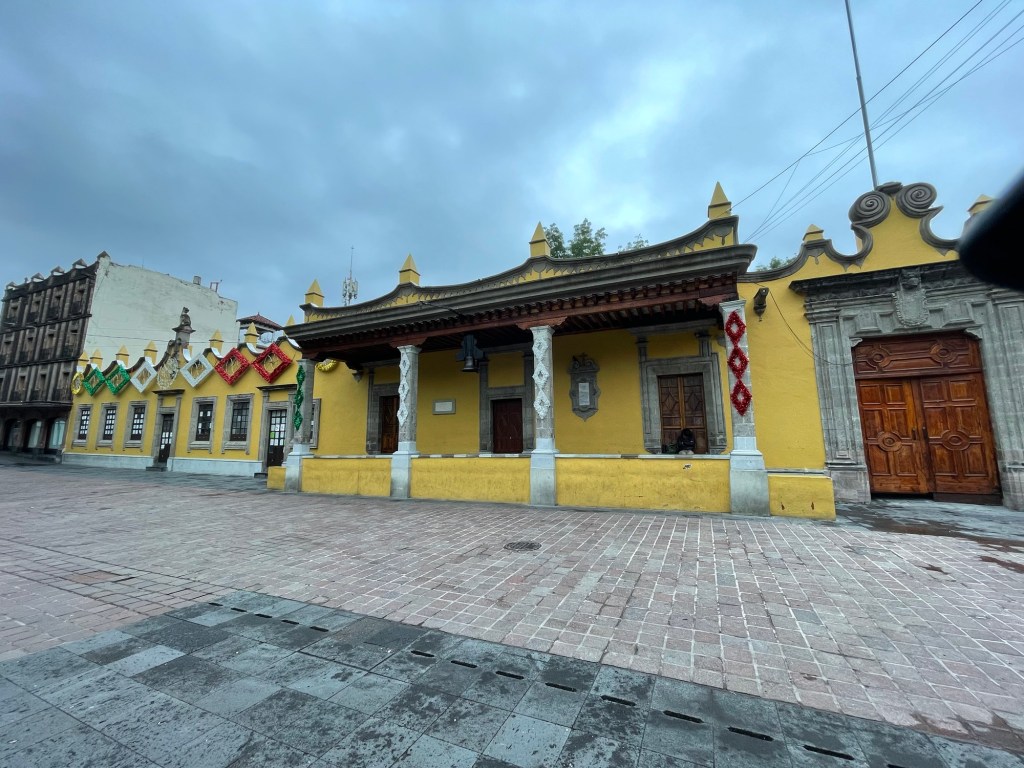
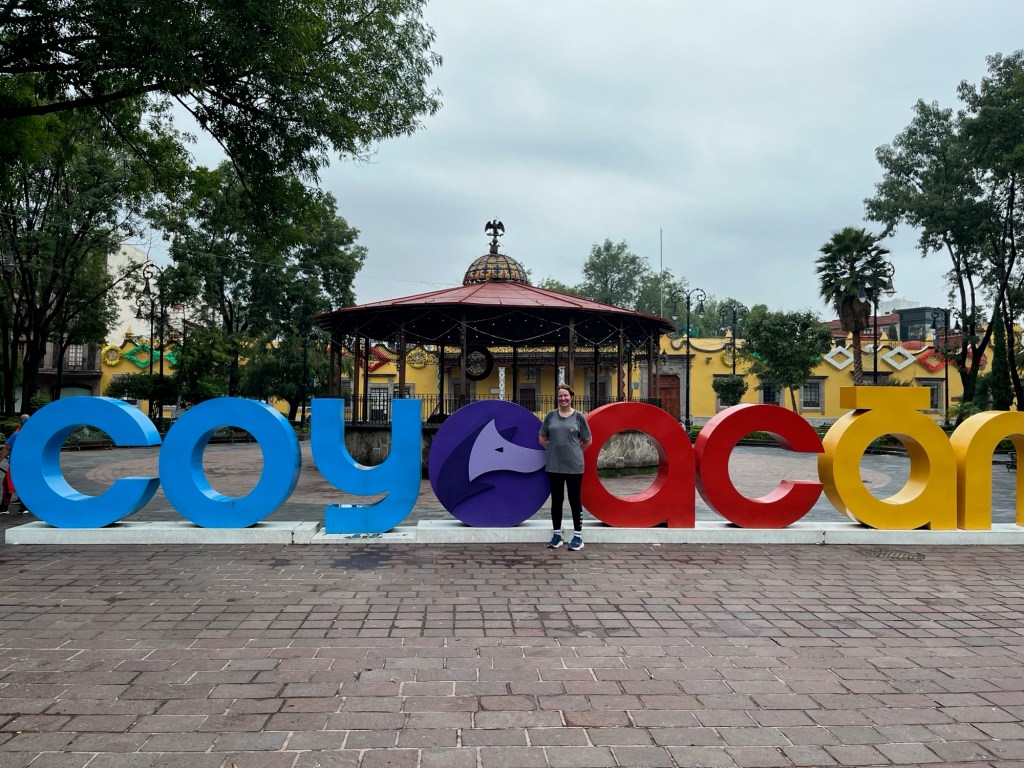
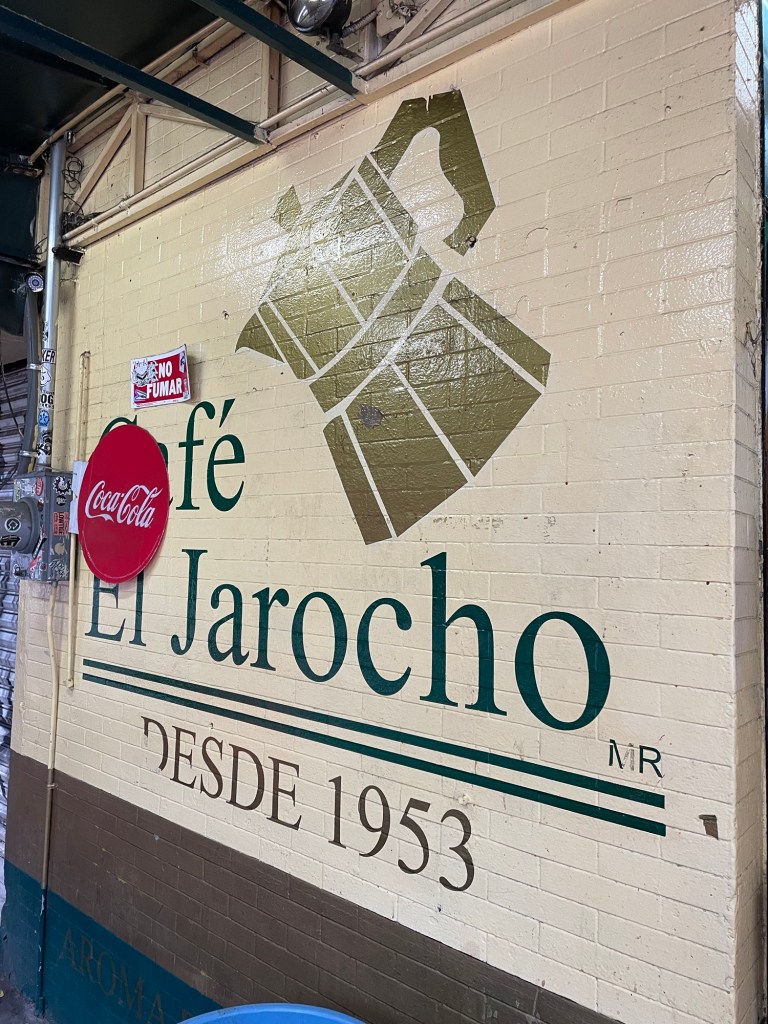
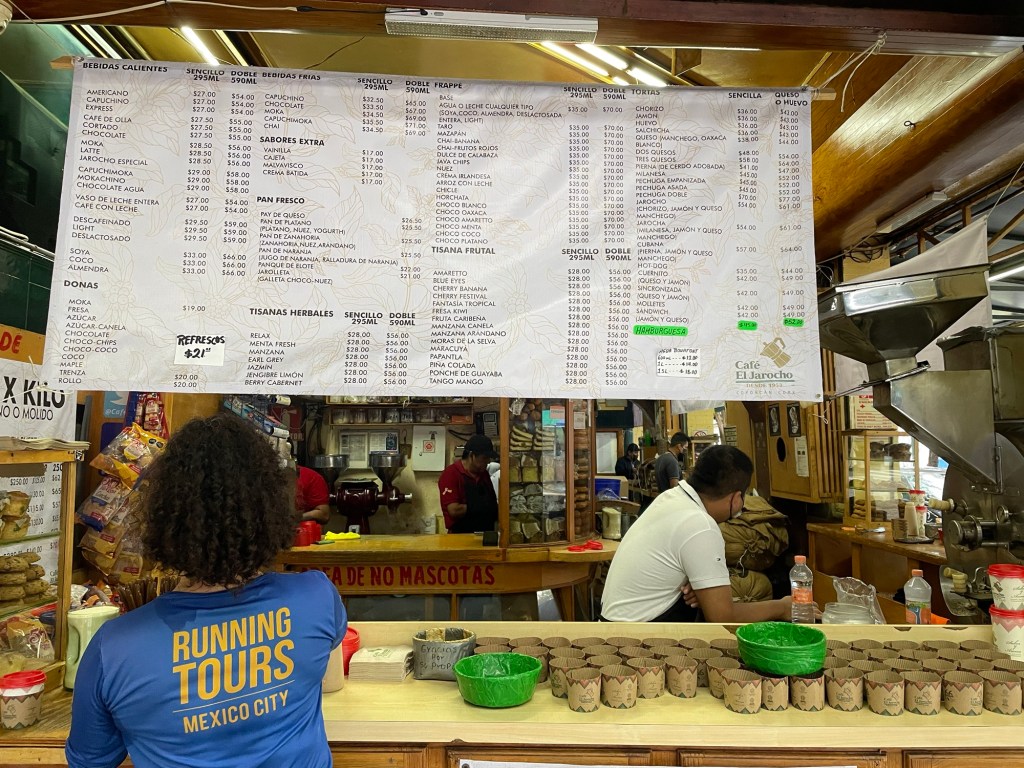
Our run concludes in the town square, where Citla takes a final picture of me beside colourful letters, before making a beeline for her favourite coffee shop and buying me a latte. As we await our drinks, a guy who looks a little worse-for-wear approaches and launches into a plaintive tale. Citla packs him off and rolls her eyes. ‘Fine, go out all night and waste your money,’ she says, ‘but don’t make up stories about having it stolen.’
As we head for the car, Citla introduces me to what will be my favourite sight of the day: this stone etching at the entrance to the square. ‘Does it look like an angel?’ she asks, of the shape that has been carved into the stone. I mean…kind of? These are examples of tequitqui, the outcome of the Spaniards entrusting indigenous pupils with the task of creating Christian symbols in colonial Mexico.
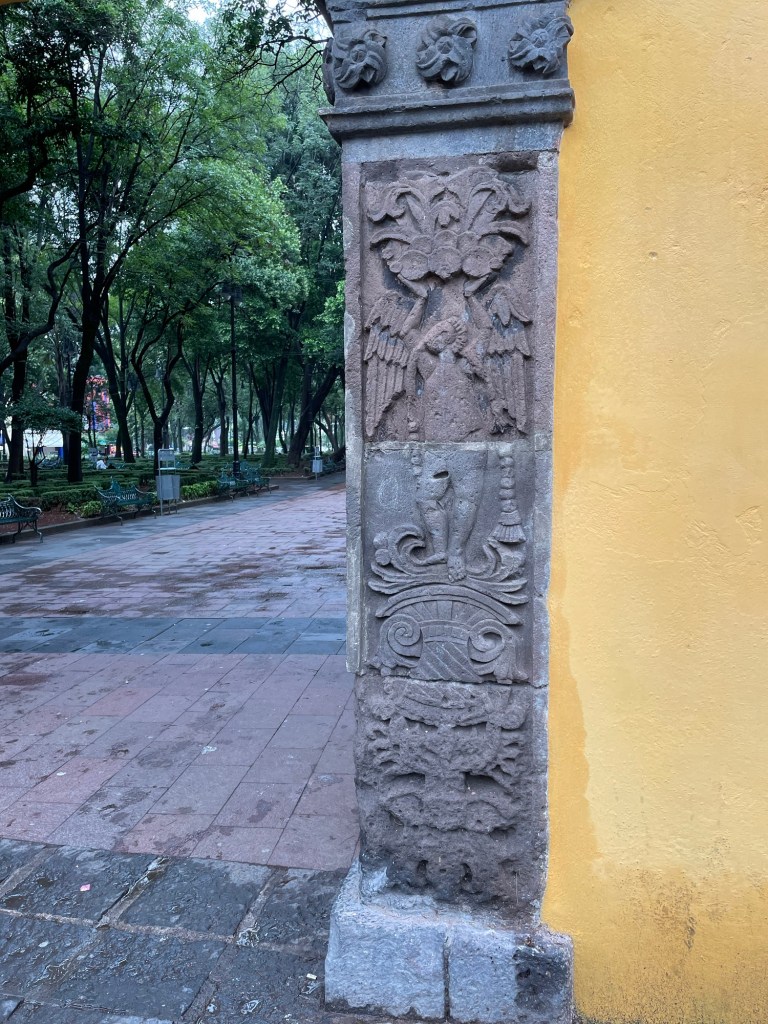
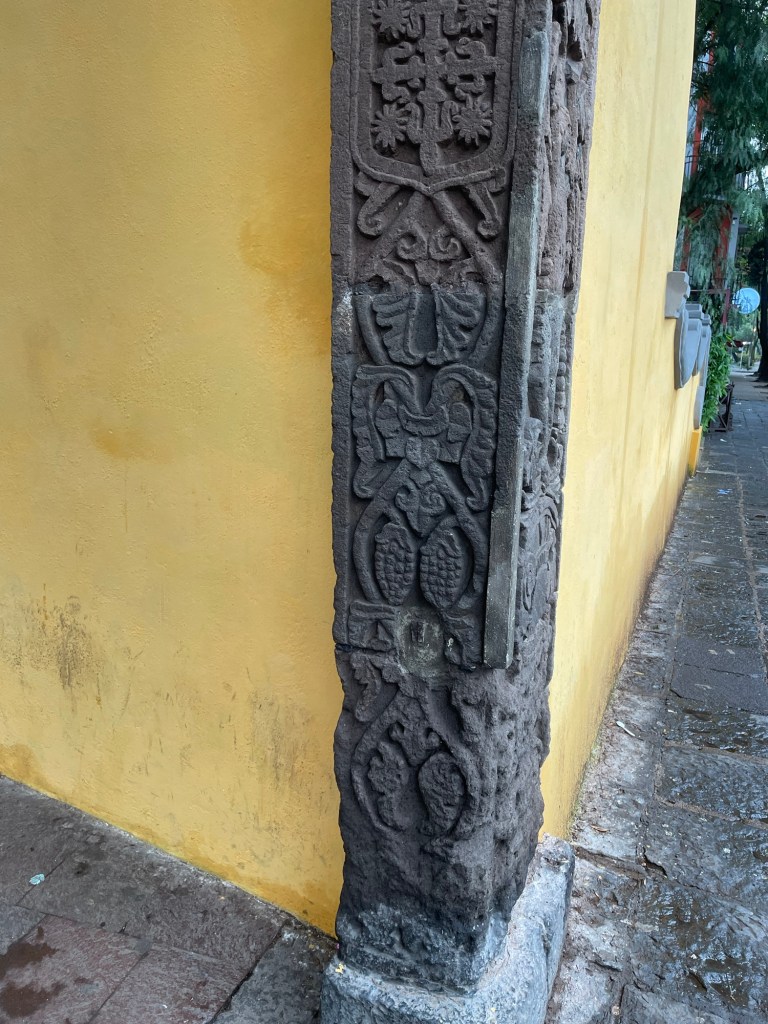
Running through Coyoacán has been a blast. Much like the artists who carved bunches of grapes that look an awful lot like corn, the experiences of my imagination are often miles (or kilometres!) away from their reality.
 A Fat Purple Fig
When in doubt…✌️😁✌️
😂😂😂